.png)

Published Jan 31, 2026, 5:30 PM EST
William Smith is a flesh and blood writer who hasn't seen natural sunlight in months. He spends every waking hour at his laptop producing content to satisfy the cruel algorithm and to give those who spend their time in the comments section something to criticize.
Alfred Hitchcock has influenced almost every major filmmaker that followed him, from New Hollywood directors like Steven Spielberg and Martin Scorsese to more modern blockbuster directors like Christopher Nolan and Christopher McQuarrie. Then there's the innumerable parodies, satires and spoofs that have sprung from his work. No matter what genre of movie it is, Hitchcock's fingerprints are likely to be found somewhere on it.
Hitchcock is most often referred to as the Master of Suspense. The moniker is apt, given that the English filmmaker directed some of the most formative entries in the thriller genre. The majority of the movies in his filmography could be considered thrillers, and their influence on the genre at large is plainly evident in some of the best entries into the genre from both the 20th and 21st centuries. This list will rank the best Hitchcock thrillers based on their execution, what they represented in his career, and their legacies when discussing the genre overall.
10 'Rope' (1948)
 Image via Warner Brothers
Rope is generally best known for its experimental and influential filming technique. The movie takes place entirely in real time and was filmed to give the impression that it is one long continuous shot. The limits of film capacity in cameras at the time meant that Hitchcock had to shoot the movie in ten-minute increments, with edits hidden within transitions as characters or objects move across the frame. The effect is obvious today, and technology has allowed many filmmakers to far surpass Hitchcock's lofty goals, but he was the pioneer.
Based on the play of the same name by Patrick Hamilton, itself inspired by the real-life Leopold and Loeb murder, Rope follows two young men who murder a third, and then proceed to hold a party in their apartment with the body hidden in plain sight. While the filming method might seem to highlight the movie's stagebound origins or come off as gimmicky, it actually increases the tension and is the most prolonged example of one of Hitchcock's favorite narrative techniques, dramatic irony. By including the audience in the killer's actions, they become unwitting accomplices as they spend the next 80 minutes gripping their seats in worry that the body will be discovered. It's a masterclass in suspense.
9 'The 39 Steps' (1935)
 Image via Gaumont British Distributors
An early entry into the spy thriller genre, which Hitchcock has contributed an immeasurable amount to, The 39 Steps also contains several elements that the director became most associated with. The film's protagonist is a wrongfully accused man on the run, its leading lady set the mold for so many "Hitchcock blondes" that followed, and the plot revolves around a prominent MacGuffin. It's everything that you expect from a classic Hitchcock thriller and a foundational effort in escapist entertainment.
Robert Donat plays a civilian who is unwittingly involved in a labyrinthine plot of secrets and spies when he is implicated in the death of a spy. What follows is a superlative chase thriller across the United Kingdom, as he tries to both clear his name and untangle the web of lies he has been caught in. The 39 Steps includes key sequences in notable locations, including the Forth Bridge in Scotland and King's Cross station, another notable signature of Hitchcock's indelible use of iconography, and it's a clear indicator of the great, thrilling things to come in the director's career.
8 'Notorious' (1946)
Another superb spy thriller from Hitchcock, Notorious employs all the tricks of the trade that the director had honed to perfection in the decade following The 39 Steps. Indeed, the film represents a major evolution for the filmmaker. It is an elegant romance, shot with a keen visual eye and featuring a sharp script by Ben Hecht. Cary Grant and Ingrid Bergman also have incredible chemistry as the film's star-crossed lovers, an American agent and the daughter of a Nazi, respectively.
Things get complicated fast for their two characters after he recruits her to seduce a man involved with a group of wanted German exiles who fled their country after World War II. Notorious is a classic noir steeped in deception and sexuality that was a key development in Hitchcock's career as a filmmaker. It also pushed the boundaries for eroticism in the Hays Code era, most notably in an extended scene of kissing where Grant and Bergman could only lock lips for three seconds at a time. It may seem tame by modern standards, but its performances and visuals are timeless.
7 'Strangers on a Train' (1951)
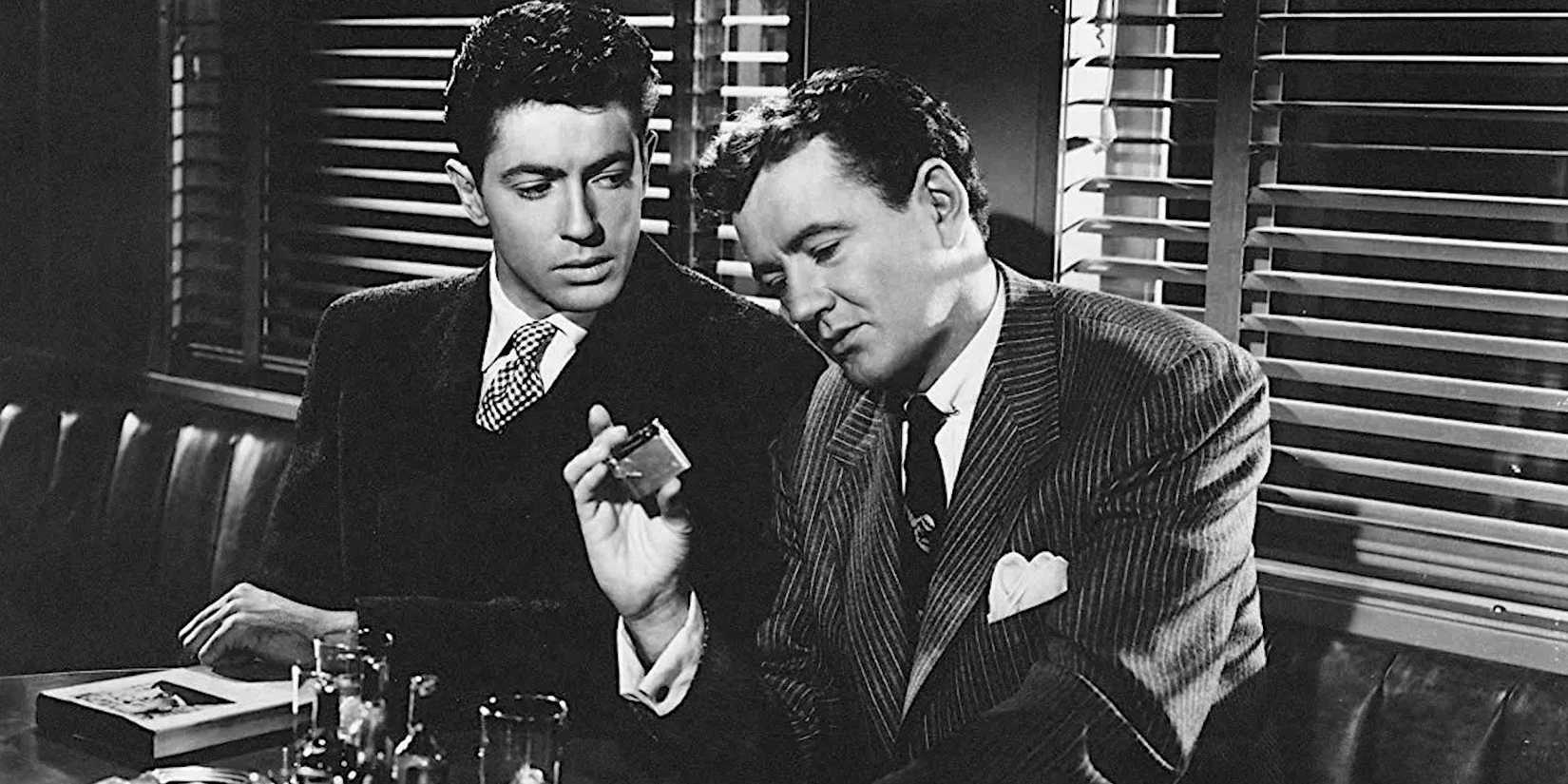 Image by Warner Bros.
Strangers on a Train is a slickly entertaining adaptation of the novel of the same name by Patricia Highsmith. Hitchcock made some notable changes to it during production, including the addition of a climax set on a merry-go-round that appealed to the visual-oriented director. It still maintains the basic plot of the novel, which has also inspired a number of other films that range from dark comedies to teen thrillers.
Farley Granger, who also starred in Rope, plays Guy, a successful tennis player who meets an intense man on a train named Bruno (Robert Walker). Bruno suggests that he and Guy swap murders as a means to avoid suspicion from the police. When he actually goes through with his murder, killing Guy's philandering wife, he ensnares Guy in an escalating game of deadly cat-and-mouse. Strangers on a Train is first-rate pulp elevated by Hitchcock's incredible direction of its set pieces and its visual expression of its themes.
6 'Shadow of a Doubt' (1943)
 Image via Universal Pictures
A dark noir set in small-town America, Shadow of a Doubt is often referred to as one of Hitchcock's undeniable masterpieces and was also cited by the director himself as his favorite of all his films. Much like Strangers on a Train, it finds its thrills not in any mystery or reversals, but in the seeping dread that comes from being in the company of a complete psychopath.
Joseph Cotten plays Charlie, a man wanted in connection with a series of murders of wealthy widows. He comes to Santa Rosa, California, to visit his family and niece, played by Teresa Wright, who quickly becomes suspicious of her uncle. The characters and setting are all richly detailed, and the plot doesn't so much twist as it binds tighter and tighter as the two leads circle each other, both knowing that violence is surely inevitable.
5 'Rebecca' (1940)
 Image via United Artists
A haunting romantic thriller, Rebecca was Hitchcock's first American film and also the only one to ever win the Academy Award for Best Picture, a seemingly unbelievable fact considering his filmography. Like many of his best works, the film was based on a novel, this one written by Daphne du Maurier, who also wrote the short story that would later inspire Hitchcock's horror film The Birds.
Though certainly dark and gothic, Rebecca is still firmly in thriller territory. It follows Joan Fontaine as a young woman swept off her feet in a whirlwind romance by a wealthy aristocrat, played by Laurence Olivier, who also turns out to be haunted by his dead, titular wife. Atmospheric and incredibly unnerving, the film also has the sustained suspense of Hitchcock's best. The performances are stellar across the board, and while the film only won two of the myriad Oscars it was nominated for, it is impeccably produced on every level and remains an essential Hitchcock classic.
4 'North by Northwest' (1959)
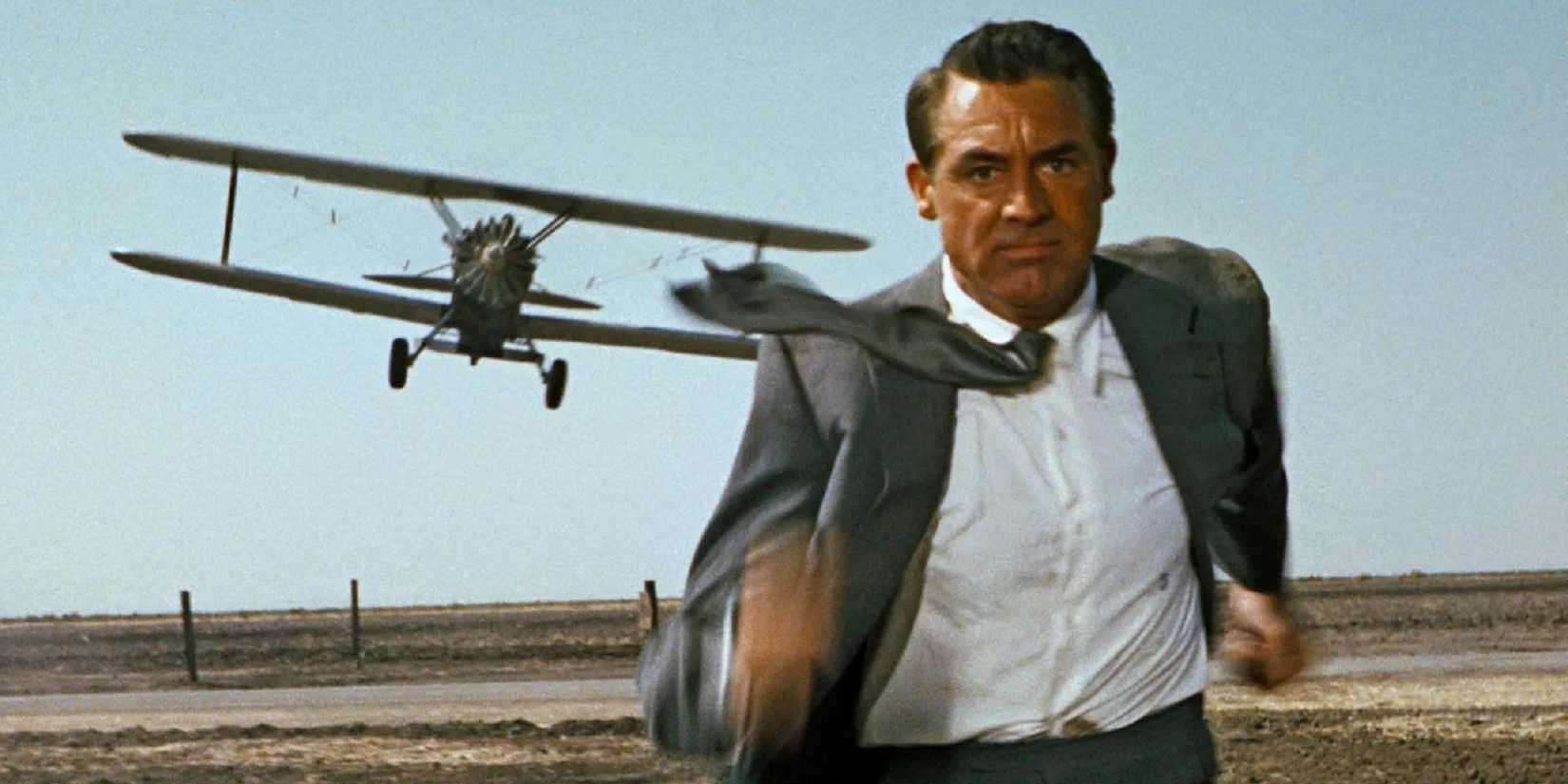 Image via MGM
Though North by Northwest is far more lighthearted than any other film on this list, or any other thriller that Hitchcock directed, for that matter, it is no less effective or influential. The escapist film has had a profound impact on the action genre at large and, even more specifically, spy thrillers, with both the James Bond franchise and television series such as The Man from U.N.C.L.E. taking heavy influence from it. Filled with many of the same tropes that are peppered throughout the director's career, it could also be argued that they were never more perfected than in this film.
Cary Grant plays an innocent man who is mistaken for an intelligence agent and then later wrongfully accused of murder, putting him in the crosshairs of multiple parties as he goes on the run, stopping only to sightsee some of Hitchcock's most iconic setpieces. From the indelible cropduster chase to the climax on Mt. Rushmore, few films of the director are as instantly recognizable as North by Northwest is from only singular frames. It's also easily his most breezy thriller that nonetheless provides gripping entertainment as it races from start to finish.
3 'Psycho' (1960)
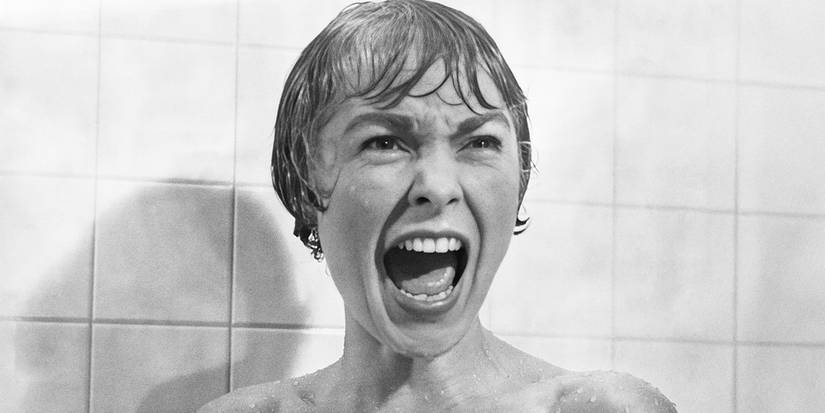 Image via Paramount Pictures
Hitchcock followed up his most lighthearted thriller with his most shocking. As influential as Psycho has been on the horror genre as a whole, and more specifically slashers, it still very much follows the patterns of the director's best thrillers. The twists and turns in the plot are perfectly designed to wring maximum tension out of every scenario, with the added shock value of some major character murders serving as punctuation marks.
Hitchcock's insistence on theaters not admitting patrons into the film after its start in order to preserve its plot twists is part of Hollywood lore now, but even with foreknowledge of the film's secrets, it's still a near-perfect thrill ride. The cleverness comes in the concept of starting the film as any other typical thriller might; Janet Leigh's Marion Crane on the run with stolen money offers any number of possibilities for the plot. Then she checks into the Bates Motel, decides to take a shower, and becomes the most iconic death in film history.
2 'Rear Window' (1954)
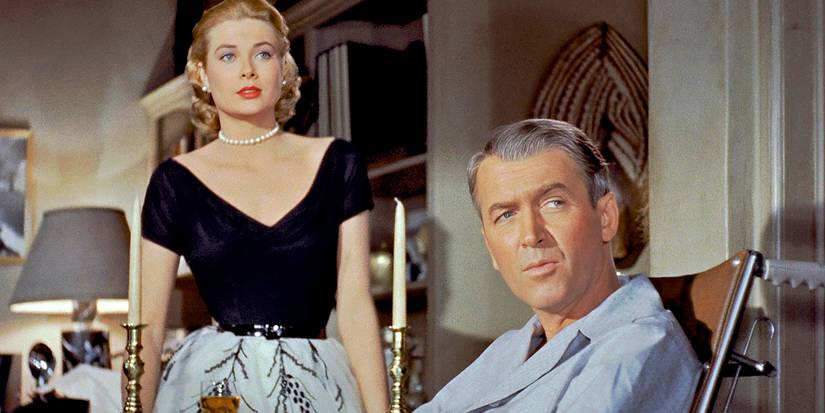 Image via Paramount Pictures
Far from the countrywide chases of North by Northwest or the shocking plot twists of Psycho, what makes Hitchcock's Rear Window such a superior thriller is its limitations. Set in a single location with a limited number of characters and a simple premise, the film is a thriller stripped down to its bare essentials, and it is all the more effective for it. As with any Hitchcock effort, it's also a technical masterpiece: an entire apartment complex was constructed on a massive indoor set, with meticulous attention given to the sound and lighting to give the setting and characters vibrant life.
Observing all that life is Hitchcock regular James Stewart, who plays a photojournalist, laid up with a broken leg and confined to his apartment. He passes the time watching his neighbors' comings and goings, until he becomes suspicious that one of them may have murdered his wife. It's a voyeuristic thriller that draws the audience into the lead character's obsessiveness and paranoia, with Hitchcock masterfully playing out every moment for maximized tension. It's a simple, perfect thriller.
1 'Vertigo' (1958)
 Image via Paramount Pictures
It's been called Hitchcock's masterpiece, it's been called the greatest film of all time, but Vertigo is, plain and simple, the quintessential thriller. It's surprising, then, that it received such a mixed reception initially, with critics, audiences, and even fellow filmmakers considering it a lesser film from the director. Time has only helped reveal its perfection, and in its re-evaluation, it has been praised for its deep themes of male obsessiveness, beautiful cinematography, and use of color and long-lasting impact.
James Stewart once again reteams with Hitchcock to play a retired police officer with a debilitating fear of heights who is asked by a friend to follow his wife. He falls in love with her before he witnesses her fall to her death, and in his grief, he finds another woman who bears a striking resemblance to her, and his obsession begins. Vertigo is a profoundly disturbing and yet undeniably moving film about love and trauma that unfolds with the patience that only a master of suspense like Hitchcock has. It's the most unforgettable thriller from a director who made more unforgettable thrillers than any other.



 English (US) ·