.png)
Haunted house horror movies endure because they turn the safest place imaginable into a site of terror. Across the last century, filmmakers have repeatedly returned to creaking staircases, whispering walls, and houses that seem alive. From early gothic chillers to suburban nightmares and darkly comic reinventions, haunted house films reflect changing anxieties while maintaining a timeless core.
The very best entries in the haunted house subgenre don’t rely solely on jump scares. They build atmosphere, mythology, and psychological dread that lingers long after the credits roll. These movies defined the ghostly visual language, narrative structure, and tone that countless successors would imitate. These haunted houses shaped horror history itself.
The Old Dark House (1932)
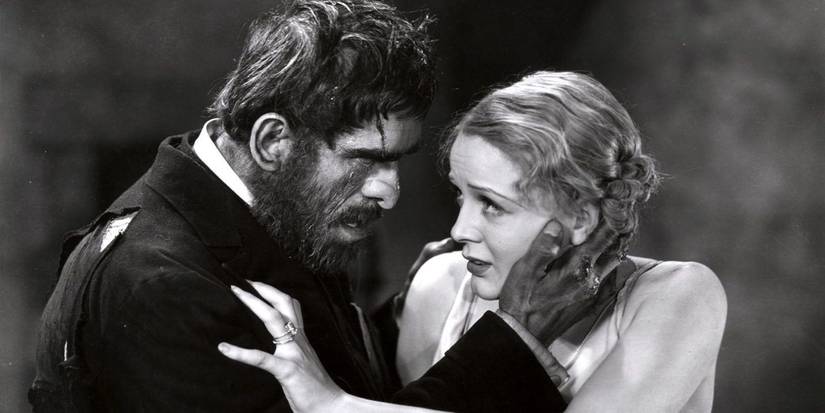
The Old Dark House centers on stranded travelers seeking shelter in a remote rural mansion occupied by strange, secretive inhabitants. In doing so, it essentially invents the haunted house movie’s narrative and visual grammar. James Whale’s film establishes isolated groups, ominous weather, creaking architecture, and residents hiding disturbing truths.
These all became staples of the genre. The whistling wind alone became a recurring horror motif. While campy and theatrical by modern standards, the gothic atmosphere is unmistakable, and the unease is carefully sustained.
The Old Dark House has been widely re-evaluated and now stands as one of his most important works. Its influence is immeasurable, laying the groundwork for decades of haunted house storytelling. Today, it’s recognized as a cult classic and a foundational horror text that defined how haunted spaces would be portrayed on screen.
The Uninvited (1944)

The Uninvited follows a brother and sister who purchase a seaside mansion, only to discover it’s haunted by genuinely malevolent spirits. What made the film groundbreaking was its decision to treat the supernatural as real, not imagined – a rarity at the time. Audiences and critics were shocked by how sincerely frightening it was, especially given its elegant, restrained tone.

Related
10 Horror Movies That Tried To Be The Next Halloween
A simple premise, a silent masked killer, and a creepy calendar date ignited a cultural phenomenon that would reshape horror storytelling forever.
The atmosphere is moody and romantic, but the ghostly presence feels unmistakably threatening. The Uninvited was one of the highest-grossing releases of 1944 and received strong reviews from major trade publications. Its combination of charm and terror helped define the haunted house film as a serious horror subgenre rather than mere gothic melodrama.
Retrospective reviews have only strengthened its reputation. Indeed, The Uninvited remains quintessential viewing. It proved that subtlety and conviction can be just as terrifying as spectacle.
The Amityville Horror (1979)

Claiming to be based on a true story, The Amityville Horror follows a family terrorized after moving into a Long Island house with a violent past. The film taps into late-’70s anxieties about domestic instability, making the haunting feel invasive and personal. While critics were largely dismissive on release, audiences embraced it in massive numbers.
The Amityville Horror became one of the highest-grossing independent horror films ever. The slow-burning dread, icy performances, and Lalo Schifrin’s unnerving score give the film a relentless sense of doom. Over time, its reputation has improved, with many scholars now recognizing it as a seminal modern haunted house film.
More importantly, its success launched an enormous franchise. It spawned nine sequels and 30 other Amityville-related films. The Amityville Horror transformed the haunted house into a contemporary, suburban nightmare, and proved the genre’s massive commercial power.
Poltergeist (1982)

Poltergeist tells the story of a suburban family whose home becomes a portal for violent supernatural forces targeting their young daughter. What makes the film exceptional is how it blends Spielbergian warmth with genuinely disturbing horror. The house feels lived-in and safe – until it absolutely isn’t.
The escalation from playful hauntings to nightmarish chaos is expertly paced, making the terror feel earned rather than gratuitous. It features some especially potent visual moments, such as moving chairs, the possessed television, and the swirling void in the bedroom. These with the terrifying clown have all become horror touchstones.
Poltergeist was both a major box office hit and critical success, earning three Academy Award nominations. Its legacy includes sequels, remakes, and countless imitators, but none have matched the franchise original’s balance of heart and horror. Poltergeist remains the definitive '80s haunted house movie, terrifying precisely because it invades the everyday.
The Haunting (1963)

The Haunting follows a group of strangers invited to investigate Hill House, a mansion with a long, tragic history of unexplained deaths. Rather than relying on visual effects, the film weaponizes sound, shadow, and suggestion, making the house itself feel hostile and alive. Doors breathe, walls throb, and unseen presences announce themselves through chilling audio cues.

Related
10 Greatest Zombie Movie Masterpieces Of The Last 100 Years, Ranked
From voodoo slaves to flesh-eating hordes, these zombie masterpieces reshaped horror, redefined fear, and changed the horror subgenre forever.
The terror is deeply psychological, blurring the line between supernatural evil and mental instability, particularly through Julie Harris’ fragile performance. Director Robert Wise creates unbearable tension without ever clearly showing a ghost. This exemplifies how the imagination is the most powerful horror tool.
The Haunting has become one of the most influential haunted house movies ever made. It inspired countless adaptations, including Netflix’s The Haunting of Hill House. Its legacy lies in its restraint, intelligence, and unmatched atmospheric dread.
The Conjuring (2013)
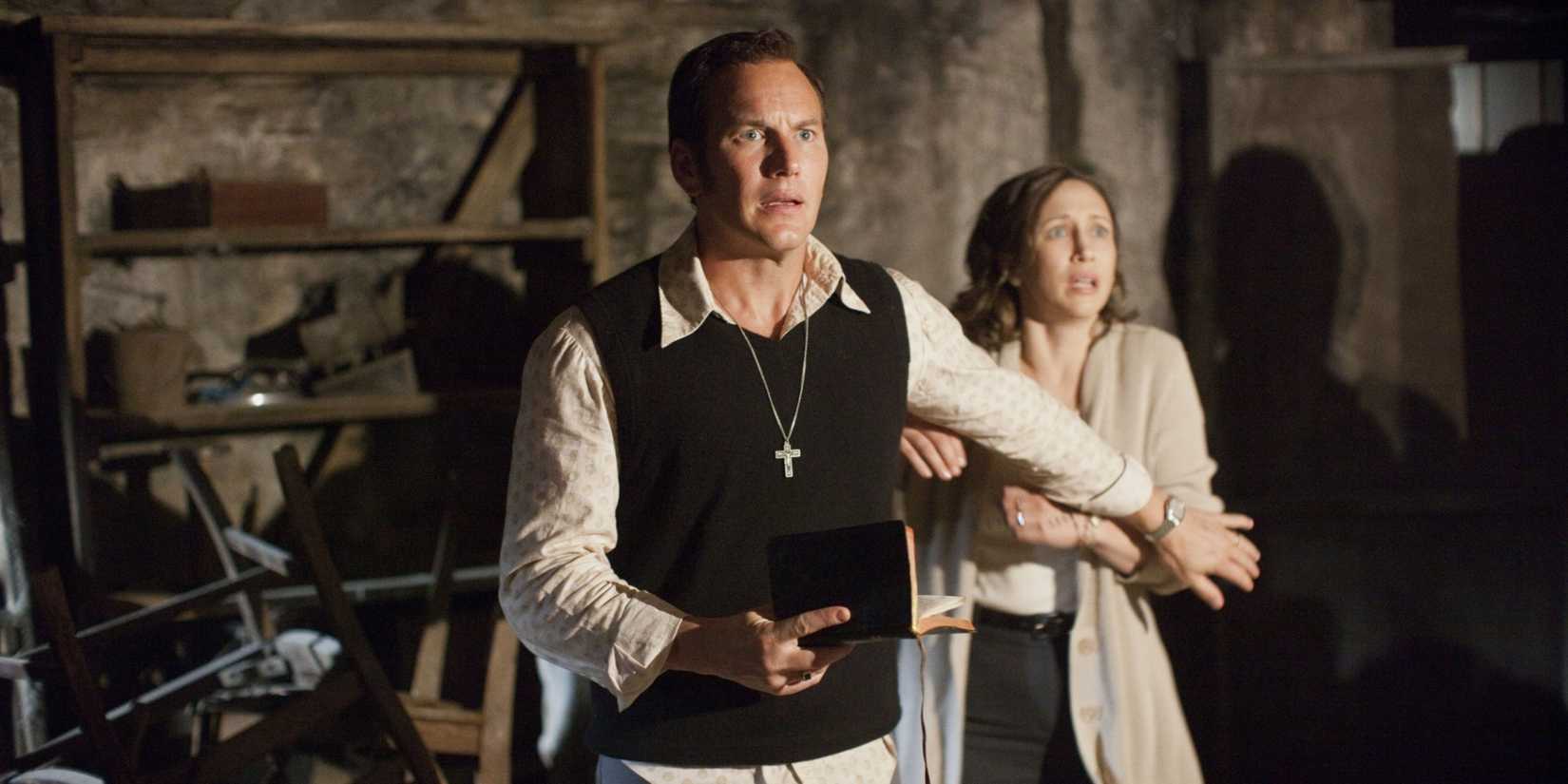
The Conjuring centers on paranormal investigators Ed and Lorraine Warren helping a family plagued by a malevolent presence in their secluded farmhouse. The premise is familiar, but the execution is masterful. James Wan builds terror through patience, spatial awareness, and practical scares that feel grounded and relentless.
The house is staged like a puzzle box of fear, with basements, wardrobes, and stairwells hiding unspeakable threats. What makes the film truly scary is its sincerity. It fully commits to its supernatural reality and emotional stakes.
Audiences responded massively, turning the film into a surprise blockbuster. Its success launched The Conjuring Universe, now one of the most profitable horror franchises ever. More importantly, it revitalized the haunted house subgenre for modern audiences, proving that classical scares still work when executed with precision and respect.
Beetlejuice (1988)

Beetlejuice flips the haunted house premise by focusing on the ghosts rather than the living. Newly deceased homeowners attempt to scare away the new occupants, only to unleash something far worse. Tim Burton’s film is macabre, playful, and visually unforgettable, blending horror iconography with anarchic comedy.
Despite its humor, Beetlejuice is deeply rooted in haunted house tradition. It’s filled with hidden rooms, supernatural rules, and invasive presences. The scares are surreal rather than terrifying, but the film’s energy and creativity make it endlessly compelling.
Its production design, creature effects, and Michael Keaton’s chaotic performance left a permanent mark on pop culture. While not a traditional horror film, its legacy is enormous, influencing everything from animated series to Broadway. Beetlejuice proved haunted house movies could be weird, funny, and still unmistakably gothic masterpieces.
The Others (2001)
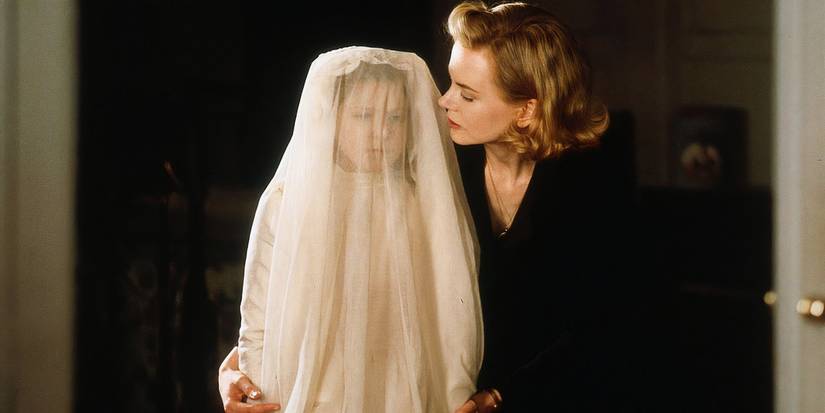
The Others follows a mother and her two photosensitive children living in a fog-shrouded mansion, convinced their home is haunted. The film’s premise unfolds slowly, using silence, darkness, and isolation to build an overwhelming sense of unease. Doors must remain closed, curtains drawn, and rules obeyed.
The whole house is turned into a suffocating prison. The scares are subtle but devastating, culminating in one of the most famous twists in horror history. Nicole Kidman’s performance anchors The Others, blending grief, paranoia, and fear into something deeply human.
The Others was a major commercial and critical success. It was praised for its intelligence and atmosphere. It showed that haunted house films could still surprise audiences in the 21st century, relying on mood and storytelling rather than shock tactics or excessive effects.
The Innocents (1961)

Based on The Turn of the Screw, The Innocents tells the story of a governess convinced the children in her care are possessed by spirits haunting a vast English estate. The premise is deceptively simple, but the horror lies in ambiguity. It keeps the viewer guessing whether the ghosts are real, or if the governess is unraveling.
The black-and-white cinematography is breathtaking, turning sunlight into something just as threatening as darkness. Shadows stretch unnaturally, and the house feels oppressive despite its beauty. The film’s restraint makes every whispered voice and distant figure deeply unsettling.
Over time, The Innocents has come to be regarded as one of the greatest psychological horror films ever made. Its influence is enormous. It has directly shaped how haunted house stories explore unreliable narrators, repression, and the terrifying possibility that the real monster may be human.
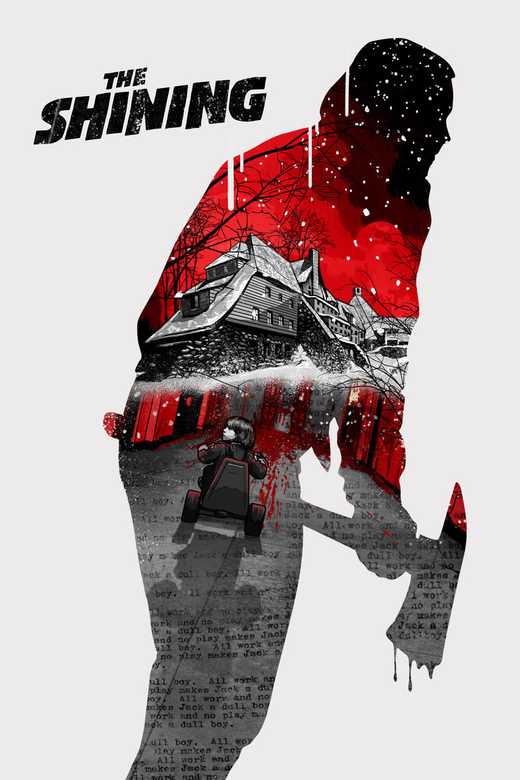
The Shining (1980)
 Image from the Everett Collection.
The Shining follows a family caretaking an isolated hotel during winter, only for the building’s dark history to slowly consume them. While not a traditional house, the Overlook Hotel functions as the ultimate haunted space. It’s vast, inescapable, and deeply malevolent.
Stanley Kubrick’s film is terrifying through atmosphere rather than overt scares. He deploys symmetrical compositions, endless corridors, and droning sound design to create constant unease. The horror builds gradually, mirroring Jack Torrance’s descent into madness, making it unclear where the haunting ends and insanity begins.
Initially divisive, The Shining has since been reappraised as an absolute horror masterpiece. Its imagery of the twin girls, elevators of blood, and the frozen maze have become iconic. The Shining’s legacy is immense, influencing generations of filmmakers and redefining haunted spaces as psychological battlegrounds.
-

The Old Dark House
Release Date October 19, 1932
Runtime 72 minutes
Director James Whale
Writers Benn W. Levy
Producers Carl Laemmle Jr.
-

The Uninvited
Release Date February 26, 1944
Runtime 99 Minutes
-

Ray Milland
Roderick Fitzgerald
-
Ruth Hussey
Pamela Fitzgerald
-
Gail Russell
Stella Meredith
-
Donald Crisp
Commander Beech
-
-

Poltergeist

4/10
Release Date June 4, 1982
Runtime 114 minutes
-
Craig T. Nelson
Steve Freeling
-

JoBeth Williams
Diane Freeling
-
-

-

The Haunting
Release Date August 22, 1963
Runtime 112 Minutes
-

-

The Others
Release Date August 10, 2001
Runtime 104 minutes
-


 English (US) ·