.png)

Published Jan 31, 2026, 7:30 PM EST
Diego Pineda has been a devout storyteller his whole life. He has self-published a fantasy novel and a book of short stories, and is actively working on publishing his second novel.
A lifelong fan of watching movies and talking about them endlessly, he writes reviews and analyses on his Instagram page dedicated to cinema, and occasionally on his blog. His favorite filmmakers are Andrei Tarkovsky and Charlie Chaplin. He loves modern Mexican cinema and thinks it's tragically underappreciated.
Other interests of Diego's include reading, gaming, roller coasters, writing reviews on his Letterboxd account (username: DPP_reviews), and going down rabbit holes of whatever topic he's interested in at any given point.
The '80s were a hell of a time for cinema, characterized by the rise of blockbuster filmmaking, the return of studio-driven pictures, and the dominance of "high concept" movies. It was the decade that saw the New Hollywood movement come to a close, leaving an entirely new and undeniably modern film industry in its wake. It also saw the release of several of the best movies ever made.
Only a handful of films, however, are so good that they deserve to be called perfect. These sorts of masterpieces span many countries and all sorts of genres, from American action thrillers to gut-wrenching Soviet war pictures. It shows the admirable variety and incredible depth of the cinema of the decade, and it's all the proof anyone should need that there haven't been very many decades that were better for the art form.
10 'Do the Right Thing' (1989)
 Image via Universal Pictures
The '80s were Spike Lee's debut decade as a filmmaker, and it was his fourth feature film that showed he was one of the most exciting new voices in Hollywood. Do the Right Thing remains the auteur's best work in many people's eyes, a gripping dramedy about simmering racial tensions in 100-degree Brooklyn.
It's one of the most groundbreaking films of the decade; a sweaty, vibrant, colorful, urgent, electrifying achievement that has aged like fine wine in every sense imaginable. Lee's dynamic handling of the camera is a constant delight, and the way he explores the inner lives of his characters is absolutely fascinating. There are no heroes or villains here, nor any easy answers. Do the Right Thing throws you right into its world with full confidence in what it has to say.
9 'Die Hard' (1988)
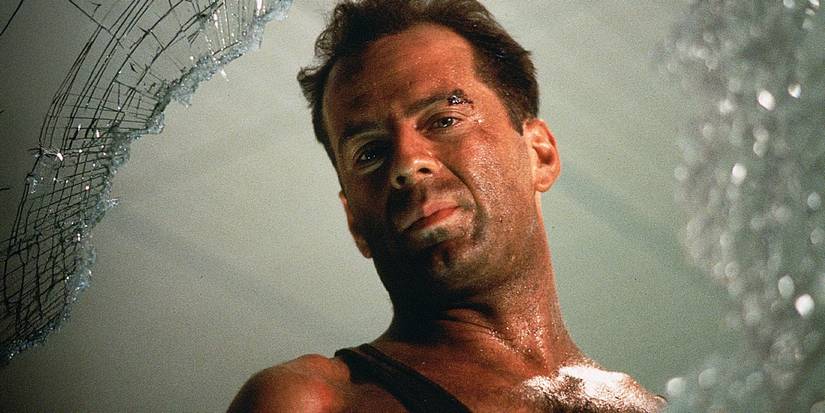 Image via 20th Century Studios
From The Terminator to First Blood, the '80s as a whole were a Golden Age for Hollywood action cinema. However, there are very few action masterpieces more perfect than Die Hard, whose single-location setting makes for one of the tensest films of the era. John McClane was never quite as great again after this, but it hardly matters — many would call this the single greatest pure action flick of the decade.
At the very least, Die Hard is one of the best action thrillers of the last 50 years, a perfectly written and perfectly directed gem packed with memorable set pieces and iconic characters. Whether it's a Christmas movie or not is irrelevant. What can't be denied is that rarely has the action genre ever achieved this level of perfection.
8 'Star Wars: Episode V — The Empire Strikes Back' (1980)
In 1977, George Lucas revolutionized pop culture by putting out Star Wars, which would end up becoming one of the largest transmedia franchises in the history of entertainment. The franchise would reach its peak shortly after. In 1980, Irvin Kershner directed Episode V — The Empire Strikes Back, one of the most perfect and timeless sci-fi movies ever.
What's not to love here? The character arcs are textbook Hero's Journey perfection, the story is full of memorable and wildly creative scenes, and the plot twist that's revealed during the third act may just be the most iconic in cinema's history. From romance to adventure to lightsaber action, there's something here for any cinephile to enjoy.
7 'Indiana Jones and the Last Crusade' (1989)
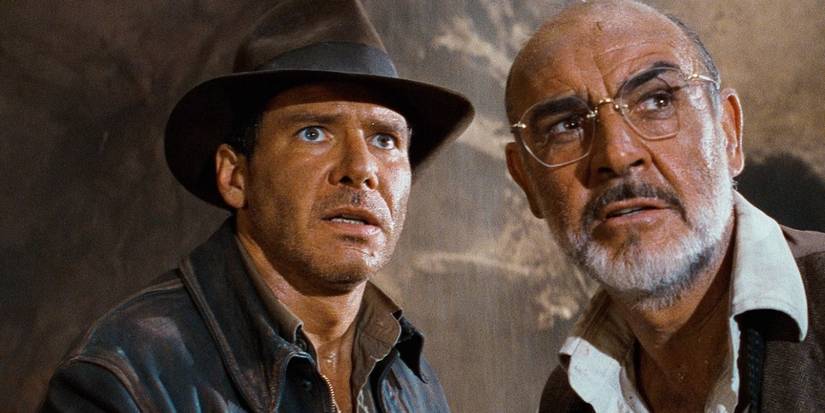 Image via Columbia Pictures
As masterful and absolutely revolutionary as Raiders of the Lost Ark may be, there's another Indiana Jones movie that's even more admirably close to true cinematic perfection: Indiana Jones and the Last Crusade, which seemed like the perfect way to bring the series to a close before Steven Spielberg and his team decided that aliens were too cool to not have them face Indy.
This might just be the single most essential movie of 1989. Lighthearted in tone yet emotionally powerful during its more dramatic moments, the film excels as an action-adventure masterpiece, but is somehow even more effective at being a father-son story anchored by Harrison Ford and Sean Connery at their best. It's expansive, it's technically perfect, and it's an irresistible ton of fun.
6 'Back to the Future' (1985)
 Image via Universal Pictures
Proof that movies don't need to be artsy or even particularly revolutionary in order to be perfect masterpieces, Back to the Future is the time-travel movie par excellence. An airtight script, a taut sense of pacing, the perfect dose of humor, and deeply compelling characters are apparently all you need to make a sci-fi film worthy of being considered perfect.
Back to the Future is flawlessly constructed and delightfully creative from beginning to end. Its recreation of the '50s may not be without fault, but everything surrounding it — the plot, the characters, the score, the timeless effects — is exceptional enough that it's difficult to care. Not only is this one of the most iconic sci-fi flicks ever made, but it's also quintessential '80s cinema at its most entertaining.
5 'Fanny & Alexander' (1982)
.jpg?q=49&fit=crop&w=825&dpr=2) Image via Sandrew Film & Teater
Image via Sandrew Film & TeaterOn the other side of the "popcorn flick" coin, you have arthouse cinema, and rarely has that department ever had an auteur more legendary than the Swedish filmmaker Ingmar Bergman. He made several of the greatest, most magical, and most depressing arthouse movies of all time, and his late-career effort Fanny & Alexander stands out as one of his best.
This fantasy masterpiece is a family epic that captures the essence of childhood innocence better than the vast majority of films.
The film's theatrical release is a little over three hours long, while its television miniseries version is over five hours long. No matter which version one watches, both are some of Bergman's best-ever works. This fantasy masterpiece is a family epic that captures the essence of childhood innocence better than the vast majority of films, and that alone is enough to make it one of the best movies of the '80s.
4 'Amadeus' (1984)
 Image via Orion Pictures
The '80s produced several great biopics, and Amadeus is far and away one of the best. But this epic period piece is far more than just a portrayal of the life and work of Wolfgang Amadeus Mozart — it's also a sweeping tale of rivalry and jealousy bolstered by a pair of flawless performances by Tom Hulce and F. Murray Abraham.
Perfectly written, visually striking, and surprisingly well-paced for a three-hour-long movie, Amadeus is one of the best must-watch biopics ever. The music biopic genre is one that can often feel tired and trite, but Amadeus' artfulness and the way it balances character work with thematic development make it the gold standard for these sorts of films.
3 'Come and See' (1985)
 Image via Sovexportfilm
One of the highest-rated films of all time on Letterboxd, the Soviet anti-war masterpiece Come and See is proof that there was arguably no better year for movies during the '80s than 1985. It's a gut-wrenchingly brutal watch that doesn't pull any punches, so it's definitely not fit for every palate, but those with the stomach for it will be treated to one of the most effective examples of "war is Hell" ever committed to celluloid.
Whether it's Aleksey Kravchenko's chameleonic performance (one of the greatest pieces of child acting in film history), Elem Klimov's gritty and unrelenting direction, or the many sequences so devastating that they'll be ingrained in the viewer's memory for good, there's no shortage of elements that make Come and See one of the most perfect war movies of all time.
2 'Mishima: A Life in Four Chapters' (1985)
 Image via Warner Bros. Pictures
Having written movies like Taxi Driver and Raging Bull, Paul Schrader is perhaps best known as a screenwriter, but he has also spent time behind the camera as a director, and never more effectively than when he made Mishima: A Life in Four Chapters. It's a portrayal of the life and work of Japanese writer, actor, martial artist, and model Yukio Mishima, but it's also far more than just that.
One of the best arthouse biopics of all time, Mishima knows better than to simply go through the motions of moving through the life of its subject chronologically. Instead, it uses elements of surrealism to explore the essence of Mishima's artistic work. By the time the credits roll on this visually gorgeous masterpiece, the audience will feel like they know the writer on a far more intimate level than they would have if they had watched a traditional biopic.
1 'Ran' (1985)
 Image via Toho
By the time he made Ran in 1985, Akira Kurosawa — perhaps the greatest of all Japanese filmmakers — had already been developing ideas for the movie since the mid-'70s, going so far as to hand-paint storyboards. He was also almost completely blind. Even still, he made what might just be the most visually gorgeous movie in live-action history, and one of the most perfectly-calculated cinematic achievements ever.
Part war film, part family drama, part adaptation of Shakespeare's King Lear, Ran is one of the greatest epic masterpieces of the last 100 years. It's an example of flawless direction in full splendor, further supported by some of the most striking cinematography and use of color in movie history, as well as one of the best acting performances in all of cinema in Tatsuya Nakadai's lead turn. '80s cinema never got better than this.

Ran
Release Date December 20, 1985
Runtime 160 Minutes
Director Akira Kurosawa
Writers Akira Kurosawa, Hideo Oguni, Masato Ide
-

Tatsuya Nakadai
Lord Hidetora Ichimonji
-
Akira Terao
Taro Takatora Ichimonji


 English (US) ·