.png)
 Image via Paramount Pictures

Published Jan 24, 2026, 9:15 AM EST
Andrea Ciriaco is a long-time script reader and former entertainment editor who specializes in classic movies and Hollywood history. She was a student film critic at Kent State University for three years and worked at Warner Bros Studio in Burbank and The Safran Company for several years. Based on her vast taste and range of knowledge, many consider Andrea to be a walking IMDb who knows dozens of underrated movies and is a vital assesst to any trivia night. While movies are her expertise, Andrea is also a diehard fan of iconic shows including The Sopranos, Boardwalk Empire, Rod Serling's The Twilight Zone, Will & Grace and South Park. Some of her favorite filmmakers are Walt Disney,John Huston, Fritz Lang, Alfred Hitchcock, John Ford, Mel Brooks, Quentin Tarantino, Martin Scorsese and Howard Hawks.
Sign in to your Collider account
Alfred Hitchcock is cited as one of the greatest and most influential filmmakers of all time, who helped shape the modern thriller with suspenseful classics such as Rear Window, Psycho, and The Birds. Known as the Master of Suspense, Hitchcock's first significant stroke of success came with his 1927 silent film, The Lodger: A Story of the London Fog, but his career took off after the release of The 39 Steps and The Lady Vanishes, both of which are recognized today as some of the best British films ever made. In 1940, Hitchcock made his American feature film debut with the Oscar-winning classic, Rebecca, essentially setting his first major stepping stone towards his legendary film career.
Throughout his sixty-plus-year-long career, Hitchcock directed over fifty feature films, many of which are still watched and studied around the world today, but some of his films, such as Vertigo, Shadow of a Doubt, and Strangers on a Train, are among the director's most intense contributions to classic cinema. Out of all of Hitchcock's movies, including Rope and North by Northwest, these are the ten most suspenseful movies from the Master of Suspense, ranked!
10 'Rope' (1948)
 Image via Warner Brothers
Farley Granger and John Dall star in Hitchcock's limited-setting thriller Ropeas Philip Morgan and Brandon Shaw, who murder one of their former classmates moments before they are about to host a dinner party at their Manhattan apartment. Morgan and Shaw stash the body in a wooden chest and are amused by their guests being unaware that they are in the same room as a dead body, but as the night goes on, one of them begins to feel remorse while the other basks in their twisted sense of achievement.
Rope is one of Hitchcock's most suspenseful films that turns time, space, and the audience's exclusive knowledge into powerful weapons. Hitchcock's decision to film the movie to appear as though it was filmed in a single, uninterrupted shot gives the audience the feeling of being trapped with the characters in real time. Another key contribution to the suspense of Rope is the audience's awareness of the murder and the body hidden in the room. As the guests unknowingly converse around the chest containing the body, the suspense gradually builds through the audience's anticipation of when the heinous secret will be uncovered.
9 'The 39 Steps' (1935)
 Image via Gaumont-British Picture Corporation
Hitchcock's British spy thriller, The 39 Steps, stars Robert Donat as Richard Hannay, a Canadian tourist who, while vacationing in London, accidentally uncovers an underground ring of spies who have been stealing vital British military information. When Hannay is wrongfully suspected of murder, he realizes the only way he can clear his name is by finding the leader of the secret organization and stopping him from carrying out his plan before it's too late.
The 39 Steps marked a monumental milestone in Hitchcock's career as the film's success not only caught the attention of David O. Selznick but also established the formula of the quintessential Hitchcock thriller. Hitchcock achieves unbearable suspense in The 39 Steps by throwing the audience into a never-ending game of cat and mouse that never gives Donat's character or the audience a break from the chaos. Compared to other espionage thrillers, The 39 Steps uses moments of humor not to defuse the intensity but to emotionally disarm audiences, allowing the sudden change of pace to have more of a shock value.
8 'Rebecca' (1940)
 Image via United Artists
Hitchcock made his American directorial debut with the romantic psychological thriller, Rebecca, which stars Joan Fontaine as an unnamed woman who, after a whirlwind courtship, marries a handsome and wealthy widower, Maxim de Winter (Laurence Olivier). When the newlyweds return to de Winter's seaside manor, Manderley, the new Mrs. de Winter tries to find out what happened to Maxim's first wife, and her seemingly harmless curiosity soon turns into an alarming discovery that makes the young bride question everything about her new husband.
The chilling adaptation of Daphne du Maurier's novel, Rebecca, is one of Hitchcock's most atmospheric and psychologically suspenseful films, as well as a testament to the director's ability to create suspense without relying on action or spectacle. Almost every element and character in Rebecca serves as a tool of suspense, specifically the eerie state of Manderley serving as a psychological trap and the immersive viewpoint of Fontaine's character, ultimately ensnaring the audience in a haunted state of mind. Rebecca received twelve Academy Award nominations, including Best Director, Best Actor, and Best Actress, and went on to win for Best Cinematography and Best Picture.
7 'Strangers on a Train' (1951)
Hitchcock's neo-noir thriller Strangers on a Train stars Farley Granger as a professional tennis player, Guy Haines, who, while on board a train home, converses with a sophisticated passenger, Bruno Antony (Robert Walker), who shares his theory of how to commit the perfect murder. While Haines brushes Antony's idea off as nothing but innocent chatter, he soon finds out that Antony is a well-dressed psychopath who decides to set his theory in terrifying motion.
Strangers on a Train is another example of how Hitchcock can take even the simplest of situations and transform them into a terrifying event that is full of relentless psychological pressure and unbearable intensity. Walker delivers a wicked performance as the charming and deranged Antony, who is easily one of Hitchcock's most disturbing villains of all time. Similar to other Hitchcock films, the audience's knowledge of Antony committing the murder and Haines' having no intention of becoming involved in the plot creates constant anxiety, and as Antony forces the pact into reality, his unpredictability becomes the central source of the film's tension.
6 'Shadow of a Doubt' (1943)
 Image via Universal Pictures
Joseph Cotten stars in Hitchcock's 1943 masterpiece, Shadow of a Doubt, as a beloved uncle, Charles Oakley, who makes a last-minute trip to visit his family in Santa Rosa, California. While the whole family is thrilled to see him, his niece and namesake, Charlie (Teresa Wright), is the most excited and hopes that her uncle's arrival will liven up her and her family's usual, boring day-to-day routine. As Charlie spends time with her uncle, she begins to suspect that Oakley is harboring a dark secret and eventually believes that he's a wanted serial killer known as the Merry Widow Killer.
Shadow of a Doubt reigns as one of Hitchcock's most suspenseful films because the thrills don't come from sudden scenes of shock and awe, but instead from the terrifying thought that the most frightening monster isn't a stranger lurking in the shadows, but someone who is much closer to home. Charlie's gradual realization that her uncle might be a killer strikes an emotional cord, and the more she discovers, the more anxious the audience becomes with her. While the truth about Oakley may seem obvious, Hitchcock maintains suspense by delaying the confirmation of his guilt or innocence, making every conversation and interaction with the character feel uneasy.
5 'The Birds' (1963)
 Image via Universal Pictures
Hitchcock flexes all of his best tricks in the 1963 thriller, The Birds, starring Tippi Hedren as a young socialite, Melanie Daniels, who, after meeting a San Francisco lawyer, Mitch Brenner (Rod Taylor), travels to Bodega Bay to deliver a pair of love birds to him to give to his sister as a birthday gift. Shortly after Daniels arrives, the town begins to experience a series of brutal and even deadly bird attacks for unknown reasons, sending everyone into a state of panic and unbearable fear.
The suspense in The Birds reaches a primal level as it turns something ordinary and harmless into an unpredictable threat, ultimately creating a sense of constant unease in the audience. Like many of Hitchcock's films, the director builds an intense atmosphere through the use of silence and unsettling sound effects, which makes every attack or scene of birds surrounding an area feel sudden and shocking. By removing logic, safety, and familiarity, Hitchcock manages to incite fear in its audience not with a gruesome creature but by immersing them into a situation where the world doesn't make sense.
4 'North by Northwest' (1959)
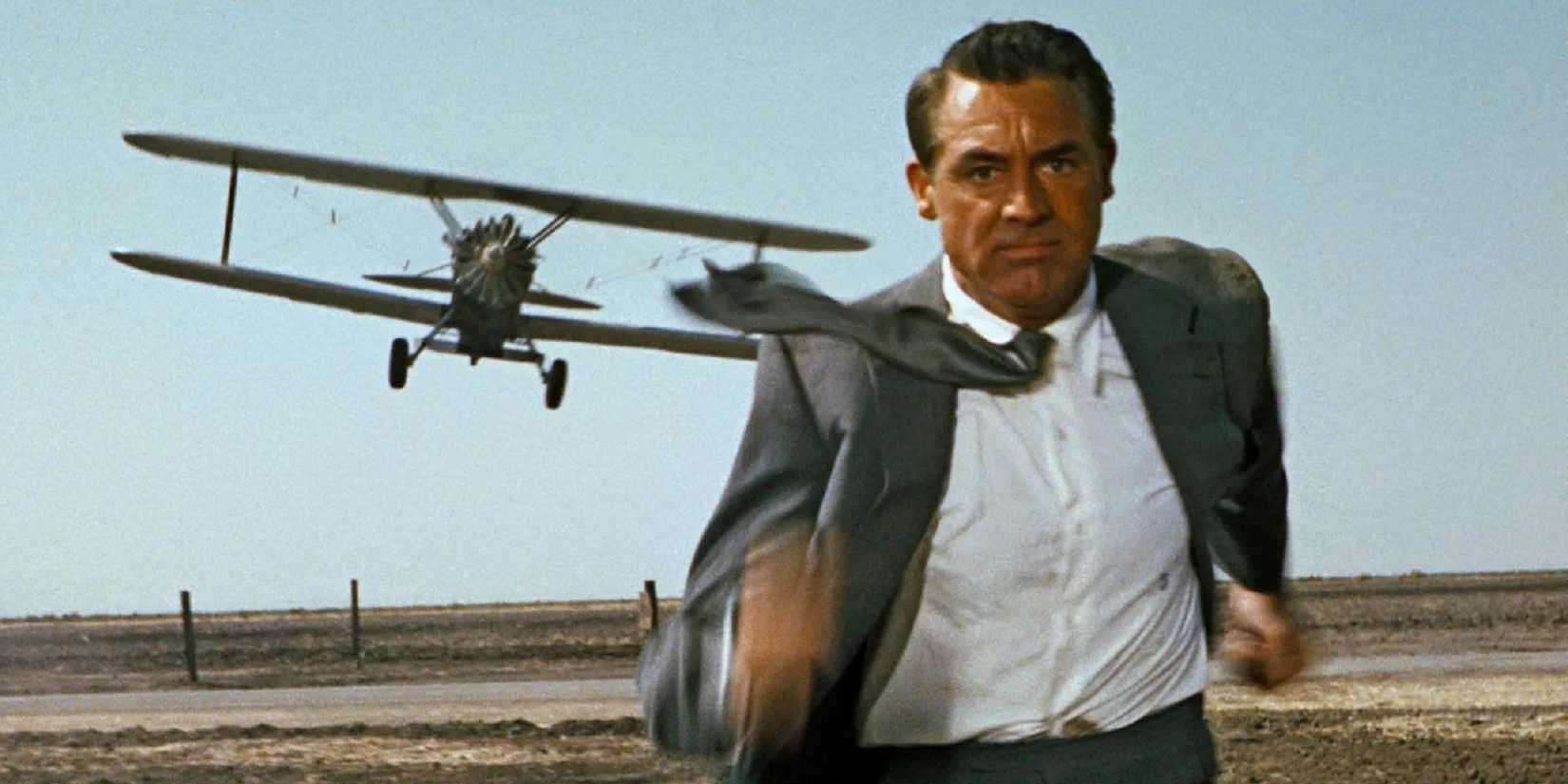 Image via MGM
Cary Grant stars in Hitchcock's iconic spy thriller, North by Northwest, as a New York City advertising executive, Roger O. Thornhill, who becomes a victim of mistaken identity and is chased by a group of men who believe he is an agent for the U.S. government. As Thornhill is sent on an unexpected journey across the country, he is soon joined by a mysterious woman, Eve Kendall (Eva Marie Saint), and eventually discovers that he's become entangled in an international conspiracy.
Hitchcock maintains the tension in North by Northwest through fast pacing, escalating danger, and legendary action sequences, specifically the crop-duster chase and the climactic Mount Rushmore scene, which combine spectacle with vulnerability. As Thornhill is relentlessly pursued, the audience becomes just as confused and cautious as Thornhill, while Grant's natural charm and witty dialogue keep the suspense of the film tight without relief. North by Northwest received three Academy Award nominations, including Best Art Direction and Best Original Screenplay, and today, it is recognized as one of Hitchcock's greatest masterpieces.
3 'Vertigo' (1958)

Image via Paramount Pictures
Vertigo is an essential Hitchcock thriller starring James Stewart as a former San Francisco detective, John "Scottie" Ferguson, who agrees to follow a friend's wife, Madeleine (Kim Novak), whose recently strange behavior has caused her husband to become concerned for her safety. Eventually, Ferguson and Madeline meet, and unexpected sparks begin to fly, but when Madeleine takes her life, Ferguson is plagued with immense guilt and regret. As Ferguson mourns the loss of Madeleine, he meets a woman (Novak) whose similar appearance to Madeleine sends him down a path towards an all-consuming obsession that could cost him his life.
The obsession, fear, and instability of Stewart's character in Vertigo make every second of every minute feel emotionally charged, but while the tension comes from a psychological perspective, the film's visual effects, such as the infamous Dolly zoom, leave the audience trapped inside Ferguson's disturbed state of mind. Initially, critics and audiences were unsure about Stewart playing a character like Ferguson, who is vastly different from the roles audiences were used to seeing Stewart portray, but witnessing a wholesome and reasonable man like Stewart become consumed by his obsession only adds to the film's unconventional premise and overall suspense.
2 'Rear Window' (1954)
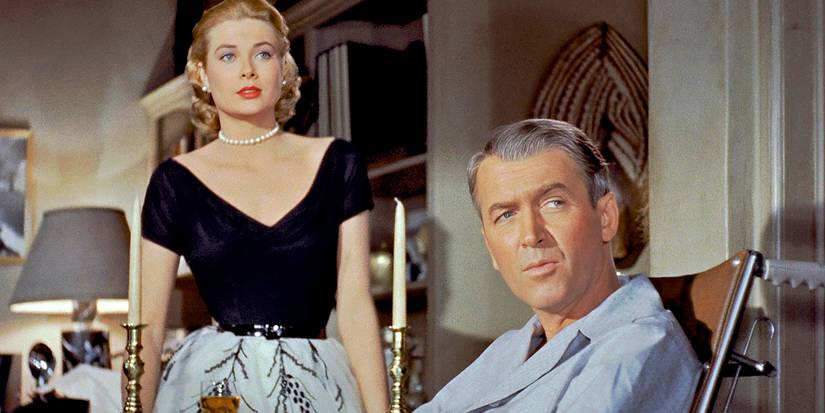 Image via Paramount Pictures
James Stewart stars in Hitchcock's iconic psychological thriller, Rear Window, as a photojournalist, L.B. "Jeff" Jefferies, who, after breaking his leg during an assignment, is confined to a wheelchair as well as his apartment. As Jefferies becomes restless and bored, he begins to observe his neighbors and eventually becomes familiar with their daily routines and lives. One night, Jefferies unintentionally witnesses a heated fight between a husband (Raymond Burr) and wife, and when the wife is nowhere to be seen the next day, Jefferies suspects that her husband is responsible for her sudden disappearance.
Rear Window is a timeless example of Hitchcock's expertise in the art of building suspense and is, without a doubt, one of the director's most intense movies. Hitchcock creates an overwhelming sense of suspense by immersing the audience into Jefferies' perspective and physical surroundings through the use of frequent point-of-view shots. This also leads the audience to somewhat share in Jefferies' physical limitations as they are forced to watch helplessly as the events gradually unfold. Overall, the film's painstakingly slow process of collecting clues, drawn-out stretches of silence, and a rising sense of danger essentially turn the act of observation into vulnerability, proving that watching can be just as frightening as being chased.
1 'Psycho' (1960)
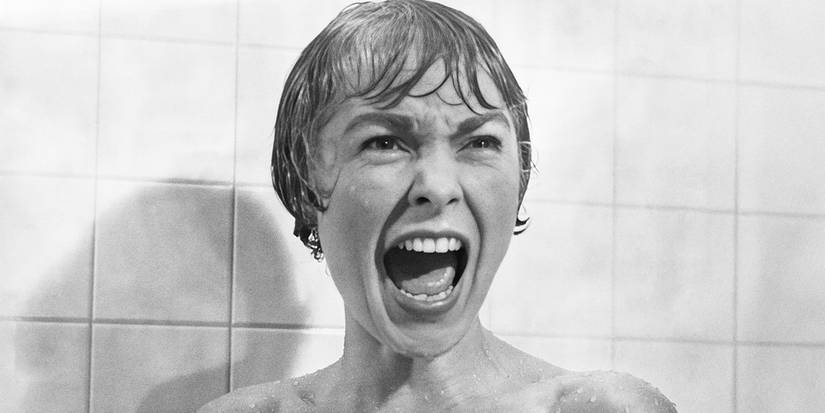 Image via Paramount Pictures
Janet Leigh stars in Psycho as a secretary, Marion Crane, who, after stealing a large sum of money from her employer, quickly skips town and plans to eventually meet up with her boyfriend with the hope of starting a new life together. When a severe storm and exhaustion begin to take a toll on Crane, she pulls over and checks into a roadside motel known as the Bates Motel, where she meets the strange but kind Norman Bates (Anthony Perkins), who runs the motel with his mother. As Crane turns in for the night, she is unaware that there is something far more sinister about Norman that will change the course of her life forever.
There's no denying that Hitchcock's groundbreaking horror thriller, Psycho, is his most suspenseful movie of all time and has since become an iconic staple in classic cinema history. Hitchcock constantly subverts audience expectations and creates fear through uncertainty, especially when he kills off his female protagonist in the first act, which ultimately destroys any hint of a safe and predictable narrative for viewers to cling to. Between blending sudden violence with deep unease and Hitchcock's traditional choice of withholding answers, specifically regarding the mysterious Norman Bates, Psycho keeps audiences in a state of unnerving anxiety and emotionally off-balance throughout the entire film without fail.
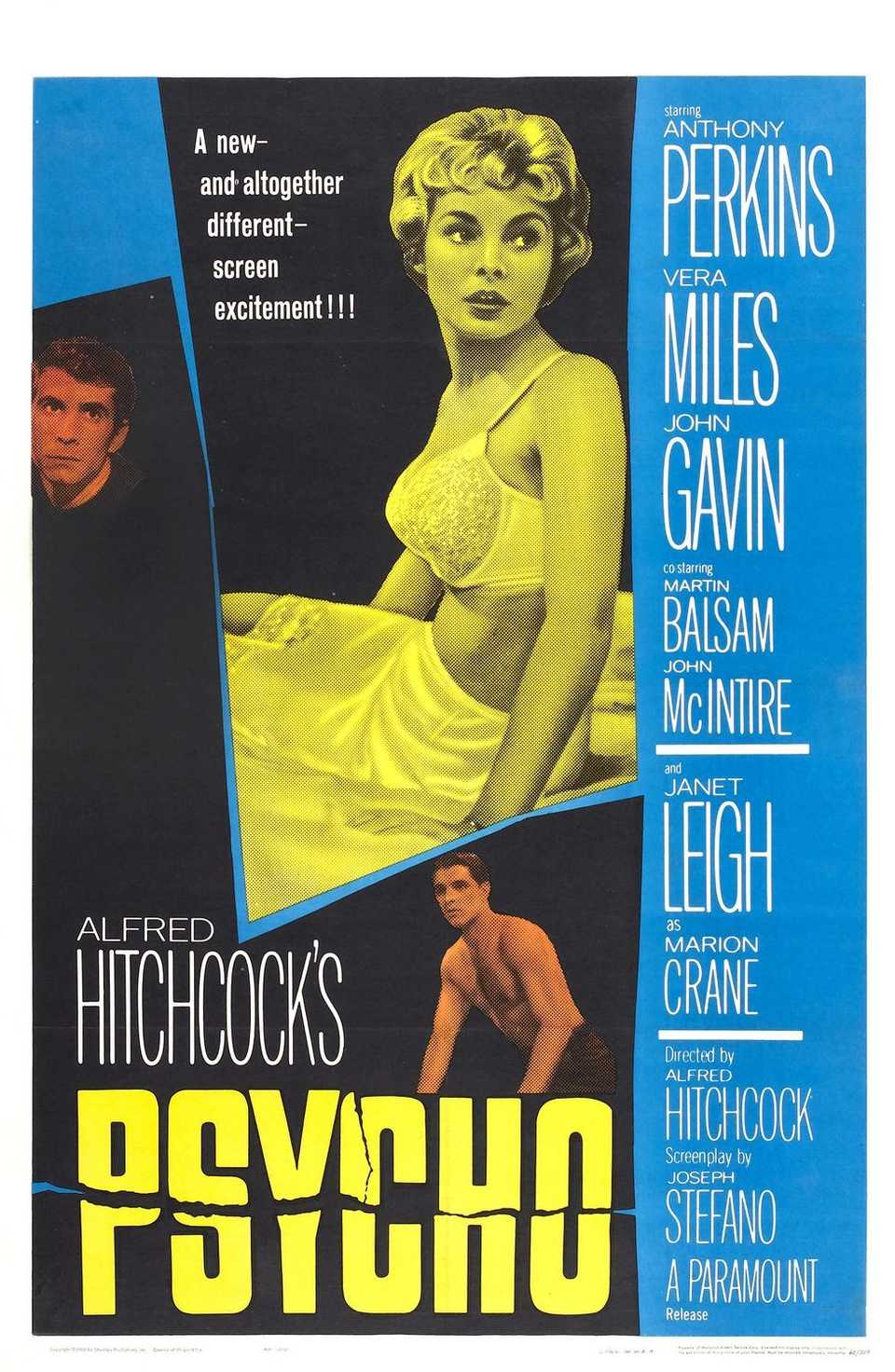
Psycho
Release Date September 8, 1960
Runtime 109 minutes
Writers Joseph Stefano, Robert Bloch



 English (US) ·