.png)
It doesn't matter whether it's an Oscar front-runner, a superhero blockbuster, or an indie classic; a movie that meticulously crafts an unexpected plot twist capable of leaving audiences in a state of shock has a certain ability to linger in the mind. Not only do these movies stun viewers with their surprise endings, but many of them actively foreshadow what is coming, leaving spoilers out in plain sight, which become glaringly apparent when the movie is rewatched.
There are many ways in which movies can spoil their own endings, be it through clever and deliberate exposition, visual cues in the opening credits sequence, or even being clearly stated in dialogue prompts which are easily overlooked as the audience's focus is drawn elsewhere. In a modern world where moviegoers love to be duped, these movies proved to be masterful in exposing their own endings in the sneakiest and most elaborate of fashions.
25 'Star Wars: Episode V – The Empire Strikes Back' (1980)
 Image via Lucasfilm
The twist of Star Wars: Episode V – The Empire Strikes Back is so ingrained in the pop-culture zeitgeist that no one who watches the movie for the first time today could possibly not know that Darth Vader (James Earl Jones) is Luke Skywalker’s (Mark Hamill) father. However, even back in 1980, some quick-thinking viewers may have seen the iconic sci-fi twist coming long before it came, owing to a number of moments of foreshadowing both earlier in the film and in Star Wars: Episode IV – A New Hope.
The revelation is hinted at as early as in the opening of A New Hope, when Uncle Owen (Phil Brown) voices his concerns at Luke having “too much of his father in him,” in Obi-Wan Kenobi’s (Sir Alec Guinness) vague reflection on how Luke’s father supposedly died, and even in the title “Vader” being the Dutch word for “father.” However, the most glaring hint comes in The Empire Strikes Back when Luke envisions himself in Darth Vader’s helmet while training on Dagobah. It isn’t apparent or overbearing, but it is noticeable on rewatch.
24 'Psycho' (1960)
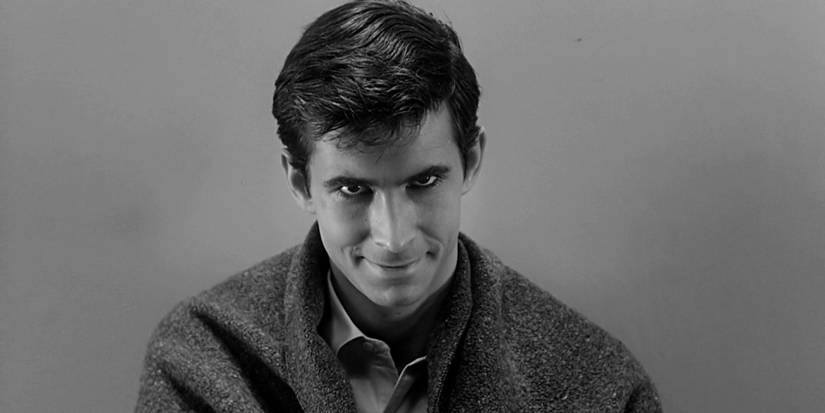 Image via Paramount Pictures
Still standing as one of the greatest psychological horror movies of all time, 66 years after its release, Psycho is a masterpiece of suspenseful and twisty storytelling revolving around the murder of Marion Crane (Janet Leigh) and the nefarious secret of the Bates Motel and its mild-mannered manager, Norman Bates (Anthony Perkins). While Norman’s mother is perceived as being the killer, the twist at the end reveals that she had been dead the whole time and that Norman was the murderer all along, suffering from dissociative identity disorder.
The shocking twist is revealed in a frightfully intense sequence at the end of the film, but some eagle-eyed viewers could spy a clue as to Norman’s mother being deceased much earlier. There is a stunning shot where Norman walks up the stairs to his mother’s room and speaks with her, telling her she has to hide out in the fruit cellar before carrying her out of her room as she protests. As the shot becomes a bird's-eye view of the stairs, viewers see Norman carrying her, but very few would have noticed the motionless and limp state of her body as she argues. It’s an obscure detail, one hiding in plain sight, but it does strongly suggest the truth concerning Norman’s mother.
23 'Inside Man' (2007)
 Image via Universal
An underrated heist thriller from Spike Lee, Inside Man is a winding gem of crime suspense and shock twists imbued with an all-star cast and a grand finale that is both energetic and rewarding. The film opens with Dalton Russell (Clive Owen) speaking directly to the camera in a dimly lit cell, emphasizing that he chooses every word he says carefully before proclaiming he has committed the perfect bank robbery. As the film unfurls, viewers question how his faultless plan winds up with him being in prison as his scheme is displayed along with his communications amid the heist with hostage negotiator Detective Keith Frazier (Denzel Washington).
The ending reveals that Russell—while reflecting on his crime—was never in prison, but was still inside the bank, hiding behind a built-in wall in a storage room and waiting for operations to return to normal before (as he said he would) simply walking out the front door unobstructed. Every hint audiences need to deduce what Russell has done is given in the first act, arguably even in the film’s title, but the ending still presents a surprise twist as he not only gets away unscathed, but cheekily crosses paths with Frazier as he leaves to give him a parting gift.
22 'Atonement' (2007)
 Image via Universal Studios
A devastating war-romance drama, Atonement is a tragedy of falsehoods and forlorn love, a heartbreaking tale of forbidden sweethearts, Cecilia (Keira Knightley) and her family’s housekeeper Robbie (James McAvoy) being parted due to a callous lie that burdens the lives of all involved. It opens with Cecilia’s younger sister, a 13-year-old Briony (Saoirse Ronan), writing a play on her typewriter, introducing her as a spinner of yarns, a creator and controller of tales who only thinks she is mature beyond her years. This, combined with the regret and dread she feels soon after falsely accusing Robbie of being a rapist, indicates the true nature of the fates of Cecilia and Robbie long before the horrible truth is revealed.
While the end of the movie shows the two young lovers happy on a beach, an elderly Briony (Vanessa Redgrave) reveals in an interview that the happy ending was a fable she wrote, an outlet of grief and remorse she concocted for herself, much like the lie she told was an outburst of envy and disgust. The scene where she explains Robbie actually died in the war, and Cecilia was killed in a bombing raid in London, is soul-shattering, a horrific revelation that decimates the film’s fleeting sense of hope. Briony’s nature, however, is revealed far earlier on.
21 'Get Out' (2017)
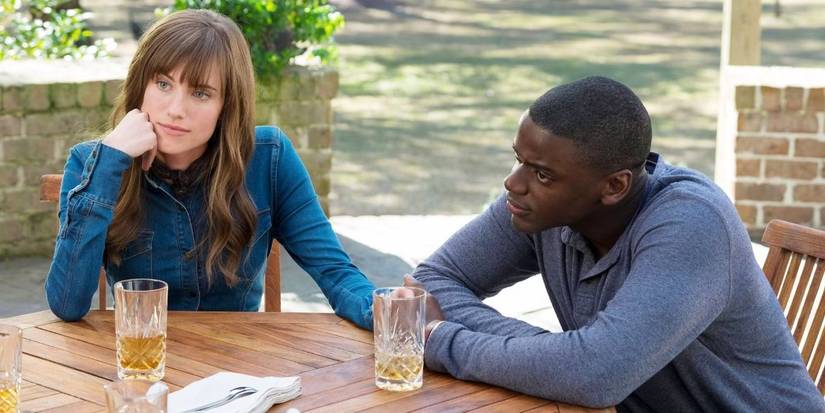 Image via Universal Pictures
An Oscar-winning sensation that became a monumental hit, Get Out delivers one of the most pointed and vivacious stories of recent decades, an original and shocking commentary on racism in modern America presented as a spellbinding marriage of sci-fi, horror, and black comic satire. Its gobsmacking revelation comes when audiences learn that the Armitage family has perfected a process of supplanting the minds of their aging friends and family members in the hypnotized bodies of black people.
The callousness of Rachel Armitage (Allison Williams) and her family is signaled earlier in the film, however, when Chris (Daniel Kaluuya) hits a deer while driving, an accident that leaves him distressed, while Rachel is coldly unbothered. With the deer on the wall being a defining symbol of the film, particularly in the sequences where Chris is dispatched to the “Sunken Place,” the scene becomes a powerful and ominous hint at what is to come. It establishes a thematic connection between Chris and deer—one rich with ideas of oppression, trophy-hunting, and the animalization of African-Americans—and highlights the Armitage family’s underlying evil.
20 'Last Night in Soho' (2021)
 Image via Focus Features
A stylistic blending of horror, mystery, and the engaging aesthetic of the music scene of 1960s Soho, Last Night in Soho is an alluring concoction of genres and pizzazz from director Edgar Wright. It focuses on Eloise (Thomasin McKenzie), an aspiring fashion designer, who unearths a mysterious link with Anya Taylor-Joy's Sandie, a rising singer in Soho’s 60s scene whose life takes a horrible turn when she is forced into prostitution.
As the film unfurls, one of the major focuses becomes Eloise’s growing obsession with solving Sandie’s murder. However, it is later revealed that Sandie was killing her clients, with Eloise’s elderly landlady, Ms. Collins (Diana Rigg), being revealed to be Sandie. This twist was foreshadowed early in the film when Ms. Collins warns Eloise not to bring any boys home, or she will kill them, as well as when she advises Eloise to clog up the sinks to prevent a bad smell from seeping into the room, something alluding to the corpses she has stashed in the building.
19 'Shutter Island' (2010)
 Image via Paramount Pictures
Martin Scorsese’s enigmatic and haunting mystery thriller delivers a twisty, mind-bending deep dive into insanity and mayhem as it follows two US Marshals investigating the disappearance of a patient in a mental asylum on a remote island. Every lead that Teddy Daniels (Leonardo DiCaprio) discovers seems to be accompanied by more questions and oddities, with the story careening towards the shocking revelation that Teddy is actually the patient in question and the whole investigation has been an experimental treatment technique.
While many were left stunned by the drastic twist, the film did plenty to signify what was coming. From cryptic warnings to visual cues, Shutter Island broadcasts its twist so intensely that it can be jarring to rewatch. In fact, the hints start at the very beginning of the film, with Teddy having to have his cigarette lit by Chuck Aule (Mark Ruffalo), subtly hinting that he is a patient, as he isn’t allowed to have matches.
18 'Fight Club' (1999)
 Image via 20th Century Fox
While a great movie from an acclaimed filmmaker in David Fincher that utilizes an exceptional cast and boasts a skewering social commentary, Fight Club is ultimately a modern classic because of its famous twist ending. Given the nature of its surprising final act and the revelations it holds, many viewers immediately rewatch Fight Club to see the moments where the twist was hinted at, and needless to say, there are several indications of Tyler Durden’s (Brad Pitt) true nature.
While the one-frame flashes that pop up sporadically throughout the movie hint at something unusual being at play, the most apparent signal the film gives as to the Narrator’s (Edward Norton) identity crisis comes when he is confronted by his boss at work. Throwing himself around the room to effectively instigate a fight with himself, the Narrator alludes to his split personality in a way that is incredibly easy to overlook. When the twist is finally revealed, a quick shot revisits the Narrator and Durden’s fight in the car park, with the protagonist alone swinging punches at himself.
17 'Arrival' (2016)
 Image via Paramount Pictures
A complex and intricately layered sci-fi masterpiece for genre maestro Denis Villeneuve, Arrival opens on what is easy to understand as being a tragic backstory to the protagonist, but it is actually revealed to be something else entirely. The film follows Louise Banks (Amy Adams), a linguistics expert called in to establish communications with an alien race that has landed on Earth. The crux of the film revolves around the growing bond between the species, the political fallout of the slow and gradual progress of Louise’s assignment, and the enigmatic nature of the aliens’ language.
The opening, which depicts the death of Louise’s daughter from an incurable illness, packs even more of a punch when it is revealed to be a revelation of the future tied to the aliens’ advanced perception of time. The introductory scene is not only an emotionally arresting opening, but it is also the greatest clue as to how the aliens communicate. It is a moment that is incredibly powerful when revisiting the film.
16 'The Shining' (1980)
 Image via Warner Bros.
While plenty of movies have teased their endings earlier in the story, few have done it in a more forward fashion than The Shining. The Stanley Kubrick horror classic follows Jack Torrance (Jack Nicholson) and his family as they agree to occupy the remote Overlook Hotel throughout the winter months, only to find the isolation affecting them as young Danny (Danny Lloyd) experiences haunting visions while Jack gradually loses his grasp on sanity.
During his interview upon arrival at the Overlook, Jack is told directly about a previous winter caretaker who killed his wife and two daughters with an ax. Jack’s indifferent reaction to the story is chilling enough, but Ullman’s (Barry Nelson) tale proves to be almost prophetic as Jack does attack his family with an ax in The Shining’s iconic climax.


 English (US) ·