.png)

Published Jan 27, 2026, 7:11 PM EST
Michael John Petty is a Senior Author for Collider who spends his days writing, in fellowship with his local church, and enjoying each new day with his wife and daughters. At Collider, he writes features and reviews, and has interviewed the cast and crew of Dark Winds. In addition to writing about stories, Michael has told a few of his own. His first work of self-published fiction – The Beast of Bear-tooth Mountain – became a #1 Best Seller in "Religious Fiction Short Stories" on Amazon in 2023. His Western short story, The Devil's Left Hand, received the Spur Award for "Best Western Short Fiction" from the Western Writers of America in 2025. Michael currently resides in North Idaho with his growing family.
While there are plenty of fabulous Westerns out there that have become almost instant classics over the years, some horse operas struggle to move past the weeds. Despite how we may feel about some of these films now, there were many Westerns that, upon their initial release, were quite divisive with audiences, critics, or sometimes both. With that in mind, we put together some of the most divisive of this wild bunch — Westerns that you may want to know something about before checking them out.
Of course, some of these films are better than others, but we've ranked these divisive Westerns based on their cultural significance and how divisive they were at the time. So, if you're just looking for a list of which of these are the best, you may be disappointed, as this list is more about the divisive nature of these pictures — and how that legacy followed them after their theatrical release.
9 'Meek's Cutoff' (2010)
 Image via Oscilloscope Laboratories
If you haven't heard of Meek's Cutoff, that may be partially due to how polarizing this film was upon its initial release. Directed by Kelly Reichardt, the historical Western followed a group on the Oregon Trail in the mid-1840s whose guide, Stephen Meek (Bruce Greenwood), leads them through particularly rough territory. So, what's so divisive about this one? In short, it's painstakingly slow.
Reichardt is known for her more minimalist approach to filmmaking, and that really shows in Meek's Cutoff. The film is somewhat ambiguous in its ending and spends the vast majority of its runtime on the more mundane elements of westward expansion. While not your typical shoot-'em-up fare, critics largely praised the film, even if audiences struggled to climb aboard.
8 'The Hateful Eight' (2015)
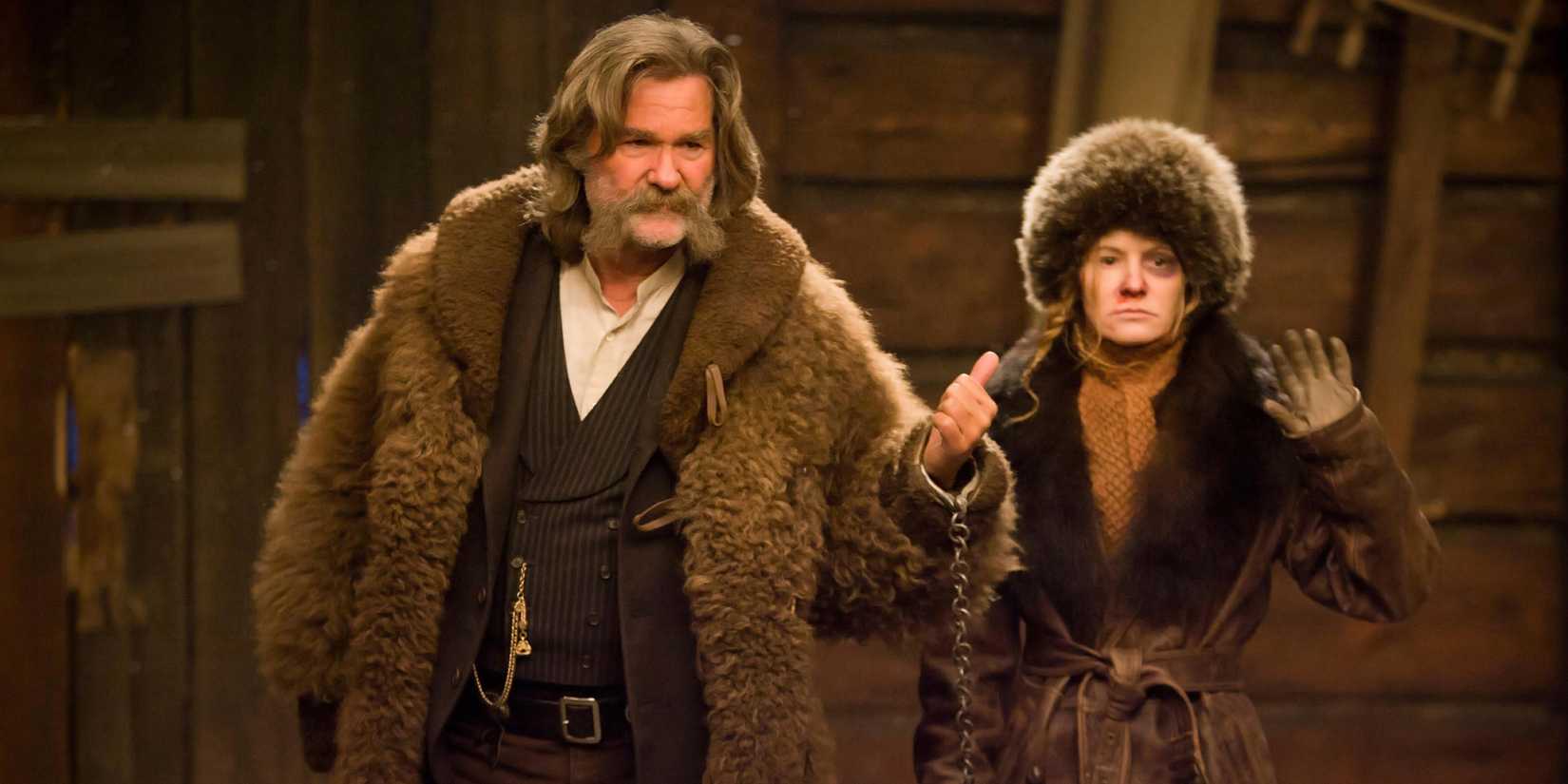 Image via The Weinstein Company
As Quentin Tarantino's second attempt at a Western, The Hateful Eight had a lot to live up to. After a group of eight strangers huddles up in a cabin during a snowstorm, things go haywire when it's revealed that many of them have personal connections to one another. As the night unfolds, violence and revelation ensue, all to the sweet score of Ennio Morricone in his final Western.
The Hateful Eight, like many Tarantino films, was particularly divisive due to its sequences of intense violence, in particular regarding Kurt Russell's character's treatment of Jennifer Jason Leigh's foul-mouthed outlaw. The film's extended runtime — which was even more expansive when Tarantino re-edited the picture to be released as a four-part miniseries — was also a point of contention with some, who believed that the whole thing was quite overblown. And let's not forget about how Russell destroyed that priceless guitar...
7 'The Assassination of Jesse James by the Coward Robert Ford' (2007)
 Image via Warner Bros. Pictures
While The Assassination of Jesse James by the Coward Robert Ford is particularly noteworthy due to its exceptional cinematography, fabulous performances, and meditative take on the genre, not everyone liked that last part. Written and directed by Andrew Dominik, Jesse James is not the type of action-packed Western you turn on for an entertaining evening. By stark contrast, this film has often been criticized for its particularly slow pace and lack of traditional genre aesthetics.
Of course, the real reason that Jesse James (which bombed at the box office) is polarizing to many is that a good number of folks simply find the picture boring. Sure, its breathtaking imagery is impressive, and everyone from Brad Pitt to Casey Affleck to Sam Rockwell is simply fantastic, but it's a long film that is arguably a bit anti-climactic.
6 'Bone Tomahawk' (2015)
 Image via RLJ Entertainment
If you thought that The Hateful Eight was violent, then Bone Tomahawk will hold your beer. A horror-tinged Western by S. Craig Zahler, this thrilling massacre of a film follows a small-town sheriff (Kurt Russell) and his posse as they seek to reclaim their loved ones from the cannibalistic cave-dwellers who stole them. It's brutal in basically every way and pulls no punches when it comes to the gore involved.
Not only was Bone Tomahawk fairly divisive for its harrowing depictions of graphic violence, but some have condemned the picture for making its cannibal troglodyte antagonists Native American. Despite the fact that there are documented accounts of native tribes who engaged in cannibalism, this has been a point of contention for some, who consider Bone Tomahawk to be perpetuating racist stereotypes. Most viewers, however, don't agree.
5 'Django Unchained' (2012)
 Image via Columbia Pictures
Is there any work by Quentin Tarantino that doesn't come with some level of controversy? Django Unchained has been widely praised by both audiences and critics, but that doesn't mean that the film — known for its inflammatory and overly colorful language — was not without its controversies. As Jamie Foxx's Django wanders the Old West to seek revenge on those who enslaved him, some have pointed out that the film downplays the slavery aspect as a whole, namely director Spike Lee (who wasn't a fan).
As is typical of a Tarantino picture, the Western featured excessive displays of violence and language, particularly concerning racial slurs spoken by Leonardo DiCaprio. Nevertheless, the film received several Oscar nominations (including Best Picture) and is highly regarded as one of the best modern takes on the Western, namely the Spaghetti Western subgenre. No matter how you feel about the movie, that killer soundtrack is where it's at.
4 'High Plains Drifter' (1973)
 Image via Universal Pictures
High Plains Drifter may not be the first Western that comes to mind when you think of the word "controversy," but upon closer examination, it sort of makes sense. After finding success as an actor in the genre with The Dollars Trilogy, Clint Eastwood directed his own horse opera in the early '70s, which followed "The Stranger" as he wandered about seeking revenge on those responsible for his death. By today's standards, it's something of a genre classic, but back then, folks like John Wayne couldn't stand it.
To Wayne, High Plains Drifter had torn down the Western themes and traditions that not only established the genre, but also the historical American West. He even wrote a letter to Eastwood to express his disappointment, and he's not the only one. Others have since pointed out that Eastwood's protagonist sexually assaults a woman in the film, leading some to write off the actor-director's anti-hero altogether.
3 'High Noon' (1952)
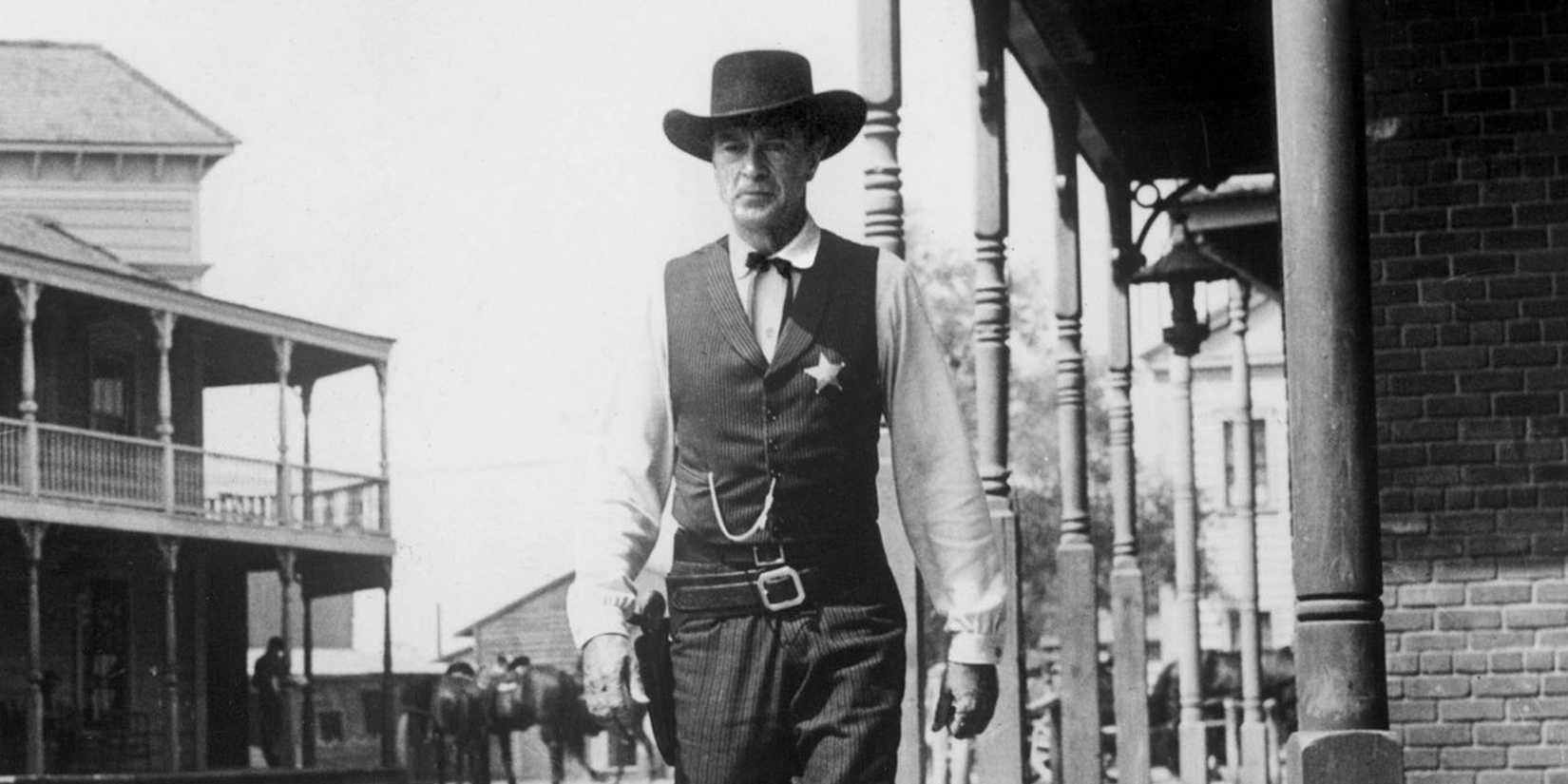 Image via United Artists
Another Western famously hated by John Wayne is High Noon, which would eventually lead him to make Rio Bravo as a rebuttal. However, it wasn't just the Duke who wrestled with Gary Cooper's Marshal Will Kane. Many believed that screenwriter Carl Foreman (a suspected communist) meant the picture to be an allegory for McCarthyism. Whether it was or not, the brand stuck.
Although High Noon has come to be known as one of the greatest Westerns ever made (and for good reason), the picture was highly controversial among some. Wayne called it "un-American" (ironic since it was Ronald Reagan's favorite film) and criticized the weakness in Cooper's protagonist, who had to be saved by his wife (Grace Kelly) at the end. Ironically, the film went on to help spark a political revolution in Poland against the communist party in charge at the time. Talk about divisive.
2 'The Wild Bunch' (1969)
 Image via Warner Bros.
The Wild Bunch is particularly famous for its graphic on-screen violence at a time when blood, guts, and gore were not so common on the big screen. Director Sam Peckinpah wanted to use an aging outlaw gang as the means of exploring the weight of "movie violence" that is often pacified. Some have even suggested that the film is analogous to the Vietnam War. But that aside, the film is still among the most divisive in the genre.
It seems that at the heart of many Western controversies was none other than John Wayne himself, who actively detested The Wild Bunch for its use of on-screen violence. Conversely, Quentin Tarantino considers the film to be nearly perfect, so it's certainly a matter of taste. Nevertheless, The Wild Bunch is still considered to be quite polarizing, even as it's hailed as one of the best in the genre.
1 'Heaven's Gate' (1980)
 Image via United Artists
Arguably the most divisive Western of all is Michael Cimino's Heaven's Gate. The film was notoriously lauded for being one of the worst movies ever made, and Cimino was heavily criticized for the overly bloated attempt at examining the historical Johnson County War. Its massively inflated budget certainly didn't help, nor did the accusations of animal cruelty. But does it really deserve all the hate?
Over the years, Heaven's Gate has been reexamined by critics and audiences alike to receive more favorable reviews. Kris Kristofferson and Christopher Walken have been praised for their particularly notable performances, and Camino's vision for the picture has been better understood with time (and different cuts of the film). While not an epic for the faint of heart, it's a Western that certainly deserves to be revisited after years of divisive criticism.

 English (US) ·