.png)

PA Images/INSTARimages/Cover Images

Published Jan 28, 2026, 6:48 PM EST
Back in 2021, Hannah’s love of all things nerdy collided with her passion for writing — and she hasn’t stopped since. She covers pop culture news, writes reviews, and conducts interviews on just about every kind of media imaginable. If she’s not talking about something spooky, she’s talking about gaming, and her favorite moments in anything she’s read, watched, or played are always the scariest ones. For Hannah, nothing beats the thrill of discovering what’s lurking in the shadows or waiting around the corner for its chance to go bump in the night. Once described as “strictly for the sickos,” she considers it the highest of compliments.
Anya Taylor-Joy doesn’t show up in Dune: Part Two so much as she passes through it. Appearing briefly as Alia Atreides, her presence lasts barely long enough to register before the film moves on, leaving one of Frank Herbert’s most unsettling characters reduced to a suggestion rather than a person. That would be fine if Dune were interested in coy teases or post-credits-style table setting, but it isn’t. Denis Villeneuve’s adaptation has been meticulous about treating destiny as something corrosive rather than romantic, insisting that visions of the future only matter if the people trapped inside them do. Which makes Alia’s introduction feel oddly unfinished, not mysterious. The issue isn’t screen time: it’s commitment. Casting Taylor-Joy as Alia carries an expectation of narrative intent, and Dune: Part Two stops just short of providing it. Her role functions as a placeholder in a franchise that otherwise prides itself on follow-through. That deferral only works if the payoff comes later. And now, with Dune: Part Three positioned as a reckoning rather than a rise, the franchise has a rare chance to turn what felt like a miscalculation into something deliberate.
‘Dune: Part Two’ Introduced Alia Atreides Too Late to Matter
 Image via Warner Bros.
To be clear, Dune: Part Two is an extraordinary achievement. Villeneuve’s sequel is confident, visually overwhelming, and emotionally ruthless in ways blockbuster sci-fi rarely attempts. Its restraint is part of its power. But restraint becomes a liability when it undercuts character investment, and Alia Atreides is where that line is most visible. Her appearance arrives late in the film and leaves almost as quickly. There is no sustained interaction, no emotional tether, and no grounding beyond implication. The moment is meant to resonate symbolically, gesturing toward destiny, lineage, and inevitability — ideas that matter enormously for Alia, but only if she’s allowed to exist as more than a vision. Conceptually, the choice tracks. Dramatically, it doesn’t have enough weight to stand on its own.
The problem isn’t that Alia doesn’t get enough screen time. It’s that Dune: Part Two asks the audience to emotionally register a character it hasn’t actually introduced. Taylor-Joy’s casting signals importance, but the film withholds the tools viewers need to understand why Alia matters beyond abstraction. In a franchise that has otherwise been meticulous about laying narrative groundwork, this omission stands out. Alia’s cameo feels less like an organic introduction and more like a bookmark left in the story for later use. That might have worked if Dune were content to live purely in prophecy and symbolism. But Villeneuve’s films have consistently argued that foresight is a curse precisely because of its human cost. Characters suffer not because they see the future, but because they are forced to live inside it. Reducing Alia to a vision risks flattening that idea rather than deepening it.

Related
Why Alia Atreides Is Perfect for ‘Dune’s Most Dangerous Phase
What makes Alia’s underutilization frustrating is not just what Dune: Part Two failed to do, but how perfectly suited the character and Taylor-Joy are to where the story is going. Taylor-Joy excels at characters who exist slightly out of sync with the world around them. Her performances often hinge on restraint rather than expression, allowing tension to build in the space between words. That quality is tailor-made for Dune’s post-Messiah era, where certainty curdles into fanaticism and power becomes isolating rather than empowering. As Dune moves beyond revolution and into consequence, the franchise’s focus shifts inward. The spectacle recedes. What remains is psychological erosion — the slow realization that destiny, once fulfilled, offers no escape. This is the phase where Alia matters most. She is not a hero, a symbol, or a rallying figure. She is a living consequence of foresight taken too far.
Alia understands the machinery of fate from the inside. She isn’t merely subject to prophecy; she is shaped by it before she has any say in who she becomes. That awareness makes her dangerous in ways brute force never is, and it places her squarely within Villeneuve’s thematic wheelhouse. His Dune films are at their most compelling when they interrogate the emotional cost of inevitability, not when they celebrate it. By keeping Alia at arm’s length in Part Two, the film inadvertently sharpened audience expectations. Her absence created negative space — a sense that something essential was being withheld. If Part Three fills that space with intention, the earlier restraint becomes purpose rather than omission.
‘Dune: Part Three’ Can Turn a Cameo Into a Reckoning
Where Part Two was about conquest and inevitability, the next chapter is about aftermath — about what happens when belief systems calcify and revolutions refuse to end. That thematic pivot makes Alia Atreides impossible to ignore. A character introduced as a vision must now become a presence. A symbol must become a complication. Otherwise, the franchise risks undermining its own argument about the cost of foresight by keeping one of its most potent embodiments of that idea safely abstract. Re-centering Alia isn’t fan service. It’s narrative housekeeping. Dune has always warned against mythmaking and the danger of elevating individuals into symbols at the expense of their humanity. Allowing Alia to remain undefined would contradict that warning rather than reinforce it.
Villeneuve has built his Dune adaptation on patience and trust — trust that audiences will follow him into darker, quieter, more uncomfortable territory. Giving Taylor-Joy real narrative agency in Part Three would honor that trust. It would also transform her Part Two appearance from a tease into a deliberate act of foreshadowing. The franchise doesn’t need to apologize for holding Alia back, but it does need to commit now. If Dune truly wants to confront the consequences of absolute foresight, sidelining one of its most symbolically loaded characters any longer would be its most avoidable mistake, and its easiest to correct.
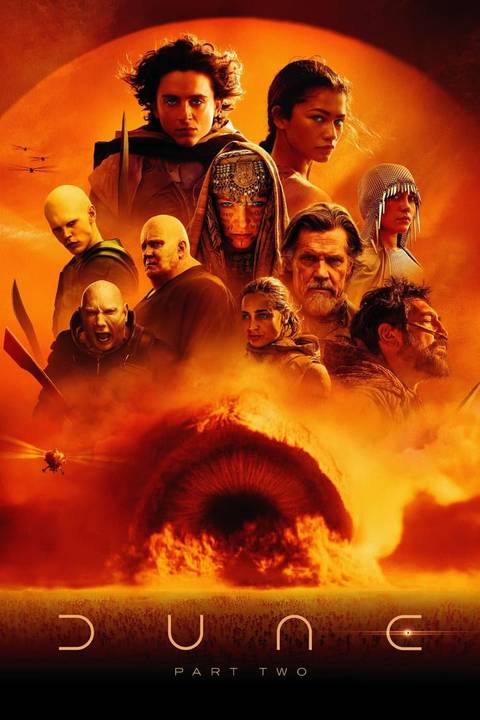
Release Date February 27, 2024
Runtime 167 minutes
Director Denis Villeneuve
Writers Denis Villeneuve, Jon Spaihts, Frank Herbert
Producers Herb Gains, John Harrison, Mary Parent, Patrick McCormick, Richard P. Rubinstein, Cale Boyter, Thomas Tull, Brian Herbert, Byron Merritt, Kim Herbert, Joshua Grode, Tanya Lapointe

 English (US) ·