.png)
Sci-fi works best for me when the central idea actively shapes every part of the movie. I want the world and its rules laid out clearly, then put under pressure as the story moves forward. The plot should keep forcing characters to make decisions that test those rules, and the film shouldn’t drift away from that focus just to chase spectacle. Consistent momentum matters, and so does staying disciplined about what the movie is actually about.
These ten films are the ones I return to when I want that experience done right. Each one maintains tension through structure and consequence, builds emotion through character action, and keeps its concept front and center from beginning to end. The story never loses direction, and by the final scene, the idea that started the movie still feels fully engaged rather than exhausted.
10 'Ex Machina' (2014)
 Image via A24
The first time I watched Ex Machina, it felt like Caleb Smith (Domhnall Gleeson) was stepping into a controlled experiment and realizing too late that he was also part of the sample. Caleb arrives expecting a weird tech flex, then meets Ava (Alicia Vikander) and starts confusing curiosity with trust.
What makes Ex Machina stick is how cleanly the power shifts. Nathan Bateman (Oscar Isaac) can be funny, then casually cruel, and you realize the real brilliance test isn’t about the entrepreneur or the intern’s knowledge about tech. The real test is about who can read people faster. The ending is not really satisfying, but the movie is still a great watch for some reason.
9 'Minority Report' (2002)
 Image via 20th Century Studios
Minority Report is different. It is about a future where crime is eliminated by arresting people before they act, and it commits to exploring what that system actually requires to function. PreCrime depends on prediction being treated as certainty, and the story immediately tests that assumption by putting John Anderton (Tom Cruise) inside the system as both its enforcer and its target. Once Anderton is named as a future murderer, the film follows the logical consequences of that accusation rather than sidestepping it. Every pursuit, escape, and decision comes from the same rule: the system cannot allow uncertainty.
Agatha (Samantha Morton) represents the flaw the system is built to ignore. Her existence forces the story to confront whether a predicted act carries the same moral weight as a committed one. The future technology, public approval, and procedural efficiency all serve that core question. It touches themes of censorship in a very smart way and anything that does that is a masterpiece because it helps you understand how the real world works.
8 'Gattaca' (1997)
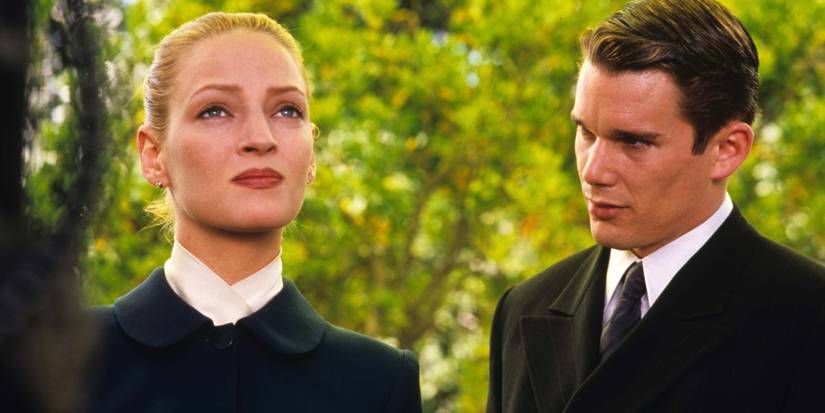 Image via Columbia Pictures
Gattaca is about a society that treats genetic potential as destiny and builds every institution around that belief. Vincent Freeman (Ethan Hawke) is locked out of opportunity from birth, because his DNA labels him as expendable. The film follows the practical reality of surviving inside that system: daily cleaning rituals, constant testing, stolen identities, and the pressure of knowing that one mistake ends everything. Every routine matters because the rules are absolute.
The movie stays powerful because it never ignores the cost of succeeding under those rules and beautifully touches on themes of what if the society is exactly that? There’s also Jerome Morrow (Jude Law), who represents the damage caused by a system that only values perfection, while Irene Cassini (Uma Thurman) shows how difficult honesty becomes when identity itself is regulated. The final act works because the film has already shown the discipline, sacrifice, and risk required for Vincent to get there.
7 'Children of Men' (2006)
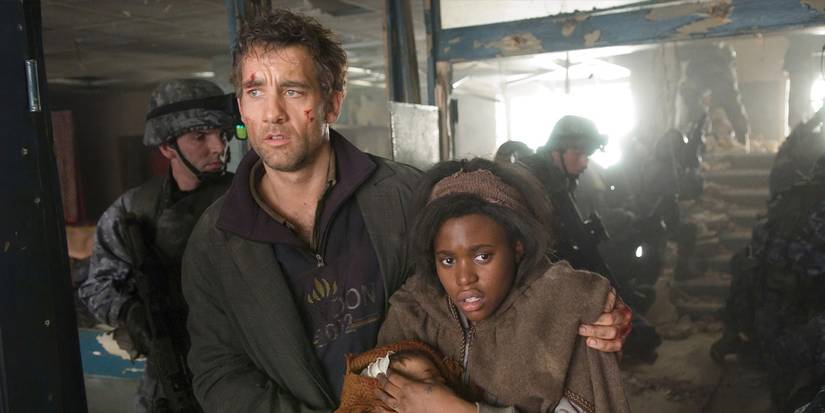 Image via Universal Pictures
Children of Men is built around a single premise: humanity has stopped reproducing, and society has learned to live with that fact instead of fighting it. The film drops you into this reality already in motion — authoritarian governments, closed borders, refugee camps, and routine violence are treated as normal background conditions. Theo Faron (Clive Owen) is introduced as a functionary going through the motions, which makes his perspective believable in a world where hope has become impractical.
What makes the film exceptional is how consistently it follows the logic that everything has consequences. Every group Theo encounters has a clear motivation, and none of them exists to offer safety or relief. The political factions, the military, and the civilians all behave in ways that track with the world the film has established. The film never breaks its own rules, never reaches for comfort, and never lets urgency fade. That discipline is why it holds together and why it still feels definitive.
6 'Dune: Part Two' (2024)
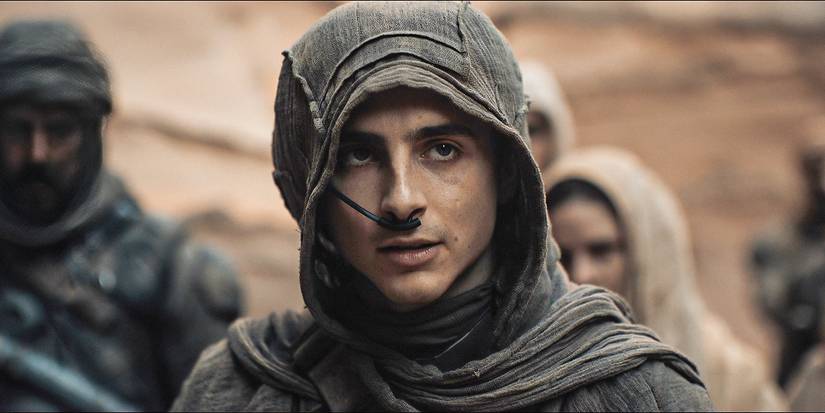 Image via Warner Bros.
I decided to rewatch Dune: Part Two recently because it is one of the few modern epics that keeps its politics readable while still feeling huge. I thought it’d matter. And it did. Paul Atreides (Timothée Chalamet) returns to the desert and you can feel him learning how power sells itself as destiny. Chani (Zendaya) is the emotional truth meter, because she sees what the crowd is cheering for and what it will cost.
What makes the film addictive and okay to sit through initially is how it turns momentum into dread. Then the victories begin feeling real, and then you notice how quickly belief becomes a weapon. Feyd‑Rautha (Austin Butler) is terrifying because he is calm about brutality, and the arena sequence is the kind of set piece you remember in pieces. Dune: Part Two ends with you excited and unsettled at the same time, which is exactly why I keep going back.
5 'Interstellar' (2014)
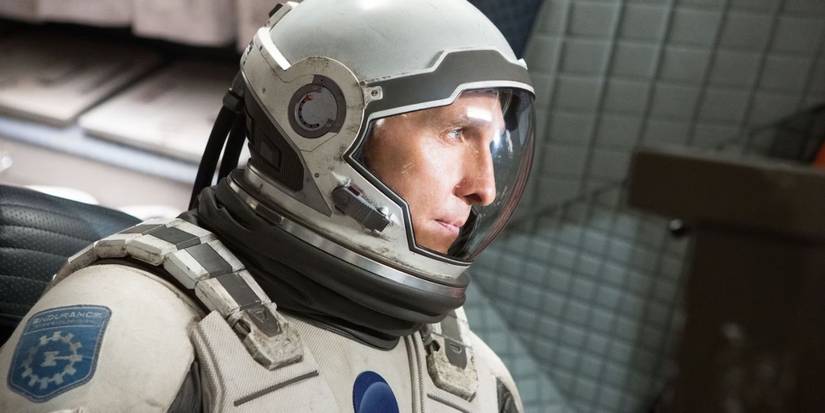 Image via Paramount Pictures
I don’t start Interstellar thinking about space. I start thinking about leaving home and realizing time will punish you for it. That’s what Interstellar is about and that’s where its masterpiece metric comes from. The character of Cooper (Matthew McConaughey) walking away from Murph (Mackenzie Foy) is one of those scenes you feel in your chest every single time because it is a promise he cannot control. From there, the movie keeps finding ways to make the mission personal.
Each set piece changes the stakes, then circles back to consequences. Brand (Anne Hathaway) adds warmth when the film could have gone cold, and the later revelations work because they connect to the family thread you never forget. It earns its big swings. Everybody loves it. It wouldn’t be wrong to list this at the top.
4 'Alien' (1979)
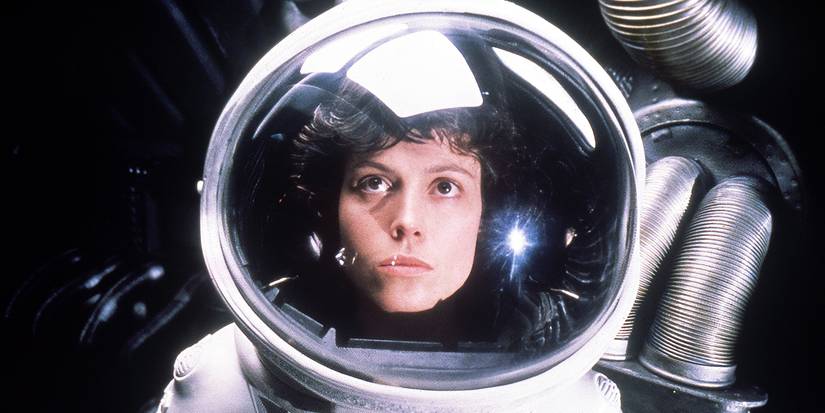 Image via 20th Century Studios
Alien begins with routine. But it is still a masterpiece because it locks onto one problem and never lets go of it: how a group of people survives when the environment, the mission, and the rules they’re following all work against them. The movie establishes the situation quickly: an isolated ship, a distress call, a biological threat, and then refuses to complicate it with side stories or explanations. Once the creature is loose, every scene exists to reduce the crew’s options. Spaces close off, plans fail, and each attempt to regain control makes the situation worse.
What keeps it relevant decades later is discipline. The film never relies on surprise editing, excessive exposition, or spectacle to create tension. The creature is effective because it’s used sparingly, and the danger escalates through consequence rather than shock. The film stars Sigourney Weaver, Tom Skerritt, Veronica Cartwright, Harry Dean Stanton, John Hurt, Ian Holm, and Yaphet Kotto, whose grounded performances keep the story anchored even as the situation spirals.
3 'Blade Runner 2049' (2017)
 Image via Warner Bros.
Blade Runner 2049 is a long, patient movie, and that patience is central to how it works. K (Ryan Gosling) moves through the world as someone built to function, no questions asked, and the story gradually allows him to imagine something beyond that role. Joi (Ana de Armas) adds a fragile, unsettling layer by keeping the question of what “real” connection means in constant play. The mood stays focused and deliberate throughout.
The rewatch value comes from how the mystery collapses inward. Each answer narrows K’s sense of self instead of expanding it, pushing the film toward identity, limits, and acceptance. Deckard (Harrison Ford) enters as a figure tied to the past, but the story keeps its attention on what remains unresolved rather than what’s remembered. Blade Runner 2049 ends quietly and decisively, and that control is why it lingers long after it’s over.
2 'The Matrix' (1999)
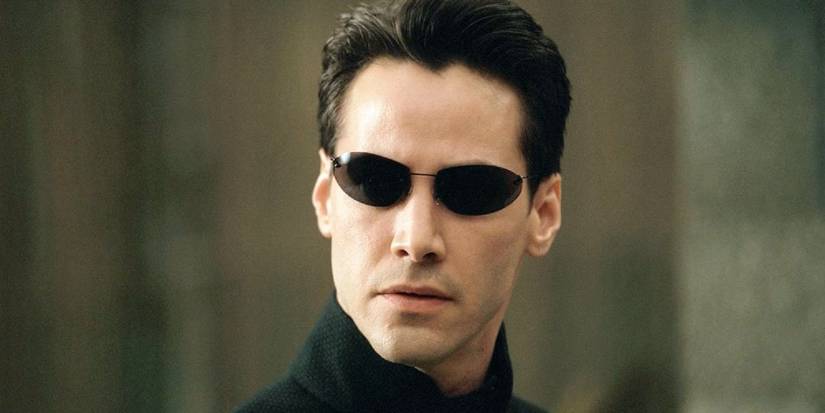 Image via Warner Bros.
The Matrix is a masterpiece, still works, and will likely continue to, because it assumes the world you’re living in is already structured by systems you didn’t choose. The film follows Neo (Keanu Reeves), who feels trapped long before he has language for it, and the movie lets that discomfort lead instead of explanation. By the time Morpheus (Laurence Fishburne) offers the choice, the idea of opting out already feels necessary. Once the rules are clear, every scene is about recognizing control and testing how far it reaches.
What keeps The Matrix relevant decades later is that the idea never stopped being true. Work, media, surveillance, algorithms, and incentives shape behavior in ways that feel natural until you step back and look at them. The fights and chases matter because they visualize resistance inside a system designed to absorb it. The movie isn’t predicting the future or some non-existent world — theme-wise, we’re living in it. And that’s why The Matrix is not just a masterpiece. It’s evergreen.
1 '2001: A Space Odyssey' (1968)
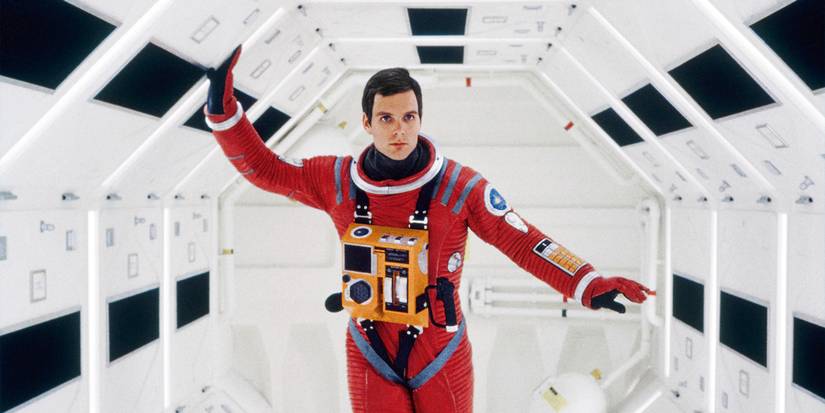 Image via MGM
2001: A Space Odyssey still works because it refuses to rush you and never apologizes for it. The movie starts with humanity learning how to use tools, then jumps to a future where space travel has become corporate, bureaucratic, and emotionally distant. Dr. Dave Bowman (Keir Dullea) moves through the mission like someone trained to stay calm no matter what, which makes the situation more unsettling once HAL 9000 (Douglas Rain) starts behaving off-script. The other astronauts treat HAL like part of the workflow, not a threat, and that blind trust is what makes everything spiral.
What makes the movie a masterpiece is how far it pushes its idea without breaking it. It moves from survival, to systems, to intelligence, to something much bigger without ever explaining itself down to the last detail. HAL isn’t just a malfunctioning computer; he’s the result of humans building systems they don’t fully understand and then handing over control. It hits harder now that AI is part of everyday life, because the themes no longer feel abstract. However, watching 2001: A Space Odyssey today also brings a quiet hope that humans understand where AI is headed, paired with the fear that maybe they don’t.
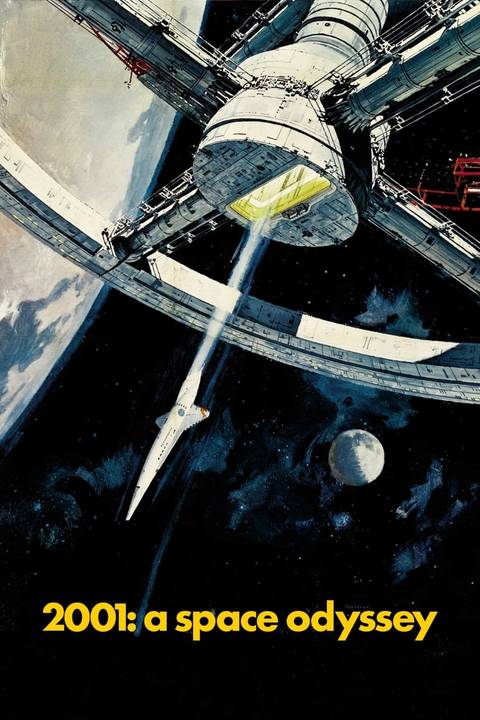
2001: A Space Odyssey
Release Date April 10, 1968
Runtime 149 minutes
Director Stanley Kubrick
Writers Stanley Kubrick, Arthur C. Clarke
-

Keir Dullea
Dr. David Bowman
-
Gary Lockwood
Dr. Frank Poole



 English (US) ·