.png)
 Image via Prime Video

Published Jan 31, 2026, 3:13 PM EST
Back in 2021, Hannah’s love of all things nerdy collided with her passion for writing — and she hasn’t stopped since. She covers pop culture news, writes reviews, and conducts interviews on just about every kind of media imaginable. If she’s not talking about something spooky, she’s talking about gaming, and her favorite moments in anything she’s read, watched, or played are always the scariest ones. For Hannah, nothing beats the thrill of discovering what’s lurking in the shadows or waiting around the corner for its chance to go bump in the night. Once described as “strictly for the sickos,” she considers it the highest of compliments.
One of Fallout’s most unsettling tricks has always been how rarely it treats horror as an accident. The franchise isn’t interested in random mutations or monsters that exist purely to be fought. Its most disturbing creations are deliberate — the result of experimentation, policy, and systems that continued operating long after morality stopped being a consideration. Season 2 of Fallout appears to be steering directly back toward that idea, and all signs suggest Thaddeus (Johnny Pemberton) is being pulled into its gravity. Across the season, Thaddeus’ arc has shifted from comic relief to something markedly more uncomfortable. His physical deterioration, diminishing agency, and proximity to experimentation no longer read as incidental details. They feel intentional — like a trajectory being laid out in plain sight. If the show moves toward a Centaur-style transformation, even a reinterpreted one, it would mark the bleakest escalation Fallout has attempted on television so far.
Centaurs Represent ‘Fallout’ at Its Most Honest
 Image via Bethesda
In the Fallout games, Centaurs are disturbing not because they’re powerful, but because they’re purposeful. They aren’t predators shaped by the Wasteland. They’re the result of experimentation — bodies altered, merged, or repurposed because someone had the authority to do so. A Centaur is less a monster than a record: proof that a system decided human limits were optional. That distinction matters for the series. Fallout has consistently framed horror as a byproduct of organization rather than chaos. Vault-Tec didn’t collapse; it succeeded. The Brotherhood of Steel didn’t fail; it endured. The terror comes from systems that still function exactly as designed. A Centaur fits squarely into that worldview. It isn’t a mutation that “just happened.” It’s a consequence.

Related
The Question Isn’t Accuracy — It’s Intent
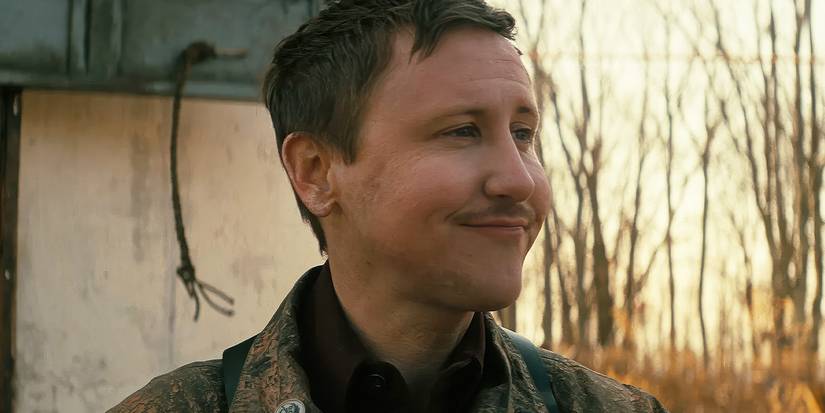 Image via Prime Video
Longtime fans often associate Centaurs with multiple humans fused together through experimentation, which naturally raises questions about how such a transformation would work for a single character. To be clear, Fallout has not explicitly confirmed that Thaddeus was exposed to Forced Evolutionary Virus thanks to the Snake Oil Salesman (Jon Daly) at all. Whatever is happening to him could stem from a different strain of experimentation entirely. Still, the franchise has never treated FEV as a rigid formula. Across the games, FEV behaves inconsistently, producing radically different outcomes depending on exposure, conditions, and intent. That ambiguity is the point. FEV doesn’t follow rules so much as it exposes priorities. From a storytelling perspective, that gives the series room not just to reinterpret a Centaur, but to create something new altogether — potentially something even worse.
Focusing too closely on mechanics risks missing the larger implication. Whether Thaddeus becomes a “classic” Centaur, a distorted variation shaped by individual exposure, or an entirely new kind of experiment doesn’t change the thematic outcome. In every version, the transformation signals the same thing: his body was altered by a choice made in desperation, sold as relief and delivered as a consequence — and that sometimes, the worst experiments in Fallout don’t happen in a lab.
‘Fallout’ Season 2’s Shift From Survival Horror to Ethical Horror
Season 2 has been steadily moving Fallout away from survival horror and toward something colder. Its most unsettling moments don’t involve shootouts or creatures in the Wasteland. They involve calm environments, polite conversations, and procedures carried out without hesitation. The horror comes from how smoothly everything works. A Thaddeus transformation would align perfectly with that shift. It wouldn’t exist for shock value. It would function as a demonstration — visual confirmation of what happens when progress is allowed to continue uninterrupted. This is where Fallout distinguishes itself from other video game adaptations. Rather than softening its most disturbing ideas for accessibility, the series appears willing to follow its logic to uncomfortable conclusions. It isn’t asking whether something should be done: it’s showing what happens when no one stops it.
If Season 2 commits to this path, it would mark a turning point for the series. It would confirm that Fallout isn’t just adapting the franchise’s aesthetics or surface-level lore, but engaging directly with its core argument: that the end of the world wasn’t caused by destruction, but by systems that refused to question themselves. Centaurs aren’t terrifying because they exist. They’re terrifying because someone decided they were acceptable. Turning Thaddeus into one — or into something even worse — wouldn’t just raise the stakes. It would clarify what kind of story Fallout is telling on television: one where survival is secondary to control, and where the most dangerous thing in the Wasteland isn’t mutation, but infrastructure. If that’s where the future of the series is headed, it wouldn’t be Fallout getting darker for shock value: it would be Fallout being honest.
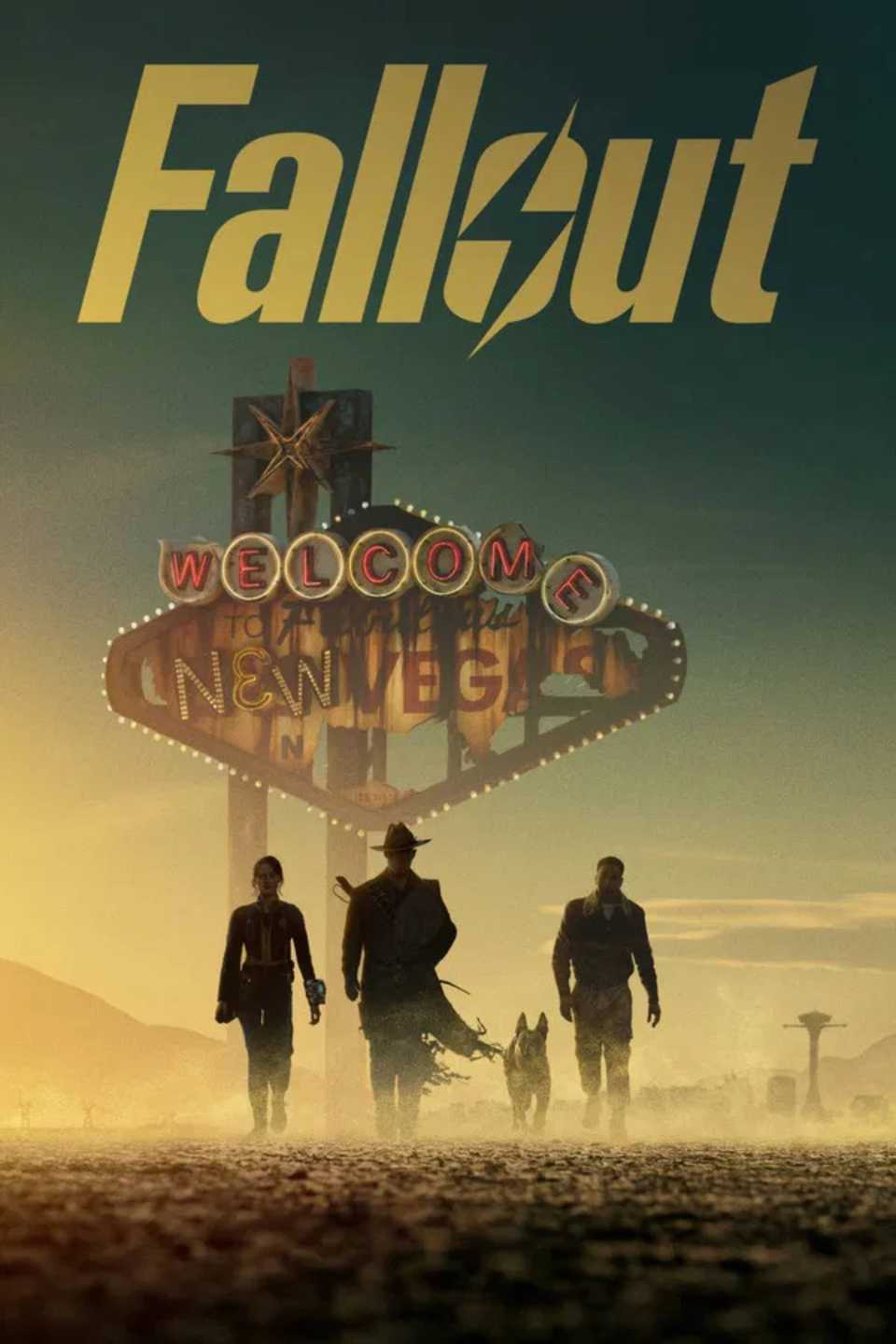
Release Date April 10, 2024
Network Amazon Prime Video
Showrunner Lisa Joy, Jonathan Nolan
Directors Frederick E. O. Toye, Wayne Che Yip, Stephen Williams, Liz Friedlander, Jonathan Nolan, Daniel Gray Longino, Clare Kilner
Writers Lisa Joy, Jonathan Nolan




 English (US) ·