.png)
 Image via NBC

Published Jan 28, 2026, 6:30 PM EST
Michael Block is a 14 time GLAM Award nominated writer, producer, and host of the podcast Block Talk. Throughout his time in the entertainment industry, he has worked on and off Broadway as a stage manager, written several produced plays, critiqued hundreds of theatrical performances, drag and cabaret shows, and has produced events randing from drag competitoons to variety concerts!
On Block Talk, he interviews nightlife personalities, covers the wide world of entertainment through features, ranking episodes, and recaps ALL of Drag Race, as well as Dragula and Survivor. He has interviewed hundreds of RuGirls that span the globe at DragCon NYC, DragCon LA, and DragCon UK.
In his free time, he makes one-of-a-kind jewelry and gift baskets with his mom. He is a proud member of the LGBTQ+ community.
Sign in to your Collider account
There may not be an official golden age of sitcoms, but some of the greatest and most beloved titles came out of the 1980s. From family-focused comedies to delightfully cheery companion shows, the '80s were filled with programs that influenced generations, both those who watched them in real time and those introduced to them through syndication.
When it comes to timeless titles, the ten sitcoms seem to have stood the test of time. Perhaps they're like The Golden Girls, where fans of all ages continue to reference the series, picking the character they identify with most. Or maybe they're like The Wonder Years or Night Court and find themselves reborn through a reboot. These shows keep a special place in our hearts, influencing television for years to come.
1 'The Golden Girls' (1985–1992)
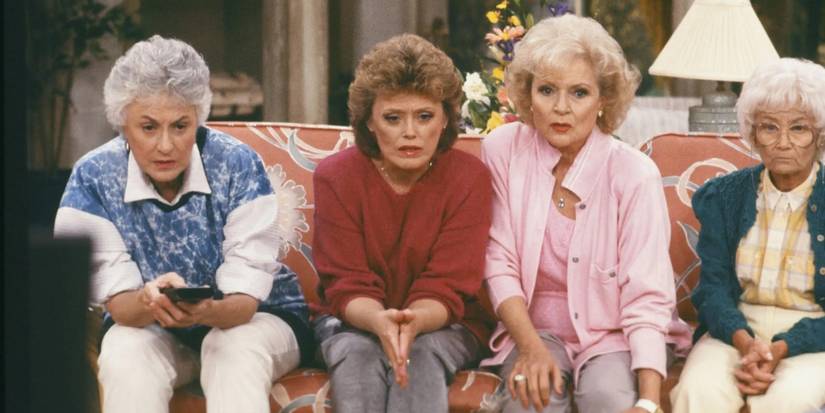 Image via NBC
The conceit behind The Golden Girls seemed like a long shot. Was there going to be an audience eager to watch a series about four women of a certain age living under the same roof? Well, the answer was a resounding yes. The beloved sitcom follows the antics of Dorothy Zbornak (Bea Arthur), Rose Nyland (Betty White), Blanche Devereaux (Rue McClanahan), and Sophia Patrillo (Estelle Getty) as they share a house in Miami, Florida. Navigating life after marriage and children, dating, and dealing with aging, The Golden Girls brings humor and heart through sharp-witted banter. And yes, while eating cheesecake. The Golden Girls was a groundbreaking series, thanks in part to its push to expand storytelling through characters who defied stereotypes.
We often think about how it's impossible to think that no one else could play certain roles. The Golden Girls is the epitome of this. The four actresses embodied these roles. All having had lovely careers prior to casting, they each brought their extraordinary acting prowess to establish a perfect dynamic. Though there was a universe in which White and McClanahan would have played Blanche and Rose, respectively, they had opted to swap roles since they had played similar parts in the past. And for that, we're grateful. The Golden Girls has lived on proudly in syndication, earning new fans as the years go by. In our friend groups, we identify one another by our Golden Girl. That's a sign of longevity.
2 'Cheers' (1982–1993)
 Image via NBC
If there ever was a show that celebrated friendship in the '80s, look no further than Cheers. The hit series set in Boston follows the staff and the barflies of the titular watering hole as they deal with life, love, and everything in between. The ensemble-driven series truly made us all want to find a place of our own where everybody knows our name. With countless awards and nominations for both the series and the individual actors, Cheers was one of, if not the most dominating series, in the '80s and on through the '90s. Because Cheers was elevated due to its cast, it seemed impossible to see life after cast changes. And yet, after the death of Nicholas Colasanto and the departure of Shelley Long, Cheers not only survived, but thrived into a new era with Woody Harrelson and Kirstie Alley, respectively.
We love Cheers because of the stories. Between Sam (Ted Danson) and Diane's (Long) "will-they, won't-they" romance, the best friendship of Cliff (John Ratzenberger) and Norm (George Wendt), the oft prickly Carla (Rhea Perlman) and her treatment of others, and the evolution of Fraiser Crane (Kelsey Grammer), Cheers had 275 episodes of stability. It only ended because it was time. And even so, Frasier, its only spin-off, has remained on our minds into the 21st century. Even though the show may have been set in the 80s, its universal themes have continued to resonate. You may find the fashion and hair funny, but each episode's storyline could easily be lifted into a sitcom today.
3 'The Wonder Years' (1988–1993)
 Image via ABC
Even in the '80s, The Wonder Years was a period piece. The coming-of-age story follows Kevin Arnold's (Fred Savage) life in suburban America, primarily set in the late 1960s and early 1970s. Tackling universal themes of first love, friendship, family, and the challenges of navigating major historical events like the Vietnam War and the Civil Rights Movement, The Wonder Years was a series driven by nostalgia. And if you examine our desire to revisit and reboot TV series of our past, nostalgia remains a major part of our lives. We may not have lived during the time Kevin grew up, but through the narration device, we can all relate to his fondness for his formative years.
From the adored story of Kevin and Winnie Cooper (Danica McKellar), his friendship with Paul Pfeiffer (Josh Saviano), and his relationship with his parents (Dan Lauria and Alley Mills), there was something you could connect with. A tried-and-true classic, The Wonder Years is a series that deserves to be put in a time capsule. Like many '80s and '90s shows, The Wonder Years was given a reboot through a completely different perspective. Framed through a nostalgic lens, the series focused on a Black middle-class family in Montgomery, Alabama, during the same era. Perhaps another reboot is in order for millennials to examine their formative years in the '90s in the same manner The Wonder Years had.
4 'The Facts of Life' (1979–1988)
 Image via NBC
Though the series did start in 1979, The Facts of Life, as we fondly remember, didn't begin until Season 2. After retaining a few characters, the series became one of the most iconic teen-centric series of all time. The series follows four teenage girls—Blair (Lisa Whelchel), Natalie (Mindy Cohn), Tootie (Kim Fields), and Jo (Nancy McKeon)—as they navigate boarding school under the watchful eye of their den mother and mentor, Mrs. Garrett (Charlotte Rae). Exploring themes of friendship, coming-of-age challenges, and personal growth, The Facts of Life was a celebration of poignant life lessons through humor and drama. As the series continued, the girls grew up, allowing for new serious topics to take hold. The ability to balance lighthearted plot lines with profound moments that touched viewers deeply made The Facts of Life more than a show meant to entertain.
Originally a spin-off of Diff'rent Strokes as a vehicle for Rae's Edna Garrett, The Facts of Life's shift to focus on the lives of young women proved to be the winning strategy. Having a diverse quartet of characters, each from different backgrounds and life experiences, opened our eyes to how we could each take better care of and better understand one another. With one of the most beloved theme songs ever, The Facts of Life truly reminded us that we have to take the good with the bad.
5 'Designing Women' (1986–1993)
 Image via CBS
It was only a year after The Golden Girls that Linda Bloodworth-Thomason tried her hand at a female quartet-centric series. And guess what, it was a success. Instead of exploring the lives of women living under one roof, Designing Women followed four women working under one roof. Set in Atlanta, Georgia, Designing Women is centered on the ladies of Sugarbaker & Associates, an Interior design firm, including Julia Sugarbaker (Dixie Carter), president of the design firm, Suzanne Sugarbaker (Delta Burke), the design firm's silent partner and Julia's ex-beauty queen sister, head designer Mary Jo Shively (Annie Potts), and office manager Charlene Frazier (Jean Smart). Joined by Anthony Bouvier (Mesach Taylor), an ex-convict and a law student, who works as Sugarbaker's delivery man, Designing Women presented sophisticated Southern Charm through an incredibly feminist-forward perspective.
Whether you can recite the infamous Julia monologue or live for the extraordinary witty takedowns, Designing Women was a mature depiction of working women defying a male-dominated world. Often ahead of its time, the focus on female empowerment made it a standout series. The show tried to maintain its longevity after Smart and Burke departed, inviting Julia Duffy to play conservative cousin Allison Sugarbaker, Jan Hooks to play Charlene's naive younger sister Carlene Frazier-Dobber, and Judith Ivey to play sharp-witted Texas millionaire BJ Poteet. Regardless of its end, Designing Women has not only served as a strong alternative to The Golden Girls but also carried the torch of working women sitcoms into the '90s.
6 'Growing Pains' (1985–1992)
 Image via ABC
The '80s were filled with iconic sitcom families, but none were quite like the Seavers. Created by Neal Marlens, Growing Pains followed the misadventures of the Seaver family, including psychiatrist and father Jason (Alan Thicke), journalist and mother Maggie (Joanna Kerns), and their children Mike (Kirk Cameron), Carol (Tracey Gold), Ben (Jeremy Miller), and Chrissy (Ashley Johnson). Known for that iconic theme song, "As Long As We've Got Each Other," and vintage photo credits sequence, Growing Pains depicted the picture-perfect family unit of 1980s America. Tackling real-life issues, including family struggles, teen issues, peer pressure, and more, Growing Pains instilled idealized life lessons through humorous situations that ultimately led to a warm hug in the end.
With Jason and Maggie portraying exceptional parents, it was the children, often Mike and Carol, who would get mixed up in the teenage antics as they couldn’t be further apart from one another. Growing Pains is also notorious for its plotting that welcomed homeless teen Luke Brower into the Seavers' home. Of course, Luke was played by none other than Leonardo DiCaprio. With a wonderful family dynamic that jumped through the screen, it was the relatable content that continues to remind us that even through life's ups and downs, family first and family last.
7 'Family Ties' (1982–1989)
 Image via NBC
If Growing Pains depicted the perfect family, Family Ties brought audiences into the Keaton household to see how politics can play a role inside a home. Reflecting the social shift in the United States from the cultural liberalism of the 1960s and 1970s to the conservatism of the 1980s, Family Ties follows young Republican Alex P. Keaton (Michael J. Fox) as he develops generational strife with his ex-hippie parents, Steven and Elyse Keaton (Michael Gross and Meredith Baxter). Set in Columbus, Ohio, its baby boomers versus Generation X through comedy and laughter, though ambitious, aspiring millionaire entrepreneur Alex is the black sheep of the kids compared to fashion-conscious, gossipy Mallory (Justine Bateman), tomboy Jennifer (Tina Yothers), and baby Andy (Brian Bonsall).
Like many family-oriented series of the time, Family Ties found humor through its sincerity and emotional depth when necessary. Much of the series' success was due to Fox's star-making turn. Other actors may have made the character snooty and unlikable. Fox did anything but. You may not have shared Alex's beliefs, but you certainly respected him. Focusing mainly on the cultural divide, flipping the script much as All in the Family did a decade earlier, Family Ties was an observational series about life. It wasn't every family, but it was some. While it's hard to think how political discussions inside the home can be numerous today, Family Ties has a timeless essence because, whether we like it or not, it plays a role in family dynamics still today.
8 'Newhart' (1982–1990)
 Image via CBS
By the time Newhart made its way to television, Bob Newhart was already a bona fide star. His affable comedy made him a beloved household name. A departure from The Bob Newhart Show, the '80s series told a new story. The series follows Newhart as Dick Loudon, a New York City author who moves to rural Vermont with his wife, Joanna (Mary Frann). Newhart follows the pair's attempt to run the historic Stratford Inn while they interact with a cast of eccentric, colorful local characters, including droll handyman George Utley (Tom Poston), spoiled maid Stephanie Vanderkellen (Julia Duffy), and her yuppie boyfriend/producer Michael Harris (Peter Scolari). Known for its running gags, including three backwoodsmen, Larry (William Sanderson) and his silent brothers, Darryl and Darryl (Tony Papenfuss, and John Volldstad), who frequently appear, and later take over the local Minuteman Café, and Dick hosting a local TV talk show, Vermont Today, in which he interviews bizarre guests. But nothing will beat the iconic ending.
Newhart isn't necessarily a beloved series we immediately recall as the best of the decade; the series is timeless simply because of how it concluded, opening the doors for further major, shocking, twisted finales. Newhart is famous for its 1990 series finale, which revealed that the entire eight-season show was actually a dream of Dr. Bob Hartley, the character he played on his previous series. Suzanne Pleshette, who played Emily Hartley, reprised her role in the now iconic scene. Now, when fans either love or hate a finale, they simply reference Newhart's conclusion in hopes that it was all a dream. The show, known for its dry wit, Newhart continued to showcase the actor's stronghold on comedy, even in a new domain.
9 'Who's the Boss?' (1984–1992)
 Image via ABC
Every so often, we tend to laugh at plots that defy stereotypes, because in what world would a man be a nanny? Well, Who's the Boss? made it funny! The series followed former baseball player Tony Micelli (Tony Danza) as he becomes a live-in housekeeper for divorced advertising executive Angela Bower (Judith Light) in Connecticut, with their families—including Tony's daughter Samantha (Alyssa Milano) and Angela's son Jonathan (Danny Pintauro) and her mother Mona (Katherine Helmond). The comedy navigated changing gender roles and domestic life while hammering home the old "will-they, won't-they" romance trope. Spoiler alert: they do.
Who's the Boss? may feel a bit antiquated, but, examining society today, the series celebrated the unique living situation and roles it reveals. "Mannies," as we call them, are a prominent part of the world today. Light-hearted and humorous, Who's the Boss? was a safe and comfortable series through its progressive lens. Who's the Boss? serves as a reminder that there is no right way to be a family. All it takes is a strong sense of love and adoration, and a family is made.
10 'Night Court' (1984–1992)
 Image via NBC
Finding a unique entry point into a workplace comedy can be hard when it feels like every concept has been done. Then, in came Night Court, and law and order became hilarious. Known for its zany and outlandish slapstick humor, the Reinhold Weege-created series serves as a vehicle for comedian Harry Anderson. Set in a Manhattan municipal court during the night shift, the show focused on the unorthodox Judge Harry Stone and his eccentric staff as they handle a revolving door of bizarre cases, eccentric criminals, and colorful characters. Filled to the brim with a brilliant ensemble, including John Larroquette, Richard Moll, and Markie Post, Night Court was a comedy set in a courtroom, not a courtroom comedy.
The show relied on a constant parade of strange, eccentric defendants, turning the courtroom into a stage for comedic, often slapstick, scenarios that made the serialized romp appointment viewing. Finding a way to give the characters new things to react to was by going deep into the hilarity of the one-off characters. This then allowed for the dynamics within the main staff to build their own bonds. The timeless essence of Night Court provided the opportunity to reboot the sequel series starring Melissa Rauch as Abby Stone, a judge and the daughter of Harry Stone. A legacy series, Night Court became nostalgic for original fans while introducing new viewers to the brilliance of the conceit.

Night Court
Release Date 1984 - 1992-00-00
Directors Jim Drake, Alan Bergmann, Jay Sandrich, Gary Shimokawa, Asaad Kelada, John Larroquette, Tim Steele, James Burrows, Lee Bernhardi
Writers Nat Mauldin, Gary Murphy, Nancy Steen, Neil Thompson, Tom Reeder, Teresa O'Neill, Jeff Reno, Ron Osborn, Lee Maddux, Chris Cluess, Howard Ostroff, Leonard Mlodinow, Julie Fleischer, Tony Sheehan, Gene Braunstein, Jeffrey Davis, Reinhold Weege, Zachary D. Wechsler
-

Adele Yoshioka
Miss Japan
-
-
Alice Drummond
Mavis Tuttle
-




 English (US) ·