.png)

Published Jan 31, 2026, 6:25 PM EST
Andrew Dyce is the Deputy Editor for ScreenRant's coverage of Marvel, DC, and all other comics. Whether superheroes, sci-fi, fantasy, or any other genre, Andrew's decade in the industry and countless hours of analysis on podcasts like the Screen Rant Underground, Total Geekall, The Rings of Power Podcast, Batman v Superman: By The Minute, and more has left its mark.
With over a decade spent at GameRant and ScreenRant, Andrew has made himself known as an outspoken fan and critic of film, television, video games, comics, and more.
Of all the superheroes and supervillains in the Marvel Universe, there are few as iconic, legendary, and surprisingly unchanging than the green-skinned, anger-fueled Hulk. No uniform, no weaknesses, and brute strength has kept the Avenger's story rolling since his first appearance in 1962. But years before his debut, Marvel tried something different for its first take on "Hulk." A story that, in hindsight, is one of the funniest misfires Marvel ever published.
Marvel's First Version of Hulk Was A Mad Scientist's Robot
First Appeared in Strange Tales #75 (1960) by Stan Lee, Larry Lieber, Don Heck

If you can believe it, Marvel actually took more than one swing at a comic book "Hulk" before landing on the Incredible variety, but the debut version seems stranger than fiction. In a short story titled "I MADE THE HULK LIVE," the tale was a perfect fit for the Strange Tales promised in the anthology series. Featuring multiple Twilight Zone-esque short stories in each issue, the one in question was penned by the same creative team behind some of Marvel's earliest superhero successes. But in this case, the assignment was very, very different.
Instead of a brilliant young man unlocking incredible superpowers to take on his school bullies, the story follows Dr. Albert Poole, a brilliant scientist hoping to unlock the power to grow taller, to take on his school bullies. But when the formulations to trigger growth fail to do the trick, he makes the obvious change in plans: building a world-conquering robot to attain the confidence and respect he craves.

Believing that a massive robotic body piloted by himself in secret will make him a hero, an icon, and ruler of the planet (we did use the term "mad scientist"), years spent obsessively toiling away cost Dr. Poole his only friend and assistant, but he did contruct his wondrous Hulk. The only thing left to do was to climb inside, and being his march to world domination and global admiration.
The Original Hulk's Death Might Be The Best Version (or Worst)
A Marvel Legend Dies, All Because He Forgot His Keys

It should be pointed out that if you were reading all the comics published by Marvel in 1960, you would encounter several scientists by the name of "Dr. Poole." All inventors, all brilliant, and all doomed to laughable failures, making the pattern something of an inside joke among writers of these 'cautionary tales.' But it's hard to beat the death of the Hulk, caused by Dr. Poole forgetting to bring his key with him into the actual mechanized robot. Locked from the outside, with no means of escape, and no assistant to help him escape, Dr. Poole was doomed to die inside his glorious, hulking, metal casket.
Yet as Dr. Poole sat inside his dark tomb, having stored "enough food and liquid pills in here to last me the rest of my life," abandoned in a workshop in the middle of nowhere, he had no idea that another more Incredible Hulk would soon rise to take his place. Gone, but not forgotten.
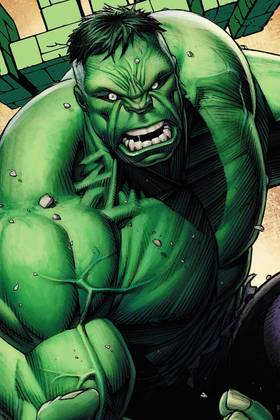
First Appearance The Incredible Hulk (1962)
Alias Robert Bruce Banner
Alliance Avengers, Defenders, Horsemen of Apocalypse, Fantastic Four, Pantheon, Warbound, S.M.A.S.H., Secret Avengers
Franchise Marvel







 English (US) ·