.png)
 Image via Netflix

Published Jan 30, 2026, 9:19 PM EST
Back in 2021, Hannah’s love of all things nerdy collided with her passion for writing — and she hasn’t stopped since. She covers pop culture news, writes reviews, and conducts interviews on just about every kind of media imaginable. If she’s not talking about something spooky, she’s talking about gaming, and her favorite moments in anything she’s read, watched, or played are always the scariest ones. For Hannah, nothing beats the thrill of discovering what’s lurking in the shadows or waiting around the corner for its chance to go bump in the night. Once described as “strictly for the sickos,” she considers it the highest of compliments.
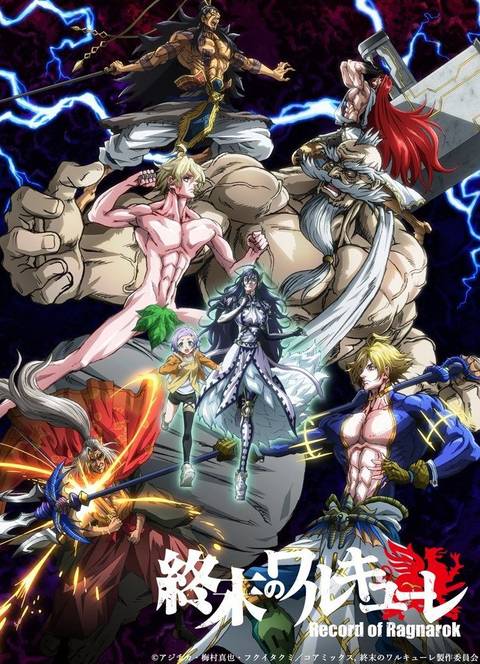
Netflix’s anime strategy has never been about prestige in the traditional sense: it’s about endurance, and few originals embody that better than Record of Ragnarok, which has amassed 114.3 million hours watched over a six-month period, placing it among the streamer’s most consistently consumed anime titles. That number isn’t driven by novelty or seasonal hype. Record of Ragnarok isn’t new, and it isn’t chasing trends. Instead, it’s doing something Netflix increasingly values: becoming a reliable rewatch machine. What makes this especially notable is that Record of Ragnarok has never been a critical darling. Its animation has been divisive, its pacing aggressive, and its violence unapologetic… and yet, it continues to perform. That tension between reception and retention is exactly why the series matters to Netflix’s anime future.
‘Record of Ragnarok’ Is Built for Sustained Viewing, Not Viral Moments
At its core, Record of Ragnarok is structurally simple: gods versus humanity, one-on-one, with the fate of the world hanging in the balance. That simplicity is its greatest strength. Each fight is self-contained, emotionally escalated, and designed for momentum. Episodes don’t ask viewers to track sprawling lore or juggle subplots. Instead, they deliver spectacle, mythology, and escalating brutality in digestible arcs. That makes the series ideal for casual binge sessions. Netflix’s internal data has repeatedly shown that shows with modular storytelling outperform more complex narratives in long-term engagement. Record of Ragnarok slots neatly into that category. You can drop in for a fight, leave, and come back weeks later without friction. This accessibility has helped the anime transcend the traditional “new season spike” model. Rather than burning hot and fading, the series maintains a steady baseline of viewership that compounds. And unlike many anime hits, Record of Ragnarok doesn’t rely on external momentum from manga readers alone. While the manga provides a built-in audience, the anime’s appeal extends beyond adaptation loyalty. Its visual bluntness, heavy metal energy, and mythological mashups resonate with viewers who may not engage deeply with anime culture otherwise.

Related
Brutality Isn’t a Bug — It’s the Hook
 Image via Netflix
If Record of Ragnarok feels excessive, that’s because it’s meant to be. The series doesn’t soften its violence or frame it as a tasteful spectacle. For Netflix, that brutality is a feature, not a liability. Across global markets, Netflix has seen sustained success with animated projects that skew darker and more visceral. Anime fans who gravitate toward Castlevania, Devilman Crybaby, or Baki often cluster around Record of Ragnarok as well. The audience overlap is clear, and Netflix’s recommendation engine rewards that clustering aggressively. What’s notable is that Record of Ragnarok doesn’t dilute its tone to expand its reach. It commits fully to its identity, trusting that intensity will do the work of retention. And the numbers suggest that trust is paying off. Crossing 114.3 million hours in six months doesn’t require universal appeal — it requires a deeply engaged audience willing to return again and again. Record of Ragnarok has found that audience by refusing to compromise its edge.
Why Netflix Keeps Betting on This Kind of Anime
Shows like Record of Ragnarok perform exceptionally well in international markets, particularly where long-running anime consumption is normalized. They also translate cleanly across languages, minimizing friction for global audiences. That makes them cost-effective, scalable, and algorithmically resilient. Just as importantly, Record of Ragnarok reinforces Netflix’s broader anime philosophy: originals don’t need to dominate headlines to justify renewal. They need to live in the ecosystem. The series’ steady accumulation of hours suggests it’s functioning as a library anchor — a title that quietly props up engagement metrics over time. That’s the kind of performance that supports continued investment, even in the absence of mainstream awards or critical consensus. Netflix has increasingly favored anime that can exist comfortably between seasons, and Record of Ragnarok exemplifies that model. It doesn’t demand urgency. It invites repetition.
In an era where streaming success is often framed around opening-weekend numbers and social media virality, Record of Ragnarok tells a different story. Its achievement isn’t loud: it’s durable. The series has become part of Netflix’s anime infrastructure, a reliable source of engagement that continues to pull viewers back onto the platform. That kind of performance doesn’t just justify more seasons. It explains why Netflix’s anime slate looks the way it does — brutal, uncompromising, and built for longevity. And as long as viewers keep choosing gods versus humanity on a quiet Tuesday night, Record of Ragnarok will keep winning its own kind of battle.
Release Date June 17, 2021
Writers Kazuyuki Fudeyasu, Yuka Yamada





 English (US) ·