.png)

Published Jan 31, 2026, 9:30 PM EST
Thomas Butt is a senior writer. An avid film connoisseur, Thomas actively logs his film consumption on Letterboxd and vows to connect with many more cinephiles through the platform. He is immensely passionate about the work of Martin Scorsese, John Ford, and Albert Brooks. His work can be read on Collider and Taste of Cinema. He also writes for his own blog, The Empty Theater, on Substack. He is also a big fan of courtroom dramas and DVD commentary tracks. For Thomas, movie theaters are a second home. A native of Wakefield, MA, he is often found scrolling through the scheduled programming on Turner Classic Movies and making more room for his physical media collection. Thomas habitually increases his watchlist and jumps down a YouTube rabbit hole of archived interviews with directors and actors. He is inspired to write about film to uphold the medium's artistic value and to express his undying love for the art form. Thomas looks to cinema as an outlet to better understand the world, human emotions, and himself.
Over the last decade, audiences have witnessed the prime of Park Chan-wook's career. This is saying a lot from the director of Oldboy, an enduring cult classic that found mainstream acclaim in the States. Since then, Park has only one-upped his craft and formalist innovation, blending high-octane thrillers with sincere character melodrama that also reflects the tapestry of South Korea. Hot off the adoration of The Handmaiden and Decision to Leave, Park's latest film, No Other Choice, appeared to be the culmination of his entire career, as well as his long-awaited breakthrough at the Academy Awards. Shamefully so, however, Park was snubbed again, despite his 2025 satirical thriller receiving extraordinary acclaim and sharing essential elements with past Oscar contenders. Everyone agrees he's one of the finest living filmmakers we have today, so what's the holdup? Well, Park just may be too impactful and bold for the awards body.
Neon Was Committed to Campaigning for Other International Films
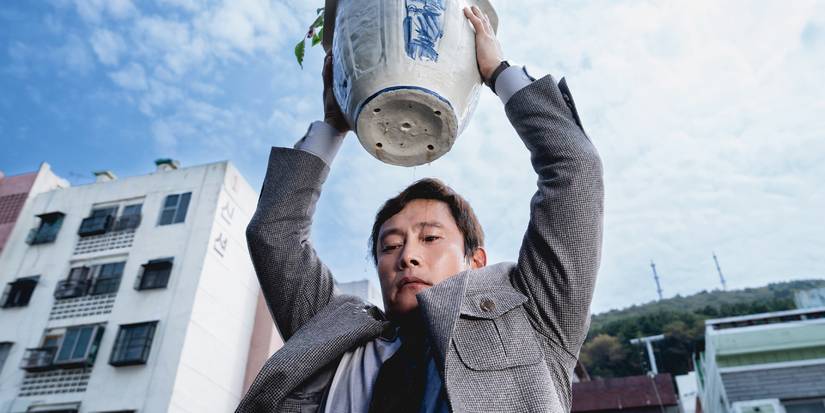 Image via CJ Entertainment
No Other Choice, Park's twisted take on modern-day economic distress and corporate takeover in the world, was perhaps a victim of its own distributor's success. With Neon having two Best Picture nominees under its belt in The Secret Agent and Sentimental Value, along with It Was Just an Accident and Sirât appearing in Best International Feature, the studio had limited resources to put its full weight behind No Other Choice. In the end, Neon was one movie shy of controlling all the slots in the respective category.
Even with such a robust and beloved filmography, including revenge thrillers like Oldboy and Lady Vengeance and slick homages to Alfred Hitchcock in The Handmaiden and Decision to Leave, Park Chan-wook has barely left a dent in the minds of Oscar voters. Evidenced by the presence of two international representations in Best Picture this year, along with viable contenders from years past like Emilia Pérez, The Zone of Interest, and Anatomy of a Fall, the Academy is far more open-minded and celebratory of foreign cinema. With No Other Choice sharing parallels with Parasite, the first and only international movie to win Best Picture, Park's entry into the club seemed inevitable. If there's anything Oscar voters love, it's a darkly comic satire about the class divide and eating the rich (Triangle of Sadness also fits into this subgenre).
Park Chan-wook's Movies Are Too Cynical and Inscrutable for the Academy
Early in his career, Park hardly had a campaign to mount, even in the international category. His ultraviolet, macabre, and borderline nihilistic portraits of human decay, notably Oldboy, shared no resemblance with the movies that would dominate the Oscars in the 2000s. As his tastes have pivoted to more upscale, Hitchcockian thrillers about romance and obsession, he seemed destined for acceptance by the Academy, especially in an era that practically worships Vertigo as the high-water mark of cinema. Park's appeal is similar to that of other cherished Hollywood filmmakers like Martin Scorsese and Christopher Nolan—heavily stylish auteurs who make rip-roaring entertainment with an intellectual core. Of all working directors, Park is arguably the most consistently inventive behind the camera, who turns rote aspects like subtitles and smartphone use into full-fledged emotional and narrative devices.
Despite his populist sensibilities stemming from his genre roots, Park is just a little too cynical for the average Oscar voter. As funny as No Other Choice can be, Park never shies away from the viciously dark core at the heart of Man-su's (Lee Byung-hun) desperate bids for employment, and there is no room for redemption for all parties, notably the greedy American corporations responsible for the mass layoffs at the character's paper factory. Most class-conscious and politically charged movies in the Oscar lineup are grounded and stately, but No Other Choice retains Park's panache for grotesque violence and depravity among ordinary citizens.
Park's films are hardly reserved, but they still operate in an inscrutable void. On a fundamental level, his movies often feature an expansive, rapidly evolving plot that is tricky to follow, and the director throws you into this vast ocean with no life jacket. He's not as interested in wowing the audience with his cunning writing or flashy editing techniques as other international directors who have been accepted into the Hollywood mainstream, like Bong Joon-ho, whose own class satire was almost scientifically engineered to appeal to Western sensibilities. In Parasite, it's obvious where the film's sympathies lie, and Mickey 17 has proven that Bong loves a broad, hyperbolic portrait of a nefarious, wealthy tycoon. No Other Choice, on the other hand, blurs the moral boundaries, showing upstanding working-class families to be treacherous and contributors to a toxic society.
The rude snubbing of Park Chan-wook by the Academy suggests an unfair standard set for international films. Where Bong's tonal shifts are pronounced within the runtime, Park never draws any lines between black comedy, thriller, and bleak melodrama. He's both a humanist and a deeply pessimistic director. By operating in a murky void between grounded reality and absurdist fantasy, Park’s varied filmography leaves you feeling uncomfortable.
No Other Choice is now playing in theaters.
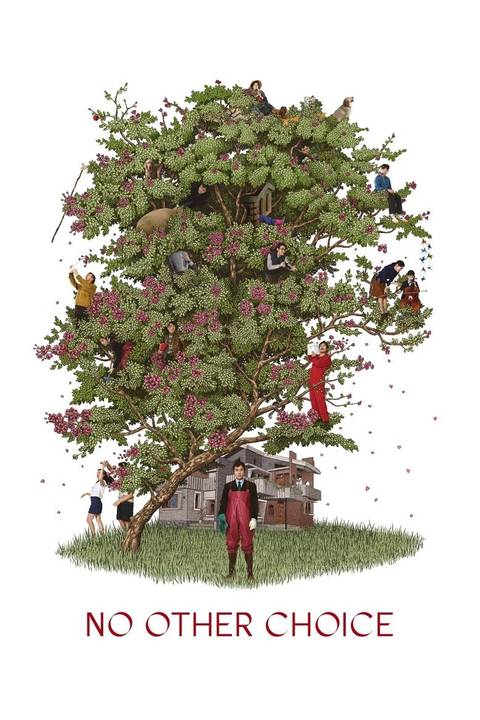
Release Date September 24, 2025
Runtime 139 minutes
Director Park Chan-wook
Writers Don McKellar, Lee Kyoung-mi, Donald E. Westlake, Lee Ja-hye, Park Chan-wook
Producers Michèle Ray-Gavras, Miky Lee, Back Ji-sun, Alexandre Gavras, Oh Hyeon-am, Park Chan-wook
-

Lee Byung-hun
Yoo Man-soo
-




 English (US) ·