.png)

Published Jan 25, 2026, 6:06 PM EST
André Joseph is a movie features writer at Collider. Born and raised in New York City, he graduated from Emerson College with a Bachelor's Degree in Film. He freelances as an independent filmmaker, teacher, and blogger of all things pop culture. His interests include Marvel, Star Wars, Ghostbusters, Robocop, wrestling, and many other movies and TV shows.
His accomplishments as a filmmaker include directing the indie movie Vendetta Games now playing on Tubi, the G.I. Joe fan film "The Rise of Cobra" on YouTube, and receiving numerous accolades for his dramatic short film Dismissal Time. More information can be found about André on his official website.
Every great Hollywood IP often releases an installment that falls short of expectations. It can cause years, sometimes decades, of quality storytelling to crumble. Sure, that franchise can be reconstructed through recalibrated follow-ups, legacy sequels, or the dreaded remake. Other times, however, it might be left alone altogether.
Coming off a year in which films such as the Razzie Award-nominated Tron: Ares and Karate Kid: Legends failed to relaunch their beloved legacies on the big screen, the following list is the eight biggest franchise-killer movies in cinema. Many have been left off the list for various reasons, while others will be heavily debated. But the eight films did not just disappoint their fanbases. They set back their futures.
8 ‘Fantastic Four: Rise of the Silver Surfer’
 Image via 20th Century Studios
Marvel’s first family did not exactly break new ground when Tim Story’s Fantastic Four hit cinemas in the pre-MCU days. Similar to the original X-Men, there was enough charm in the 2005 adaptation’s cast and overall execution for a sequel to improve on the original’s flaws. Fantastic Four: Rise of the Silver Surfer aims high with the arrival of an impressive mo-cap depiction of the title cosmic superhero, played by Doug Jones and voiced by Laurence Fishburne. The chase sequence between the Surfer and Johnny Storm (Chris Evans) was the sequel’s biggest highlight.
Unfortunately, the rest of Rise of the Silver Surfer never reaches the creative heights of the aforementioned action scene. The cheeky 2000s humor of the 2005 film is dialed up to eleven at a time when audiences shifted to the gritty superhero tone of Batman Begins. Cringe-inducing scenes of Reed Richards (Ioan Gruffudd) doing a stretchy dance in a nightclub and having Johnny and Ben Grimm (Michael Chiklis) switch powers seem lifted out of a parody from the Scary Movie-type comedies. More infamous was the big tease of Galactus throughout the sequel, only to be revealed as a storm cloud in space. While not the disaster that Josh Trank’s reboot would turn out to be a decade later, it hurt any chance of taking the Fantastic Four seriously on film until Marvel Studios produced a better take with The Fantastic Four: First Steps.
7 ‘Superman III’
 Image via Warner Bros.
While it is early to look at 1987’s Superman IV: The Quest for Peace as a sad finale to Christopher Reeve’s iconic portrayal of the Man of Steel, 1983’s Superman III exemplified a moment when a promising franchise loses ground. After Richard Donner’s epic take on Superman’s origin story, followed by an action-packed sequel featuring General Zod (Terence Stamp) as the big bad, Superman III gets reduced to a two-hour running joke with the legendary Richard Pryor misused as a comedic foil. Without Donner at the helm, director Richard Lester and the franchise’s producers resorted to their worst instincts in making a Superman installment that lacks the heart and innovation of its predecessors.
Superman III is not without some saving graces, however. The epic junkyard fight splitting a Kryptonite-induced bad Superman, and his alter ego, Clark Kent, remains a spectacle to behold and provides Reeve with some of his best acting in the series. Even the finale scene with Vera Webster (Annie Ross) transforming into a cybernetic henchwoman was pure nightmare fuel for ‘80s babies. Ultimately, Superman III marked the downward spiral for the DC Comics icon on the silver screen and would struggle for decades to properly relaunch.
6 ‘Beverly Hills Cop III’
The role of Axel Foley in 1984’s Beverly Hills Cop turned SNL funnyman Eddie Murphy into a global superstar. The fast-talking, gritty street detective from Detroit turned Rodeo Drive upside down by exposing white collar corruption alongside local lawmen Billy Rosewood (Judge Reinhold) and John Taggert (John Ashton). Yet, instead of kicking and conning the dirty rich baddies in Beverly Hills Cop III, Axel finds himself fighting crime in a Disney-inspired amusement park in Southern California.
Beverly Hills Cop III symbolized Murphy’s losing streak at the box office during the early ‘90s. The comedian’s attempt to soften his image by giving a phoned-in performance under the direction of John Landis (Animal House, The Blues Brothers) resulted in a lackluster third entry that does more to poke fun at the franchise’s tropes than push it forward. The slapstick tone, featuring Axel going undercover in a cartoon costume, restrains the energy and rhythm of the original film and its 1987 sequel. Murphy has gone on to slam Beverly Hills Cop III for being "garbage" and the franchise went dormant for 30 years until Netflix welcomed the beloved detective back to the West Coast for Beverly Hills Cop: Axel F.
5 ‘Speed 2: Cruise Control’
 Image via 20th Century Fox
Speed 2: Cruise Control is what happens when a studio chooses not to build a franchise around its lead. The 1994 action blockbuster that made Keanu Reeves into one of the genre’s biggest stars was a simple but relentless thrill ride within the confines of a bomb-rigged bus driven by the film’s breakout player, Sandra Bullock. The urgency and chemistry of the leads that made Speed a staple of ‘90s cinema simply did not translate to the sequel’s cruise liner angle.
Though Bullock and returning director Jan De Bont do their best with the material, Speed 2 suffers from the lead actor swap from Reeves to a pale imitation cop hero played by Jason Patric. Additionally, Willem Dafoe’s living cartoon terrorist, along with the premise of a boat rerouted to collide with an oil tanker at a snail's pace, made the ill-conceived sequel an unintentional satire of the original. The tension-less Speed 2 exemplified the idea that not every action classic needs a follow-up.
4 ‘A Good Day to Die Hard’
 Image via 20th Century Studios
The appeal of Bruce Willis as John McClane in the Christmas classic Die Hard was his everyman quality. Lacking the feats of strength that other action heroes of the ‘80s possessed, he survived on his wits with a spark in the eye, but still fears his demise at every turn in the midst of reconnecting with his wife. Five movies into the franchise, with 2013’s A Good Day to Die Hard, McClane had transformed into the ultimate disgruntled supercop.
The Russia-set fifth installment turned in Willis’s worst performance as his signature character. He appears tired and aimless in every scene. While McClane’s estranged son Jack (Jai Courtney) is positioned to carry the action, he lacks the charisma of his father when taking on instantly forgettable villains in a CGI-driven catastrophe directed by Fox’s resident franchise killer, John Moore. It was truly a depressing end for the legendary star’s world-renowned action hero. At least the world was gifted one last fitting finale in Willis’s Die Hard battery commercial in 2020, right before his untimely retirement from show business.
3 ‘The Amazing Spider-Man 2’
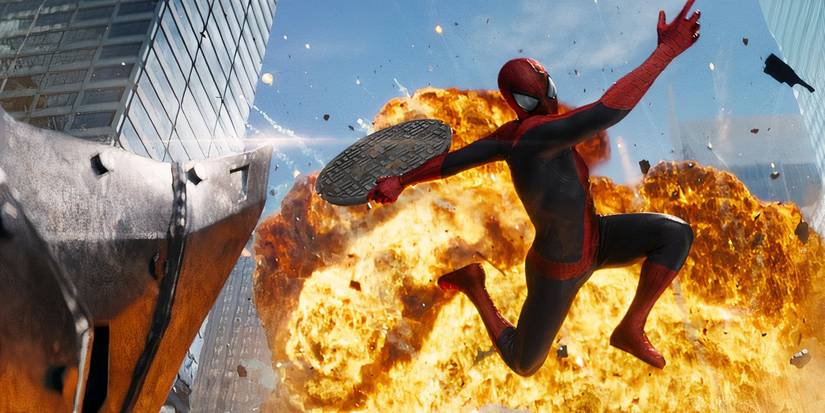 Image via Sony Pictures Entertainment
Though 2012’s The Amazing Spider-Man was the reboot that the world did not push for, critics and audiences were charmed by the fresh re-imagining of Peter Parker’s (Andrew Garfield) origin story. More grounded than the Sam Raimi installments, director Marc Webb examined the true nature of Peter’s family and a well-developed relationship with Gwen Stacy (Emma Stone). But rather than further Peter and Gwen’s romance prior to the tragic conclusion, The Amazing Spider-Man 2 becomes a lengthy advertisement for a cinematic universe to rival Marvel Studios.
The bloated 2014 sequel drops the Parker family storyline entirely for emphasis on multiple villains, including the Green Goblin (Dane DeHaan) and Jamie Foxx’s comedically bizarre turn as Electro. With endless amounts of teases to unproduced spin-offs about Sinister Six and Black Cat, the love story feels tacked on in an otherwise overstuffed sequel. Sony would hit the reset button again by entering a joint agreement with Marvel to bring Tom Holland’s new Wall-Crawler into the MCU beginning with 2016’s Captain America: Civil War.
2 ‘Terminator Genisys’
 Image via Paramount Pictures
While Terminator 3: Rise of the Machines and Terminator Salvation never reached the innovative heights of James Cameron’s preceding sci-fi classics, they still managed to progress John Connor’s arc from snarky teenager to the leader of the human resistance. Terminator Genisys, however, followed no such arc. Taking its alternate timeline cues from J.J. Abrams’s Star Trek, the fifth Terminator installment dropped everything that came before with Kyle Reese (Jai Courtney) time-traveling back to the original film’s 1984 events, only to find the circumstances have changed drastically.
Arnold Schwarzenegger’s post-California governor return to the franchise should have been enough to get the franchise’s systems restarted once more. But as a T-800 model sent to the wrong time and adapting to civilization, he’s become a one-note joke filled with cringy one-liners and a useless mentor role to a battle-ready Sarah Connor (Emilia Clarke). Add to that the controversial decision to make Connor (Jason Clarke) into a Skynet-ridden antagonist, and you end up with the worst movie in the series. Not even the next film, Terminator: Dark Fate, could restore faith in Cameron’s creation.
1 ‘Indiana Jones and the Kingdom of the Crystal Skull’
For a 19-year gap between films, Indiana Jones and the Kingdom of the Crystal Skull should have delivered on expectations. Steven Spielberg, George Lucas, and Harrison Ford had the winning touch for three unforgettable adventures on the big screen. What audiences ended up getting was worse than what was inside the Ark of the Covenant.
You have probably heard the timeless complaints already: Nuking the fridge, CGI-riddled monkeys, the alien angle, etc. The filmmakers’ influence from the Saturday afternoon serials of the ‘30s and ‘40s were replaced by ‘50s sci-fi B-move aesthetics that did not play for fans loyal to Indy since Raiders of the Lost Ark. Though Ford showed more energy in the role than any movie he made post-Air Force One, he could not hold together a script that needed another draft or two to save it. The polarized response to Crystal Skull would remain a dark cloud over Indy’s final adventure in Indiana Jones and the Dial of Destiny.

Release Date May 21, 2008
Runtime 122 minutes
Writers David Koepp, George Lucas, Jeff Nathanson
Producers Frank Marshall, Denis L. Stewart

 English (US) ·