.png)


Published 15 minutes ago
Gregory Nussen is the Lead Film Critic for Screen Rant. They have previously written for Deadline Hollywood, Slant Magazine, Backstage and Salon. Other bylines: In Review Online, Vague Visages, Bright Lights Film Journal, The Servant, The Harbour Journal, Boing Boing Knock-LA & IfNotNow's Medium. They were the recipient of the 2022 New York Film Critics Circle Graduate Prize in Criticism, and are a proud member of GALECA, the Society of LGBTQ Entertainment Critics. They co-host the Great British Baking Podcast. Gregory also has a robust performance career: their most recent solo performance, QFWFQ, was nominated for five awards, winning Best Solo Theatre at the Hollywood Fringe Festival in 2025.
Back in 2000, at the advent of the digital camera, French New Wave pioneer Agnès Varda made The Gleaners and I. One of the most consequential documentaries of the new century, the film is at once an appraisal of Varda's own aging body, an exploration of a new cinematic tool, and, most prominently, an investigation into food scraps. How Varda takes a subject like discarded food and turns it into something much more esoteric and profound, quotidian yet complex, is a bit of magic.
John Wilson possesses the innocent curiosity of a child and the calm wisdom of an ancient philosopher. His brand of filmmaking is the logical continuation of Varda's micro/macro, personal/public fascination. The History of Concrete bills itself as a sardonic take on the machinations of Hallmark films, but in actuality it is, like The Gleaners and I, an attempt at understanding the self and community through something innocuous and supremely overlooked. In this case, the titular material, which is second only to water in widespread use.
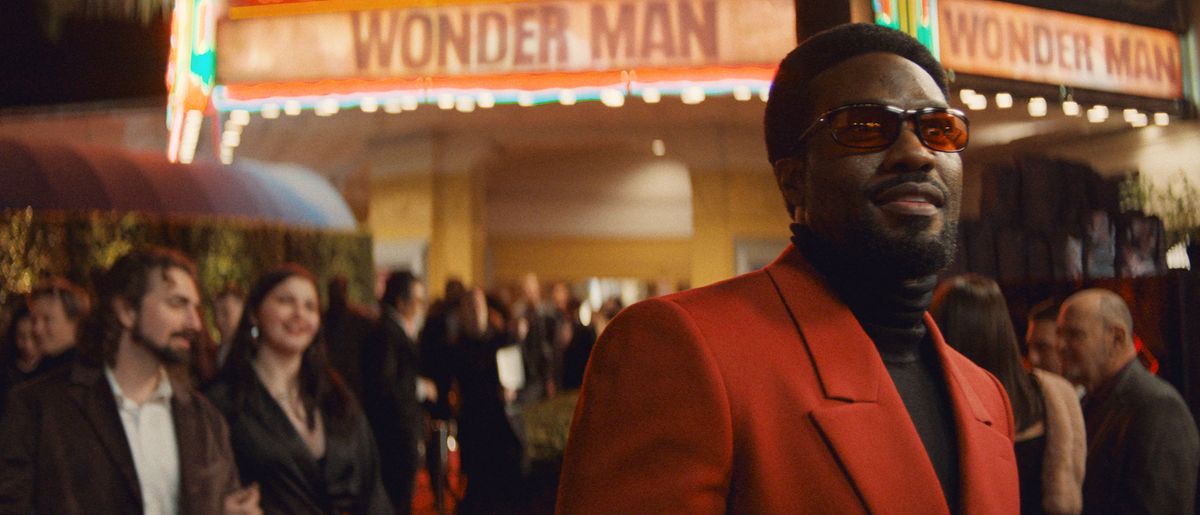
The History of Concrete is, unsurprisingly, for the How To With John Wilson creator, blisteringly funny. More startling is that it is also one of the finer, more moving documentaries of recent memory. Watching The History of Concrete feels like being caught in the flow of a casually moving river, its ebbs and flows persistently novel yet inevitable. It is a wholly distinct experience. What other filmmaker can quote Guy Debord in response to a bizarre Hollywood event in honor of Kim Kardashian?
The History of Concrete is a Miraculous Wonder
Wilson began the project somewhat by accident. In the midst of the WGA strikes, which were brought on, in large part, as a repudiation of the incursion of AI, Wilson noticed that his union was offering a workshop for writing a Hallmark movie. At the same time, he became a landlord at a building with rapidly deteriorating infrastructure. In the mind of someone as deliriously inventive as John Wilson, a natural connection is made: what if you made a documentary on concrete in the style of a cheap romance? Perhaps that way, it could get some funding.
But that's just the beginning of The History of Concrete, which travels to all sorts of odd locales, capturing images along the way of everyday oddities. He travels to Las Vegas for the annual concrete convention, stumbles into a strange business that preserves the dead tattooed skin of loved ones, and, in the film's most emotionally trenchant sequence, befriends Jack Macco, a hard rock musician who moonlights as a liquor salesperson and who is engaged to a trailblazing New York City judge. Macco's armchair philosopher ruminations on art are magnetic in their cogent poetry.
Wilson showed with his television series just how life-affirming it can be to just observe, and, with his triumph of a feature doc, he shows us how merely looking around can reveal entire histories.
Along the way, Wilson wryly meditates on responsibility, artistic ingenuity and responsibility, the commerce of art and the irreconcilable clash between creation and capitalism. He makes implicit arguments against the use of AI in our everyday life, simply and effectively advocates for found family and friendship, and questions why certain avenues of artistry are judged as commercially viable or not before they've even been made.
The History of Concrete is not a film about climate change. But, amongst the myriad of topics it touches on is the deleterious effect of constantly producing new things or otherwise desperately hearkening back to nostalgic days of yore, all the while ignoring the very thing right in front of us. Wilson showed with his television series just how life-affirming it can be to just observe, and, with his triumph of a feature doc, he shows us how merely looking around can reveal entire histories.
The History of Concrete screened at the 2026 Sundance Film Festival.

Release Date January 22, 2026
Runtime 100 Minutes
Director John Wilson







 English (US) ·