.png)

Published Jan 23, 2026, 7:28 PM EST
Gabrielle Ulubay is a Music writer at Collider. She has previously been published in The New York Times, Bustle, HuffPost Personal, and other magazines, and wrote at Marie Claire for nearly three years. Her interests have spanned film, politics, women's lifestyle, and, of course, music. She has a BA in history from Northeastern University and a MA in Film and Screen Media from University College Cork, Ireland, which have facilitated her passion for using art and media to analyze the sociopolitical landscape. Born and raised in New Jersey, she has since spent time in Boston, Ireland, Cuba, and Montreal, and currently lives in New York City. You can find highlights of her work at gabrielleulubay.com.
If there’s anything Fleetwood Mac fans love as much as their favorite band’s songs, it’s the lore that comes with them. And this legendary rock group certainly delivers. Their most popular album, Rumours, is infamously filled with tracks that the members wrote about one another, with the trend continuing throughout their musical career. Lead vocalist Stevie Nicks and guitarist and vocalist Lindsey Buckingham, for instance, wrote cutting lyrics about their troubled on-and-off relationship. Meanwhile, keyboardist Christine McVie and bassist John McVie played through the painful downfall of their relationship and ultimate divorce. Nicks and drummer Mick Fleetwood even embarked on an affair that was chronicled in a number of songs, particularly on Tusk.
With so many songs detailing the most painful moments of her life, it’s no wonder that Nicks is reticent to sing a few of these tracks. She famously hated “Go Your Own Way,” because Buckingham had written it about her, and she long avoided singing “Silver Springs” after it was cut from Rumours—a move that she found unjust. But while she has relented in performing the former song, and she finally saw the latter get its flowers, there remains one Buckingham-penned number that she has remained disdainful of: “Come,” the ninth track off Fleetwood Mac’s 2003 album Say You Will. But while Nicks’ reticence towards other songs grew from a place of pain, her reaction to “Come” was based on more objective artistic standards.
Unlike Many Lindsey Buckingham Songs, "Come" Wasn’t About Stevie Nicks
Because Buckingham and Nicks’ relationship—and feud—spans so many years, it’s easy to assume that all of their painfully, romantically charged songs were written about each other. However, both artists had a number of other love affairs whose complications made appearances in their work. In the case of “Come,” it was Buckingham’s relationship with actress Anne Heche, who he dated for a year in the early 1990s. Famously, Heche later dated Ellen DeGeneres from 1997 to 2000, becoming “the world’s first day super-couple,” in the words of The Advocate.
It was in the wake of this highly publicized partnership that Buckingham wrote “Come” about his ex. The blues-heavy song is unapologetically sexual, with lyrics such as “Think of me, sweet darlin’/every time you don’t come,” and “One thing leads to another/ But I guess you know about that.” Equal parts scandalous and scathing, the track seems to suggest that Heche’s new lovers, including DeGeneres, couldn’t measure up to Buckingham’s purported prowess. It also hints at a fraught relationship between Buckingham and Heche, along with snide remarks about the latter switching between partners. While Heche being the subject of the song was, initially, mere conjecture, Buckingham later confirmed that she was the muse in a 2003 interview with The Ann Arbor News. When journalist John Soeder asked if “Come” was about Heche, Buckingham demurred, “Um, well, I mean, uh, well, since you’re asking, I would have to say yes, it is.”

Related
Even Though "Come" Wasn’t About Her, Stevie Nicks Refused to Have Any Part in It
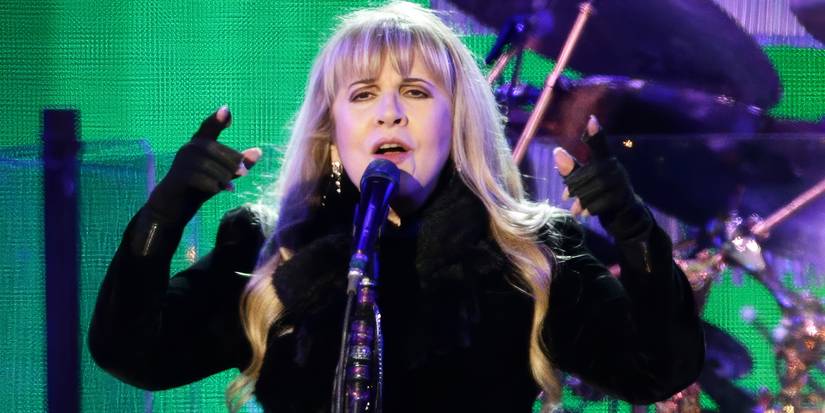 Image via Yui Mok/PA Images/Startraksphoto.com
Nicks made no lyrical or musical contributions to “Come,” and she refused to sing it live during Say You Will’s accompanying tour or since. The reasoning, apparently, was the song’s lyrical content. Buckingham himself explained, “I asked her to sing on the song, and she wouldn’t. I think she thought it was dirty.” The sexual references, in particular, seemed to bother the feminist rock icon. Buckingham continued, “Stevie sees herself as being defined within a certain set of boundaries, outside of which things probably don’t ring true to her, or to the people who listen to what she does.”
Although he was able to articulate his longtime bandmate’s reservations about the track, he still didn’t hold her opinion in high esteem. When pressed about her refusal to participate in “Come,” he said, “That tells you something about someone who has been a rock icon but, in some ways, is still quite a conservative person. And I don’t see her as someone who has lived her life very conservatively. So, there’s an interesting dichotomy there.”
Indeed, Nicks seems far from conservative, both in her words and actions. In addition to eschewing traditional gender expectations, including the pressure to marry and have children, the rock icon has long been an outspoken feminist and an advocate for LGBTQ rights. While it’s impossible to say what, exactly, disturbed her about “Come” (she has never spoken publicly on the subject), it’s possible that her protestations were fueled not by social or political conservativism but by disgust over the sexually disparaging way that Buckingham spoke about his ex as well as the song’s implications that her then-partner, a woman, wouldn’t be able to please her the way he had. Regardless of Nicks’ reasons, “Come” remains one of the many sharp points of contention between her and Buckingham, and it doesn’t look like she will close the distance between herself and that track any time soon.





 English (US) ·