.png)
 Image via Showcase

Published Jan 31, 2026, 5:18 PM EST
Michael John Petty is a Senior Author for Collider who spends his days writing, in fellowship with his local church, and enjoying each new day with his wife and daughters. At Collider, he writes features and reviews, and has interviewed the cast and crew of Dark Winds. In addition to writing about stories, Michael has told a few of his own. His first work of self-published fiction – The Beast of Bear-tooth Mountain – became a #1 Best Seller in "Religious Fiction Short Stories" on Amazon in 2023. His Western short story, The Devil's Left Hand, received the Spur Award for "Best Western Short Fiction" from the Western Writers of America in 2025. Michael currently resides in North Idaho with his growing family.
While there is no shortage of science fiction staples here in the 21st century, one lesser-known Canadian series managed to take a compelling look at the future through the eyes of one character who is stranded in the past. Or, well, the present at the time of airing. If you've never heard of Continuum, this four-season Showcase drama connects the technologically advanced and overly controlled world of 2077 with the year 2012 — and it feels more relevant than ever.
'Continuum' Predicted Our World's Over-Reliance on Technology in All Areas of Life (Among Other Ideas)
 Image via Showcase
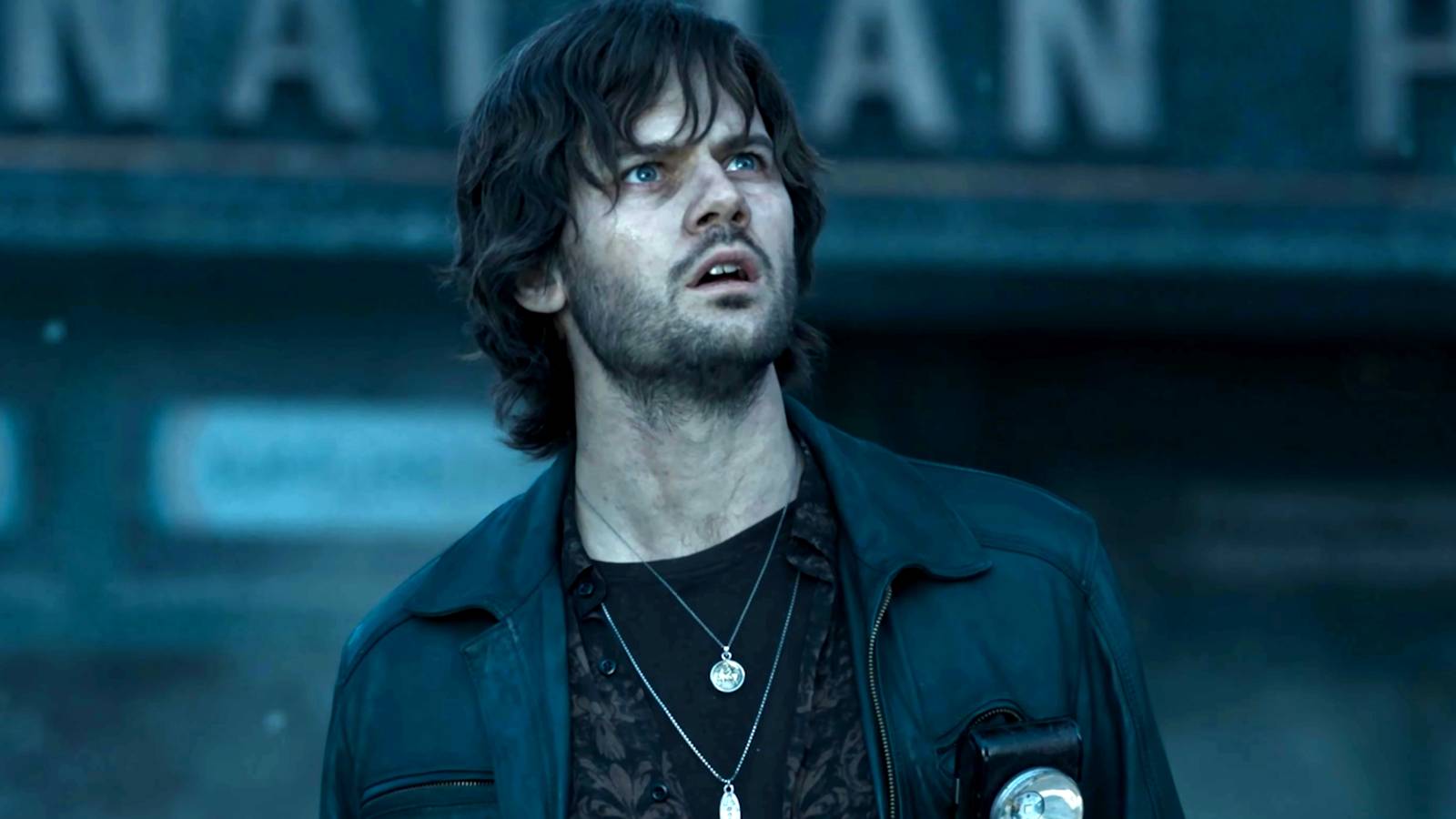
Although Continuum has only been off the air for a decade, it's one of those sci-fi shows that just sticks with you. When City Protective Services (CPS) operative Kiera Cameron (Rachel Nichols) is accidentally sent from 2077 back to the past after attempting to apprehend the terrorist cell Liber8, she finds herself in 2012 with no way to get home. The future she came from was under an incredible amount of Orwellian technological surveillance, run entirely by a government bought and paid for by corporations. This grab for power lulled the citizens of the North American Union into complacency, decorated by the adornments of futuristic technology meant to keep the people in line as much as it was meant to make them live longer. But in present-day Vancouver, Kiera is forced to reconcile with her beliefs, slowly deconstructing them as she regains her own personal autonomy.
Of course, the biggest change for Kiera is that the world around her is not so clothed in technology as the one she came from. Having to rely on good, old-fashioned police work — with the help of her new partner, Detective Carlos Fonnegra (Victor Webster) — Kiera fights hard to track down Liber8 before they can commit their next terrorist acts, but never fully gets used to being so "off the grid" by comparison to her old life. Although Kiera uses the future tech she brought with her as an advantage over her opponents (not to mention her colleagues), it also comes at a disadvantage on occasion. Not only can her entire body be hijacked if the right hacker finds his way into her CMR system, but she can be both spied on and put out of commission if infiltrated digitally. Sure, it helps her to see fingerprints at crime scenes, put data together, and contact Alec Sadler (Erik Knudsen) at a whim, but the constant digital connection can, on occasion, prove too much for her body to handle — in our world of constant connection and smartphones, we can see the future danger clearly.
Perhaps the greatest example of the tension between a world overruled by technology and the simpler living of 2012 (by comparison to 2077, anyway) comes in the form of Alec and his step-brother Julian Randall (Richard Harmon). Alec is a technological pioneer who envisions a world of possibilities. It's largely because of Alec's vision for the future — a vision his older self (played by William B. Davis) sends Kiera back through time to stop — that the world of 2077 becomes a reality. But Julian disagrees with his step-brother's future hopes and dreams. He takes more after his own father, a grassroots activist who wants to secure Vancouver's farmland and who distances himself from the convenience of modern technology. While there are also intense political differences between the two, it's their differing opinions on the use of technology that arguably becomes the focal point of their conflict. Of course, this isn't to say that technology is bad or unhelpful. As Alec eventually learns, technology itself is simply a tool, one that can be used for good or for bad.
'Continuum' Holds Up As One of the Best Sci-Fi Shows That Everyone Forgets About
Continuum ran for four seasons on Showcase in Canada and eventually on Syfy in the U.S. before it was canceled a bit prematurely. Although series creator Simon Barry had more ideas in mind for the show — and there were several mythology-based loose ends that could've been tied up better — the network granted the sci-fi series a final season of six episodes to wrap it all up. So, this is one short-lived series that actually ends (largely) on its own terms. The final character arcs are mostly satisfying, and though Kiera's ending is a bit heartbreaking, it is also warranted given her own choices made throughout the show.
Continuum is an overall solid time-travel show that shows us a dystopian future entirely reliant on technology and corporate overlords, juxtaposing it with modern-day examples of what can be done in the past (our present) to prevent such a future from occurring. With flash-forwards to Kiera's life in the future and alternate timelines that result from Liber8's time in the past, the show challenges all your preconceived notions of time travel and pushes its hero to make tough choices that she may never be fully able to come back from. This is certainly one sci-fi series that's better than it's given credit for.


 English (US) ·