.png)
Adam Meeks studied film at NYU’s Tisch School for the Arts, where one can imagine the true-to-his-roots filmmaker learning alongside eclectic classmates. Manhattan must have felt like a stark break from the reality of rural Ohio, where Meeks grew up, but instead of abandoning his upbringing, the way so many do after moving to the big city, the writer-director honors what he left behind — and especially those struggling with opioid epidemic back home — in his feature debut, “Union County.” The make-or-break ingredient turns out to be British actor Will Poulter, whose immersive commitment dovetails beautifully with Meeks’ unvarnished sensibility.
Expanded from a 2020 short of the same name, Meeks’ raw, honest movie fits neatly within a tradition of red-state escapees who remain committed to depicting the communities they know best with empathy and compassion (other examples include Nicole Riegel’s slice-of-life indie “Holler” and J.D. Vance’s bestselling memoir “Hillbilly Elegy”). While Hollywood remains disproportionately invested in depicting glamorous coastal lifestyles, Meeks focuses on what’s going on with the other 70% of the country, paying particular attention to a handful of recovering drug addicts.
Committed to authenticity, Meeks takes an unconventional approach that can feel almost like social work at times, partnering with the Adult Recovery Court in Bellfontaine, Ohio (pronounced “Bell Fountain”). With the exception of Poulter (who plays Cody Parsons) and Noah Centineo (as his brother Jack), nearly everyone in the film is a nonprofessional actor, tasked with bringing their own truth to the screen. The naturalistic drama opens with a handful of testimonials, as court-supervised addicts step to the lectern and address the judge, sharing their progress and setbacks on the route to sobriety.
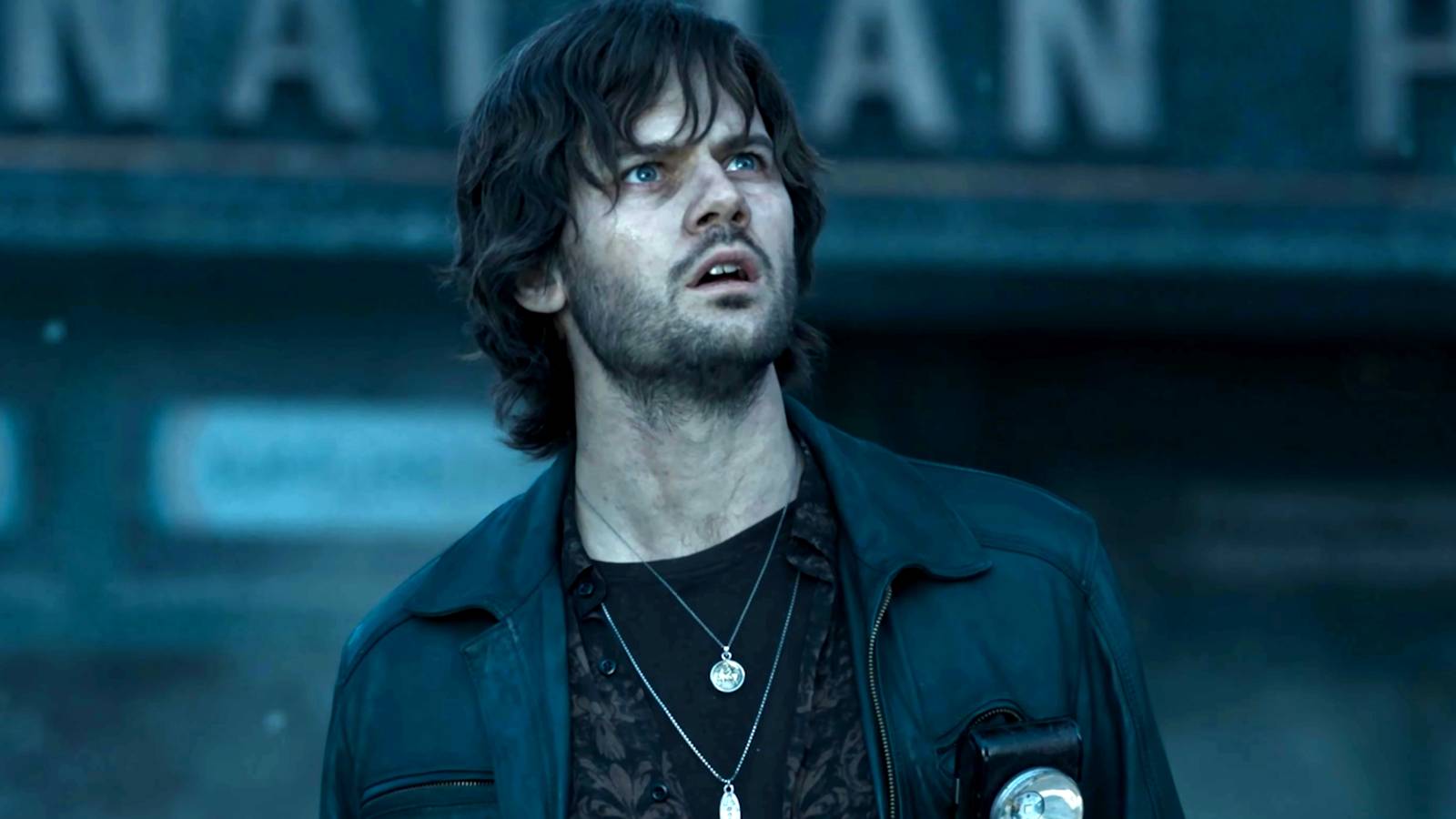
All but unrecognizable behind his scruffy beard, Poulter blends right in with these hard-knock folks, whose homemade tattoos and missing teeth are the real deal. Whether from news reports or personal experience, we know by now what addiction looks like (roughly a third of Americans have a family member with an opioid problem). Too many of those stories turn out tragically. While Meeks’ movie doesn’t ignore that dimension, the filmmaker prefers to emphasize how entire communities have come together to fight back.
The recovering addicts we meet in the opening scene are supported by social workers and sponsors, as well as the legal system (which is so often presented as a kind of punishment, but here seems to prioritize forgiveness and recovery). When Poulter takes the podium, we don’t see an actor, but a good man worn down by bad decisions. This is Clay, who accepts that he’s an addict, but isn’t quite ready to change his life. He sleeps in his car, which affords him a degree of independence (or so he thinks).
The program requires him to get a job and a proper residence, steps that “Union County” chronicles, without turning away from his stumbles. Rehabilitation is rarely a straight line, but there’s something in Clay/Poulter’s face that suggests he could do it — his eyes are clear, his gaze determined — whereas Centineo’s Jack looks like trouble — a bad influence. We ought to know better than to judge a book by its cover, and Meeks reveals in time that it was Clay who got Jack hooked, not the other way around. If anything, Jack is the responsible one, helping Clay find work at the local lumber mill (the car and the job are the same as they were in the short film, though most of the faces are different).
Instead of taking comfort in seeing them reunited, we watch warily. Jack brings his brother along to a campfire, where he drinks — enough to fail his next toxicology screening — while Clay chats with Anna (Elise Kibler), a woman who’ll become important later. She’s an ex-addict, too, it turns out, and though we might hope she could steer him in the right direction, we also respect her for refusing to get involved with someone who could jeopardize custody of her child. Life has a way of getting complicated when you introduce temptation, and though “Union County” can be frustratingly simple at times, the stakes are life and death. Not everyone Meeks introduces will make it to the end.
After one character relapses, Clay is offered the empty room at a group home. But he’s still susceptible to opioid use as well, and the scene where he shoots up — passing out behind the wheel, as his white car rolls forward into a ditch — says everything about how dangerous addiction can be. No wonder his sister (Emily Meade) freaks out when Clay shows up at her house, calling the cops to come take him away. Clay starts the film with a clean slate (in the audience’s eyes, at least), but he’s been letting others down for more than a decade.
Will Clay get it together by the end of the film? “Union County” knows it doesn’t work that way. Success is measured in days of sobriety, as well as the incremental realization that these addicts are not alone (a kindly sponsor played by Annette Deao beautifully embodies the patience it takes to support such cases). If Meeks’ project somehow feels less than the sum of its parts, that’s likely because the filmmaker doesn’t impose a more compelling crime story or romance to hook us. It’s one of those projects that is “about what it is about,” minus subplots or sizzle. There’s integrity in that choice, even if it ultimately costs “Union County” the kind of commercial appeal we expect from Sundance movies.




 English (US) ·