.png)
 1 week ago
34
1 week ago
34
Bored of "perfect" sharpness? These five optical oddities force you to see the world differently.
We are living through an unprecedented golden age of optical engineering. The latest generation of premium glass from Sony, Canon, Nikon, and Sigma has essentially solved lens design. Corner-to-corner sharpness at wide apertures? Done. Geometric distortion corrected to imperceptible levels? Standard. Chromatic aberration? A relic of the past. The modern G-Master or L-series lens is a technological marvel, a miniaturized computer of precision-ground elements and exotic coatings that renders reality with ruthless accuracy.
And that might be exactly your problem.
When your equipment is flawless, something strange happens to the creative process. The friction disappears. The happy accidents vanish. The images start to feel less like personal expressions and more like clinical documentation. You find yourself reaching for the camera less often, and when you do pick it up, the results feel hollow despite their technical perfection. The files are sharp, the exposure is correct, the colors are accurate, and you feel absolutely nothing when you look at them. If this sounds familiar, you don't need another firmware update or a higher-resolution sensor. You need glass with personality, flaws, and opinions about how images should look.
What follows are five lenses that will break you out of your creative rut by breaking all the rules you've internalized about what "good" optics should do. None of them will win a resolution chart shootout. All of them will make you fall in love with photography again.
1. Lensbaby Twist 60
The Petzval lens design dates back to 1840, created by Joseph Petzval for portrait photography in the early days of the medium. Its defining characteristic is a sharp central region surrounded by increasingly aggressive radial blur that appears to spin around the edges of the frame. For over a century, this was considered a flaw to be corrected. Lensbaby decided it was a feature to be celebrated.
The Lensbaby Twist 60 is a modern recreation of this antique optical formula, built with contemporary manufacturing but deliberately preserving that swirling, dreamy edge distortion. The center of the frame is genuinely sharp, capable of rendering fine detail on modern high-resolution sensors. But as your eye moves toward the edges, the image dissolves into a painterly vortex that seems to pull the viewer's attention back toward the center like water circling a drain.
 What makes this lens transformative for burned-out photographers is how completely it invalidates modern compositional dogma. Forget the rule of thirds. Forget placing your subject on power points. The Twist 60 demands centered subjects, and suddenly all those years of training yourself to avoid centered compositions become irrelevant. You're forced to think differently about framing from the moment you raise the camera to your eye.
The lens also gamifies your environment in unexpected ways. That swirl effect isn't equally dramatic with every background. Smooth, featureless walls produce subtle results. But textured surfaces like foliage, gravel, city lights, or brick walls create violent, hypnotic spirals that transform mundane backgrounds into something that looks like a Van Gogh painting come to life. You'll find yourself hunting for the right backdrop the way a landscape photographer chases golden hour, suddenly engaged with your surroundings in a way that sharp, characterless glass never demanded.
2. TTArtisan Tilt 50mm f/1.4
Tilt-shift lenses have traditionally been the exclusive domain of architectural photographers and well-funded professionals, with prices from Canon and Nikon hovering around $2,000. TTArtisan threw a wrench into that assumption with their Tilt 50mm f/1.4, a fully manual lens that lets you physically bend the optical axis at a fraction of the expected price.
By tilting the lens barrel relative to the sensor plane, you invoke the Scheimpflug principle, which allows the plane of focus to be angled rather than running parallel to your sensor. In practical terms, this means you can photograph a long wall receding into the distance and render the entire surface sharp at f/1.4, something that would otherwise require stopping down to f/11 or beyond. Conversely, you can tilt the focus plane to intersect with only a narrow slice of your subject, rendering a person's eyes tack sharp while their chin and forehead dissolve into blur.
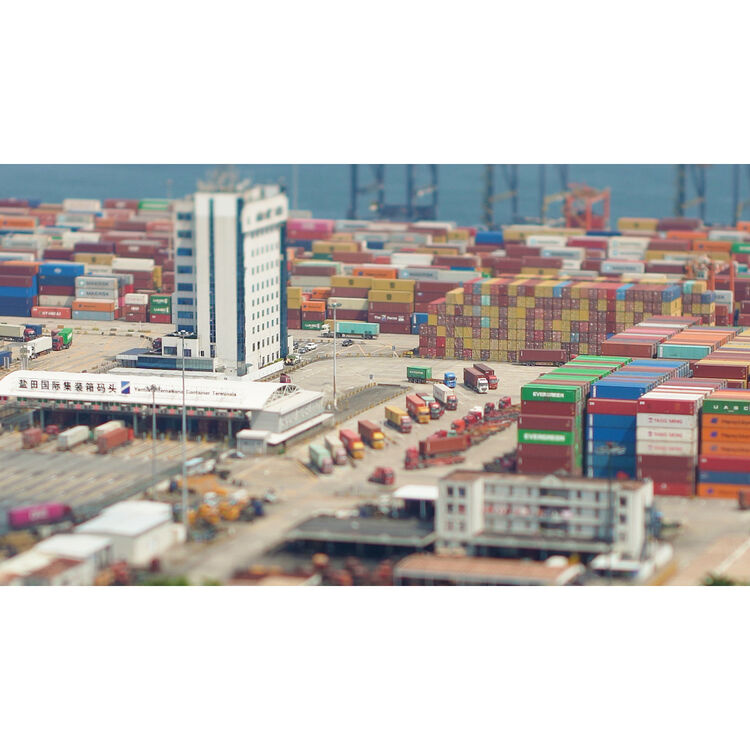 For photographers stuck in a creative rut, this lens forces an entirely new mode of thinking. You are no longer simply choosing a focus distance and aperture. You are placing an imaginary plane through three-dimensional space and deciding which slice of reality will be rendered sharp. It is an almost sculptural way of thinking about photography, treating focus as a creative tool rather than a technical necessity.
The "miniature fake" effect is probably the most famous application of tilt lenses, where tilting the focus plane makes real cityscapes look like tiny model train sets. But the creative applications extend far beyond that single trick. Portraits take on a dreamlike quality when the focus plane is tilted to intersect only with the eyes, leaving everything else swimming in painterly blur. Product photography becomes more dynamic when you can control exactly which elements draw the eye. Landscape photography gains new possibilities when you can hold both foreground flowers and distant mountains in focus without diffraction-limited apertures.
3. Laowa 24mm f/14 Probe
Some lenses are weird because of their optical formulas. The Laowa 24mm f/14 Probe is weird because of its physical form factor. It looks less like a camera lens and more like something a doctor would use to inspect your intestines: a long, rigid barrel roughly the diameter of a finger, extending nearly a foot from your camera body. The front element is waterproof and ringed with built-in LED lights. The minimum focus distance is measured in millimeters rather than feet.
This lens exists to show you worlds that are physically impossible to photograph with conventional optics. The narrow barrel slides into spaces no other lens can reach. Slip it through a wedding ring and focus on the bride's face behind it. Push it through the neck of a wine bottle and photograph the refracted light on the inside surface. Submerge it in a creek and capture the alien landscape of an underwater rock while keeping the surrounding riverbank in frame. Each of these shots would require elaborate rigs, specialty housings, or post-processing composites with any other lens. The Probe makes them trivially easy.
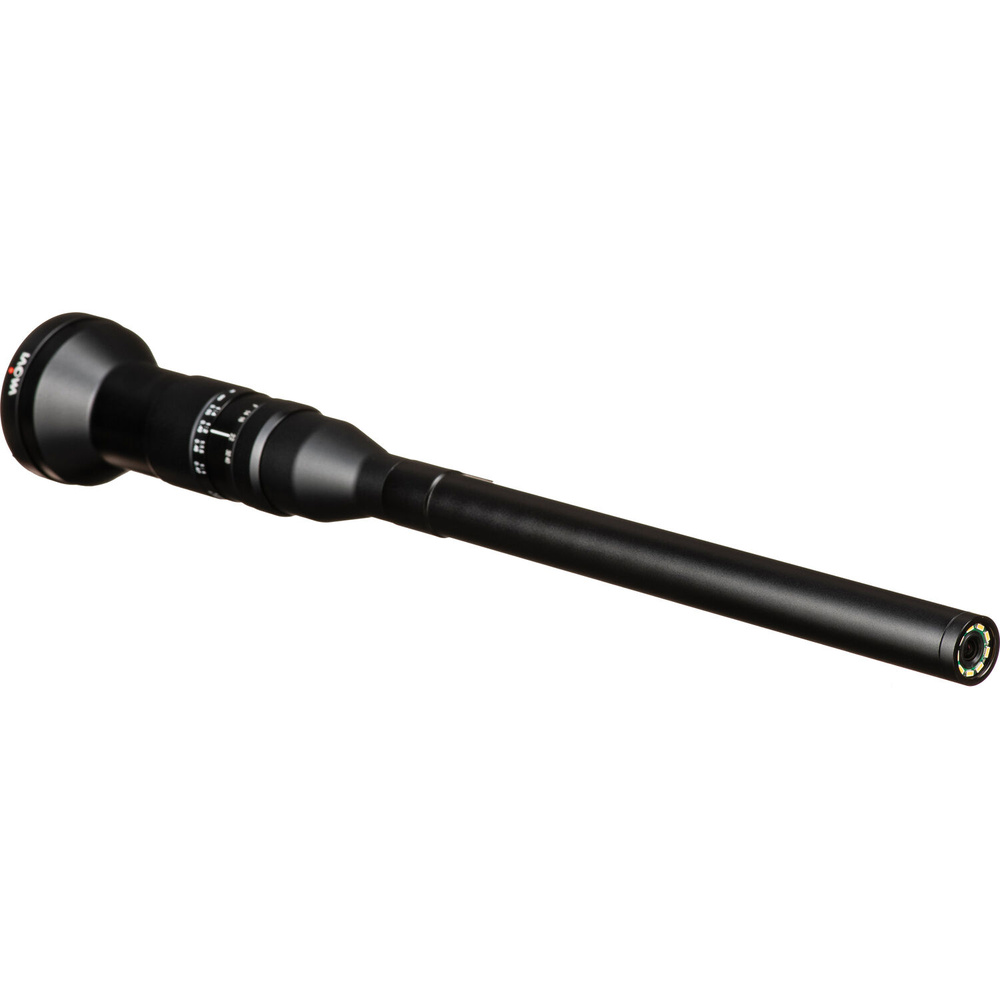 What cures creative burnout here is the complete inversion of how you think about subject selection. Instead of looking for interesting scenes, you start looking for interesting apertures: holes, gaps, transparent containers, any opening that might reveal an unexpected perspective. Your desk becomes a safari through unexplored territory. The gap between couch cushions becomes a compositional opportunity. A glass of water transforms into an abstract light sculpture. The lens doesn't just change your images; it changes what you consider photographable in the first place.
The built-in LEDs are a crucial feature, since you'll often be shooting in spaces where no ambient light exists. They're bright enough to illuminate small subjects without additional gear, making the Probe remarkably self-contained for such a specialty optic. You can quite literally pick it up and start exploring without any preparation, which lowers the barrier to creative experimentation dramatically. If you want to dive deeper into this kind of extreme close-up work, Fstoppers offers a comprehensive tutorial called Mastering Macro Photography that covers both shooting techniques and post-processing workflows.
4. Lomography Daguerreotype Achromat 2.9/64
Louis Daguerre's original lens design from 1839 was, by modern standards, hilariously flawed. It was soft, it glowed around highlights, it rendered images with a dreamy haze that looked more like memory than documentation. Lomography looked at those "flaws" and saw character worth preserving, so they built a brass and glass recreation that brings 19th-century optical rendering to modern mirrorless cameras.
The Lomography Daguerreotype Achromat 2.9/64 Art Lens uses Waterhouse aperture stops, a system that predates the iris diaphragm. Instead of turning a ring to change your f-stop, you physically drop metal plates with different-sized holes into a slot in the lens barrel. It sounds cumbersome, and it is, but the ritual of swapping aperture plates forces a mindfulness about exposure decisions that automatic systems eliminate. Each plate also produces a slightly different quality of blur and glow, giving you creative options that extend beyond simple depth-of-field control.
 The optical rendering is unlike anything produced by modern designs. Highlights bloom with an ethereal glow. Contrast is reduced in a way that feels painterly rather than flat. Fine detail is present but softened, as if viewed through a nostalgic haze. Digital files shot through this lens look like they were pulled from a museum archive, lending a timelessness to contemporary subjects that would look clinical through modern glass.
For photographers paralyzed by pixel-peeping and obsessive sharpness testing, this lens is genuinely therapeutic. It cannot be evaluated by resolution charts. It does not reward technical perfection. The only meaningful question you can ask about a Daguerreotype Achromat image is whether it evokes the feeling you intended, which is the question you should have been asking all along. It forces you to shoot for light, shape, and atmosphere rather than detail, removing the entire framework of technical anxiety that makes modern photography feel like a test you might fail.
5. Sirui 50mm f/1.8 Anamorphic 1.33x
Anamorphic lenses have defined the look of cinema for over half a century. The horizontal squeeze that produces that ultra-wide 2.4:1 aspect ratio, the oval bokeh, the horizontal streak flares across bright light sources: these characteristics are visual shorthand for "this is a movie." They're also visual characteristics that have been essentially impossible for still photographers and independent filmmakers to access, because professional anamorphic glass costs more than most cars.
The Sirui 50mm f/1.8 Anamorphic 1.33x brings cinematic optical rendering to a price point that independent creators can actually justify. The 1.33x squeeze factor means the image captured on your sensor is horizontally compressed, and you "de-squeeze" it in post-production to reveal the full ultra-wide frame. The process adds a step to your workflow, but that step comes with optical characteristics no spherical lens can replicate.
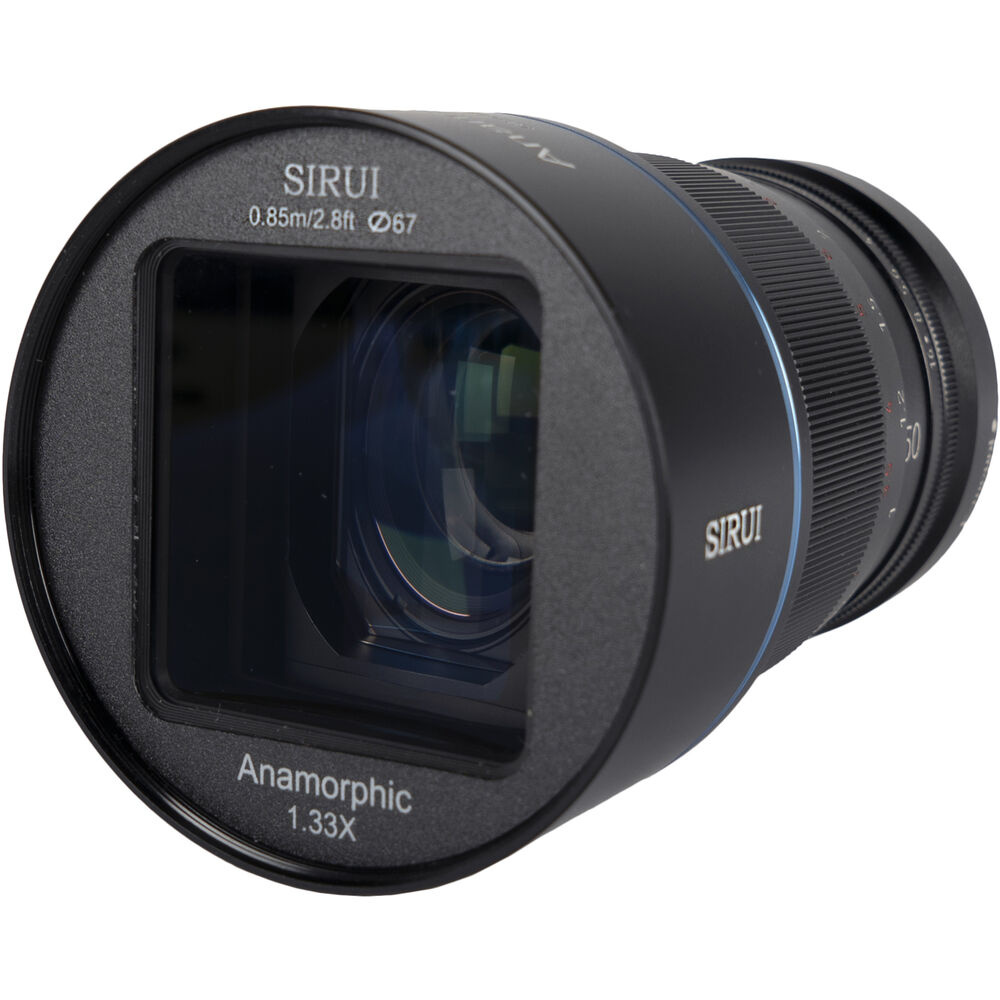 The flares alone are worth the price of admission. Point the lens at any bright light source and you'll get those signature horizontal blue streaks cutting across the frame. Streetlamps become dramatic accent lighting. Practical sources in your scene become compositional elements rather than problems to manage. You start looking for light sources to include in your frame rather than trying to keep them out.
The oval bokeh fundamentally changes how out-of-focus elements render. Instead of circular blur shapes, you get stretched ovals that feel immediately cinematic. The effect is impossible to replicate convincingly in post-processing, no matter how sophisticated your blur tools are, because it's a true optical characteristic rather than a digital approximation.
What cures burnout here is the psychological shift from photographer to cinematographer. You stop thinking about single decisive moments and start envisioning sequences. You compose for a different aspect ratio that forces you to think horizontally in ways that the 3:2 still frame never demanded. Every walk around the block feels like location scouting. Every errand becomes an opportunity to capture B-roll. The lens doesn't just change your output; it changes your entire relationship with visual storytelling. For those who want to explore this cinematic mindset further, the Fstoppers tutorial Introduction to Video: A Photographer's Guide to Filmmaking provides an excellent foundation for still photographers making the transition to motion.
The Character Prescription
Modern lens design has given us technical perfection, and that perfection has paradoxically made many photographers less creative. When the equipment has no opinion about how images should look, the photographer must supply all the vision. That's theoretically liberating but practically exhausting, especially when you're already battling creative burnout.
Constraints aren't limitations. They're creative collaborators. When a lens fights against your default instincts, it forces you to develop new instincts. When the equipment has character flaws, your images develop character too.
If your photography has started feeling like a chore, don't buy a sharper lens. Buy a weirder one. Mount it on your camera for a week and refuse to take it off. Let its quirks and limitations push you into unfamiliar territory. The constraints will frustrate you at first, but frustration and engagement feel remarkably similar after months of creative numbness. That frustration might be exactly what you've been missing.






 English (US) ·