.png)
 5 days ago
10
5 days ago
10

DJI has announced the RS 5, a new lightweight, professional-grade gimbal. The latest entry in DJI’s celebrated Ronin series, the RS 5 promises improved subject tracking, stability, and control, all with a longer battery life.
The DJI RS 5 includes the latest generation of the company’s RS Intelligent Tracking Module, which has been updated since its debut less than a year ago with the DJI RS 4 Mini gimbal. The new RS Enhanced Intelligent Tracking Module enables users to track any subject directly from the gimbal’s touchscreen and can track a diverse array of objects, including people, vehicles, pets, and more, per DJI. The module can also maintain locked focus on a human subject up to 10 meters (just over 30 feet) away. If the subject leaves the frame, DJI says the new module can quickly reacquire focus. The module is installed magnetically and doesn’t require any additional adapters or accessories.

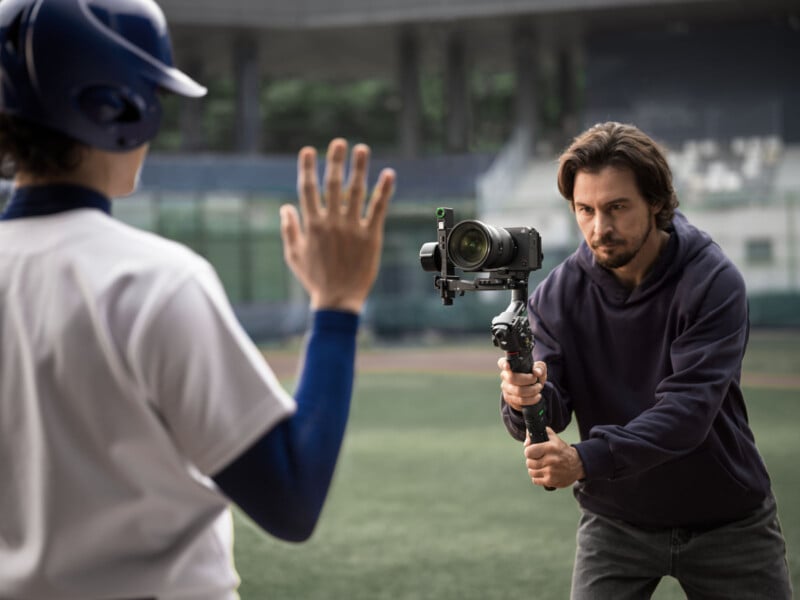
The DJI RS 5 also includes the newest fifth-generation RS Stabilization Algorithm, which promises 50% higher peak motor torque. The greater power ensures greater stability during fast movement, such as when the filmmaker is walking or even running, or when the camera undergoes significant movement during angle changes. The new algorithm also promises “significantly improved” stability when recording vertical video, an essential component in a lot of content creation workflows these days. The gimbal doesn’t require any special accessories to shoot vertically, either.
The DJI RS 5 weighs just 1.46 kilograms (3.2 pounds) with its battery grip and quick-release plates installed, and the RS 5 can support payloads up to three kilograms (6.6 pounds). This means the DJI RS 5 supports a very wide range of mainstream mirrorless camera and lens combinations. For example, a Sony a7 V and Sony FE 24-70mm f/2.8 GM II lens weigh about 1.4 kilograms (around three pounds), leaving plenty of leeway for heavier cameras and lenses.
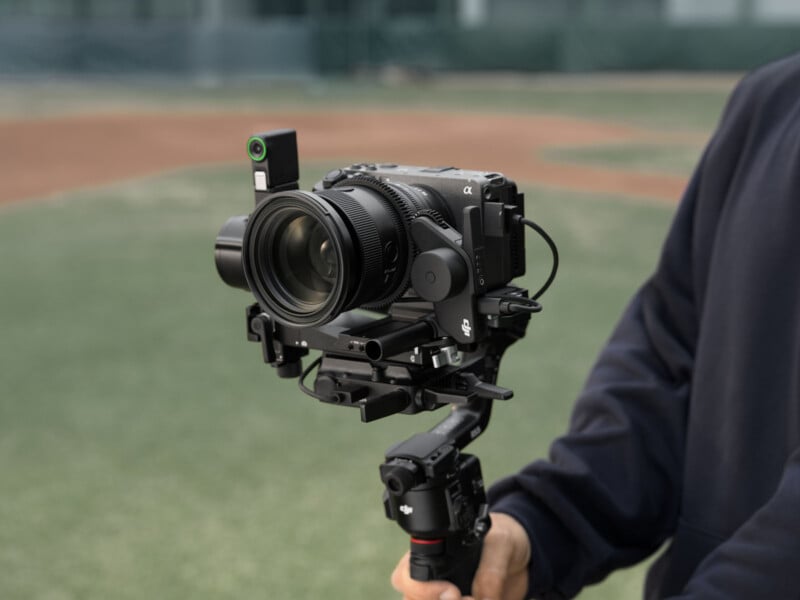
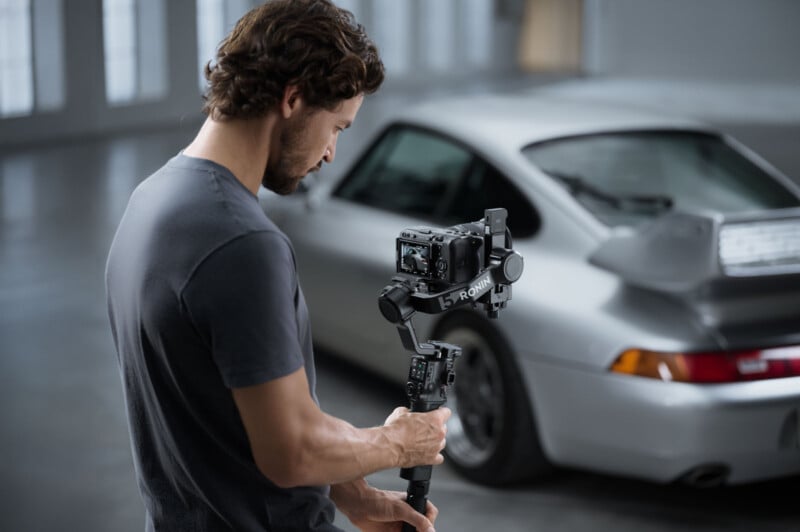
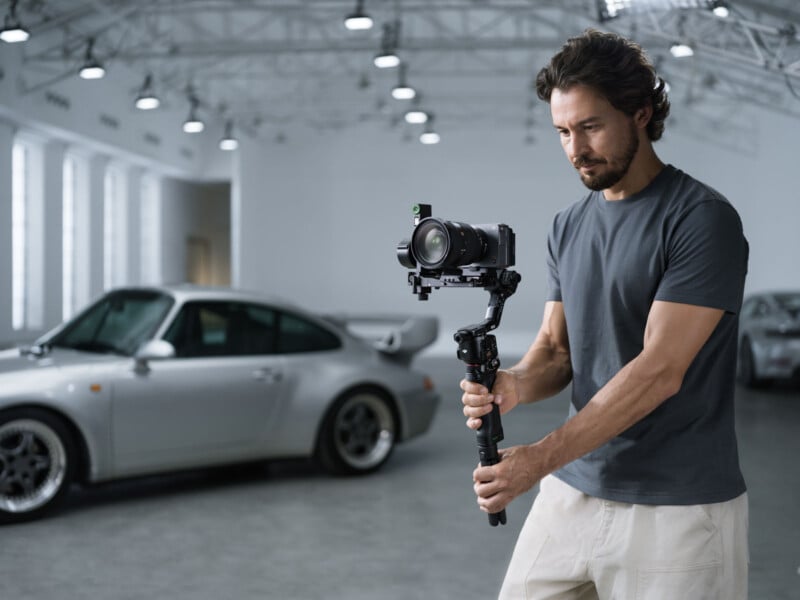
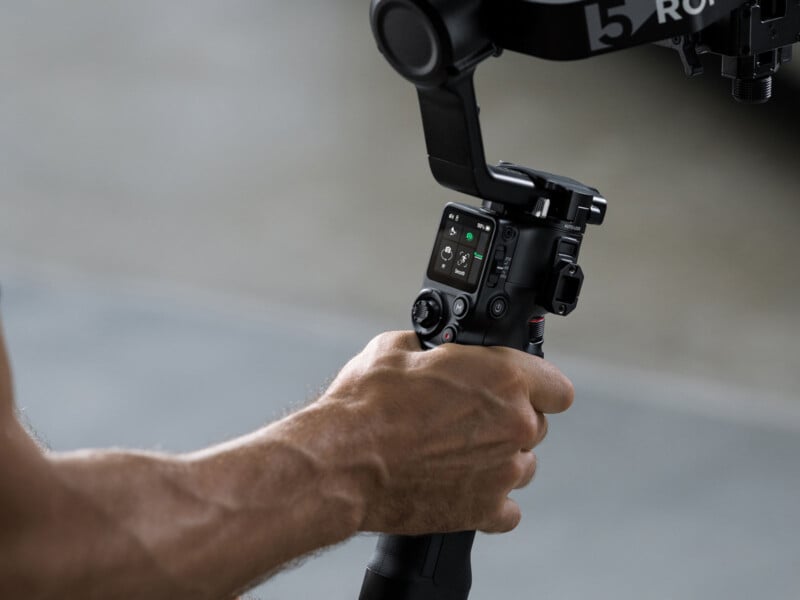
From a design standpoint, the RS 5 features a new Electronic Briefcase Handle design that promises to make capturing footage with dynamic angles easier than ever. The handle offers electronic control over the footage and features a comfortable grip with easy-to-reach controls, per DJI. The RS 5 can be controlled entirely with one hand. It also includes a new on-screen Z-Axis Indicator to help users dial in the perfect gait to reduce camera shake when filming. There are also new fully adjustable fine-tuning knobs with Teflon interlayers on each axis arm, which DJI says enable more precise balancing when installing a camera.

The RS 5 can be fully charged in just one hour, which is 60% better than the RS 4. The standard battery offers 14 hours of runtime, more than enough for a long day on set. There is also a new BG70 High-Capacity Battery Grip that further extends runtime to 30 hours.
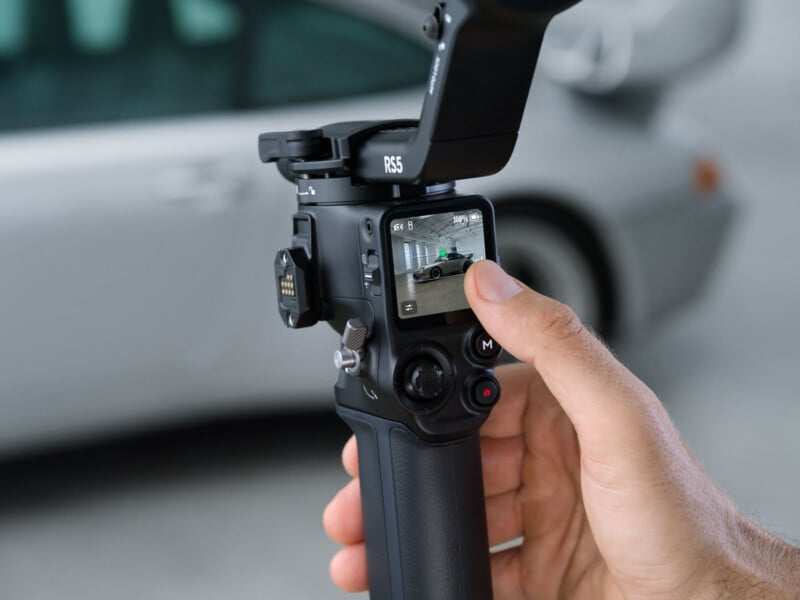
Good news for Panasonic and Fujifilm camera owners, too, as the RS 5’s Bluetooth shutter now supports cameras from these manufacturers, joining existing support for Sony, Canon, and Nikon cameras. As expected, the DJI RS 5 works with DJI’s Focus Pro Motors, which enable videographers to adjust zoom via the RS 5’s joystick control and focus using the gimbal’s dial wheel. Further, the DJI SDR Transmission accessory delivers remote HD feeds and remote gimbal and camera control.
Pricing and Availability
Like recent DJI product launches, the RS 5 will not be available in the United States at launch through DJI’s official retail channels. However, if other products are any indication, the DJI RS 5 will still be available through some U.S. retailers. The DJI RS 5 will cost $479 in Canada, and the RS 5 Combo kit will cost $589. This should not be considered a proxy for an official U.S. price, even though the DJI store in Canada uses USD.
The DJI RS 5 will be €569 in Europe, with the RS 5 Combo priced at €719. In the United Kingdom, the standard RS 5 is £485, and the combo is £619.
Image credits: DJI








 English (US) ·