.png)
 1 week ago
22
1 week ago
22
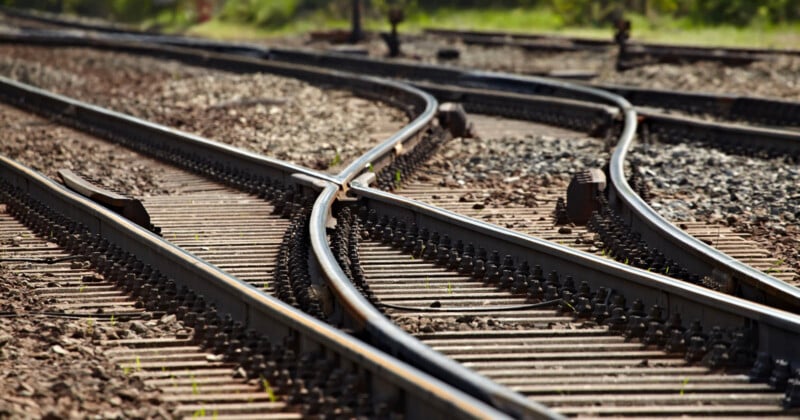
The New York Times photographer who stumbled across a vital clue at the scene of a train crash in Spain that claimed the lives of 45 people has said the story “ignited a firestorm across Spanish media.”
Writing for the Times this weekend, photographer Finnbarr O’Reilly explains he received a call from an editor asking him how quickly he could get to the scene in southern Spain.
O’Reilly, who lives in Barcelona, hopped on a flight as quickly as he could and arrived 22 hours after the crash.
“The cause of the crash was a mystery. It occurred on a straight stretch of track. The authorities said the trains and the tracks had recently been maintained. Taking a forensic approach, I knew I’d need to photograph as many angles of the wreckage as possible,” O’Reilly writes.
Protocol dictates that authorities stop media and the public from getting too close to the scene, setting up cordons and roadblocks. When he first arrived, he scaled a hill to get a view of the stricken trains, but a patrolling drone “buzzed” at him several times, which he interpreted as, ‘you better leave.’
Nevertheless, O’Reilly captured a photo from the hill that was good enough for the front cover of the Times the next day. But stories like this one can carry on for days and O’Reilly’s job wasn’t over yet: the following morning he was there before daybreak and trekked through forests, streams, and undergrowth in the hope he could capture a different angle.
“I found a vantage point in some bushes far enough away to avoid interfering with the investigation while offering a partial view of the second train, which had come to rest about 2,000 feet from the wreck I photographed the day before,” he says.
But on the route back, O’Reilly says he “stumbled through some bushes” and found himself on the edge of a stream in which there was a hulking piece of metal. “At first I thought it was just junk — it was not cordoned off like the rest of the wreckage — but I quickly put things together in my mind,” O’Reilly says.
The piece is thought to be something called a bogie, which is a piece of framework beneath the carriage. It was missing from the underside of the train in O’Reilly’s front page picture.
“Understanding that it could be important evidence, I kept my distance, took a few pictures, then climbed away, not wanting to disturb the area. I sent the photos to my colleagues, who swiftly informed the authorities while beginning their own investigation,” O’Reilly says.
“The publication of our story and photos ignited a firestorm across Spanish media and raised questions about the thoroughness of the investigation.”
The authorities have said they were aware of the debris but didn’t tell the Times when they became aware. The cause of the accident has since been blamed on a rail fracture, according to a preliminary report by the rail accident investigating body CIAF.
“Based on the information available at this time, it can be hypothesised that the rail fracture occurred prior to the passage of the Iryo train involved in the accident and, therefore, prior to the derailment,” the CIAF says, per Reuters.
Image credits: Header photo licensed via Depositphotos.



 English (US) ·