.png)
 3 days ago
4
3 days ago
4
Learning to love the rangefinder was a long process for me. I could appreciate the simpler and sometimes slower approach to photography that a rangefinder represents. There is more demand on the photographer to focus, compose, and pre-visualize the image.
In fact, this more demanding process, which might at first be far less practical, eventually becomes the very thing you love about the cameras. However, in the digital rangefinder world, for all realistic intents and purposes, the main option is a Leica. This makes the digital rangefinder a prestigious and costly enterprise, and leaves the door wide open for other manufacturers to make far more accessible alternatives.
 This is the Pixii Max, and it certainly looks smart and capable.
On The PetaPixel Podcast, I have repeatedly implored the many Chinese lens and camera accessory manufacturers to bring a more cost-effective digital rangefinder to the market, which I feel would make excellent use of the many Chinese rangefinder lenses that are already available. However, I was completely ignoring a passionate group of talented photography lovers from France, who have been making such a product.
Pixii have been in the digital rangefinder game for about seven years now, constantly evolving its camera design with a modular and upgradeable platform. A faithful viewer of ours even had the latest full-frame version aptly named the Pixii Max, and lent the camera to me for a full review.
This is a $4,500 full-frame alternative to the Leica line of cameras and it uses the same M-mount lenses. The ordeal that followed was certainly interesting, but I can’t say that it was pleasant.
 The Pixii is a boutique camera, but it comes with an expensive price tag.
Pixii Max: How It Feels
Yes, I am revealing right from the start that I did not enjoy the shooting experience with the Pixii Max, and a significant part of that is due to the way the camera handles.
At first glance, the body design is quite appealing. The Pixii Max is svelte and streamlined, with a clean, modern look. At 17 ounces (480 grams), the Max is solid-feeling, although the classic metal brick design isn’t that comfortable to hold. This camera would definitely benefit from an auxiliary grip or thumb rest. Inside, you will find a Sony FW-50 battery powering the camera. Because of this, the battery life is quite poor and I struggled to get even a couple of hundred shots on a full charge. You will want to carry spares, for sure.
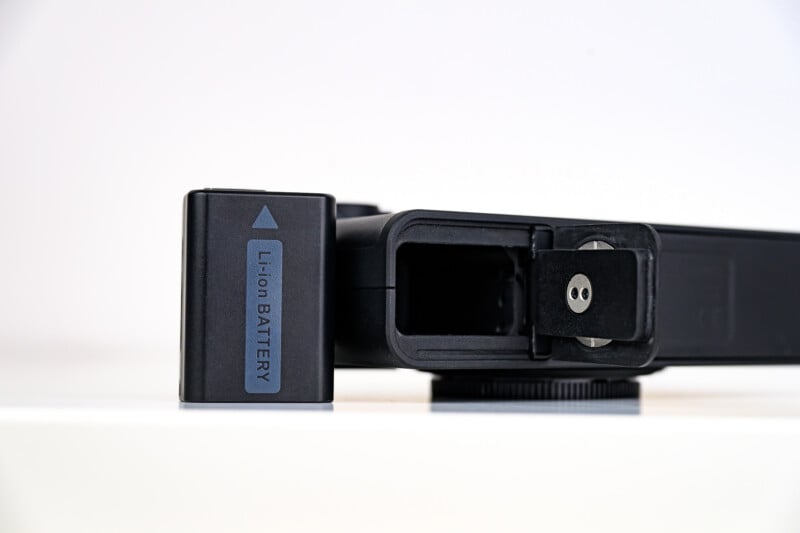 The battery life is pretty poor with Sony FW-50 batteries.
On top of the camera is a very simple shutter button, which is flush with the camera plate. I found this button to lack much haptic feedback on the half-press, and it required a fairly strong push to activate fully, which leads to some unwanted camera movement. Beside the shutter is a dedicated shutter speed dial which lacks any markings, save for a red A to indicate when the camera is in aperture priority mode. The shutter speed information is instead given on a really sleek screen right next to the shutter dial, which acts as a display for all your settings and camera status. There is also a metering indicator to let you set manual exposure properly while shooting from the hip.
Lastly, there is a cold shoe on the top of the camera, but because it has no electronic connections it obviously does not support any flashes and it also oddly doesn’t line up with the lens mount to allow it to properly work with an optional optical viewfinder either. I’m not sure what it’s good for, to be honest.
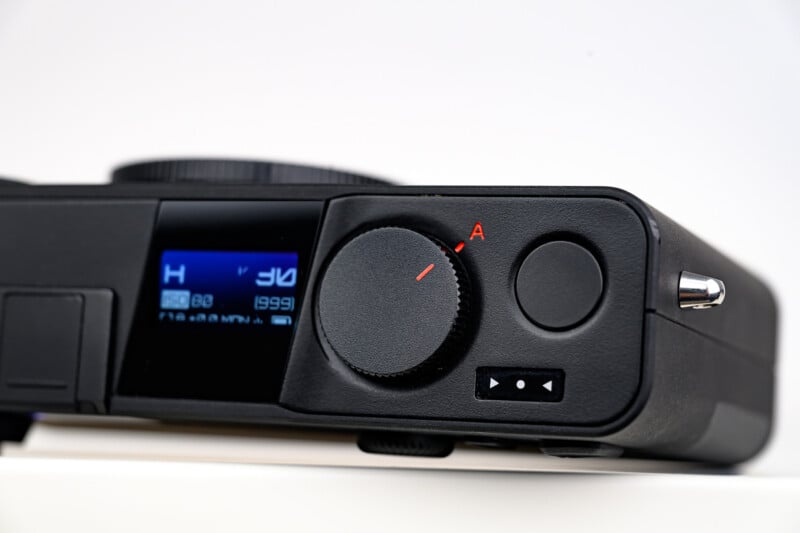 The top of the camera has a mushy shutter button, shutter dial, and top screen.
On the back of the camera is the USB port for both charging the camera and transferring images. The Pixii Max only supports up to 128GB of built-in memory with no option for removable media. Maybe I’m old-fashioned, but I far prefer having a removable memory option and I’m convinced that it would make the camera more affordable, too. I get that having internal storage as the only option seems very modern, but I find the lack of an alternative stressful and somewhat impractical.
There is a menu button which also functions as the on/off switch for the camera, but the start-up time is a fairly long few seconds. In a quick shooting situation, the delay is real, but this is also an issue for Leica rangefinders like the M EV1, so it’s at least not unique to Pixii.
 Controls are pretty minimal on the back, and there is lots of unused space that should have provided more buttons and dials.
There is also a simple thumb dial, which is used to navigate the cumbersome menu system. A single press of the menu button brings up tiles which can be seen in the viewfinder as well as on the top screen. Then you spin the dial to access the menu tile, you want to change and press the menu button again to change the option and use the dial again to select it. The problem is that the controls are very simple, but lack the elegance to make the process quick and enjoyable. Changing menu options feels ponderous, with the dial needing multiple spins to get it moving through the menu and lots of button mashing to accomplish the task of choosing a basic function. The whole experience lacked a feeling of refinement for me.
 Shutter speeds can go insanely fast because you only get an electronic shutter.
 The bottom plate looks nice. In fact, the overall fit and finish is fine.
I get that Pixii wanted to have a very simple and minimalist interface because it seems approachable and looks great from a design standpoint. However, sometimes too minimal an interface leads to the doubling up of functions with buttons, or it forces the photographer to use the camera in only one specific method, without any freedom to customize the experience. I had this same issue with the Sigma BF, which is a perfect example of another camera trying to force a minimalistic interface for the sake of aesthetics. I guess I just like a camera that gives you customizable buttons and alternate methods to adjust settings quickly. As it is, I found the shooting experience to be frustrating and limited.
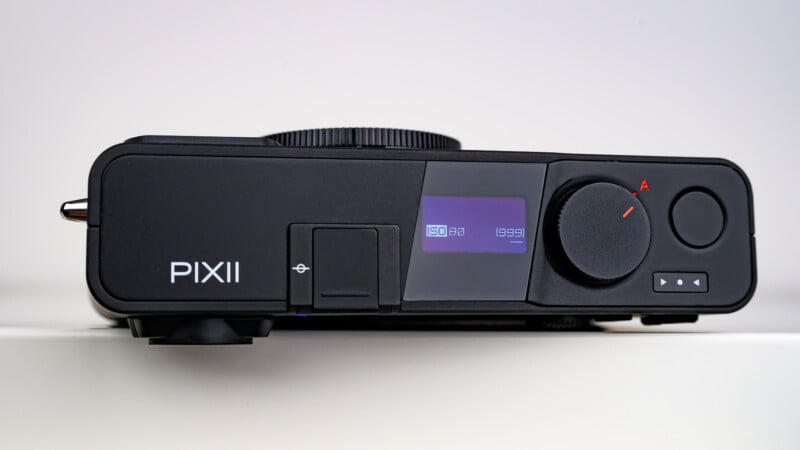 I like the trapezoidal screen window and the very modern look, but its style over substance.
 The menu system is minimalistic. Too much so for its own good.
Pixii Max: How It Shoots
I might not have loved the interface, but a camera is for taking pictures. The streets of New York always provide a rich and fast-paced testing ground for camera reviews. I also pushed the Pixii Max to, well, the max, by using a Thypoch Simera 75mm f/1.4 for most of my shots. This lens with its shallow depth of field would really show if the rangefinder was accurate enough to hit focus properly.
 The camera looks the part but I never fell in love with the handling.
 Manhattan is always a great place to test out a camera.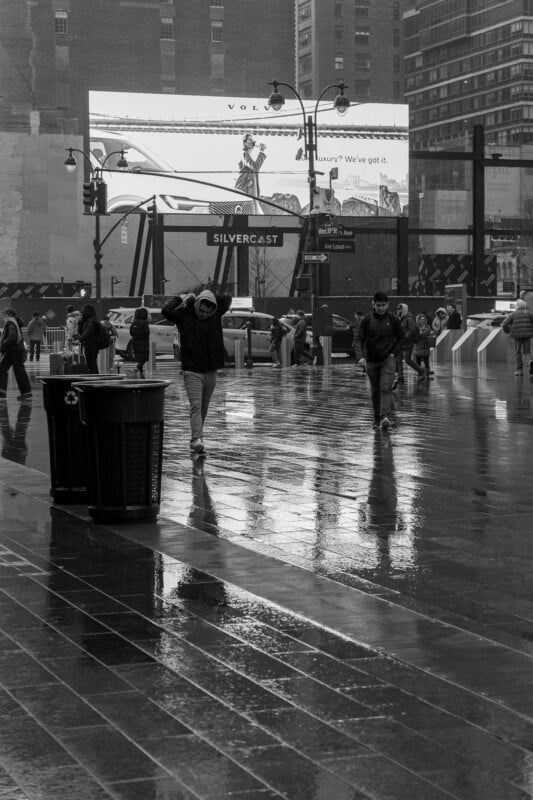

The viewfinder gives roughly a 28mm equivalent field of view with its outer dimensions and incorporates some very slick illuminated frame lines when using other focal lengths. This is a very effective and well presented way of composing, and I know that this would have been quite complicated to design properly. You do have to remember to go into the menu to change your focal length every time you change lenses, and yes, the process is a slow one. This is where a custom quick button or dedicated frame line switch would have been helpful.
 The illuminated frame lines are bright and classy.
 I couldn’t always hit proper focus with the rangefinder.
The rangefinder patch lined up properly inside the viewfinder and coupled with my lenses without issue. More importantly, the rangefinder was accurate enough to focus fast telephoto lenses and any issues I had with focus were more related to my fault rather than any issues with the rangefinder.
However, I will say that the rangefinder patch is very dim and it can be quite hard to confirm proper focus with it. The most accurate rangefinder in the world means very little if you can’t achieve good focus in the first place. It took significantly longer to confirm proper focus with the Pixii as compared to the much brighter and better Leica system. If you want a different diopter setting you will have to buy an additional eyepiece from Pixii and snap it in place — there is no built-in diopter adjustment.
 The rangefinder patch is quite dim and difficult to use. At least it is accurate enough.
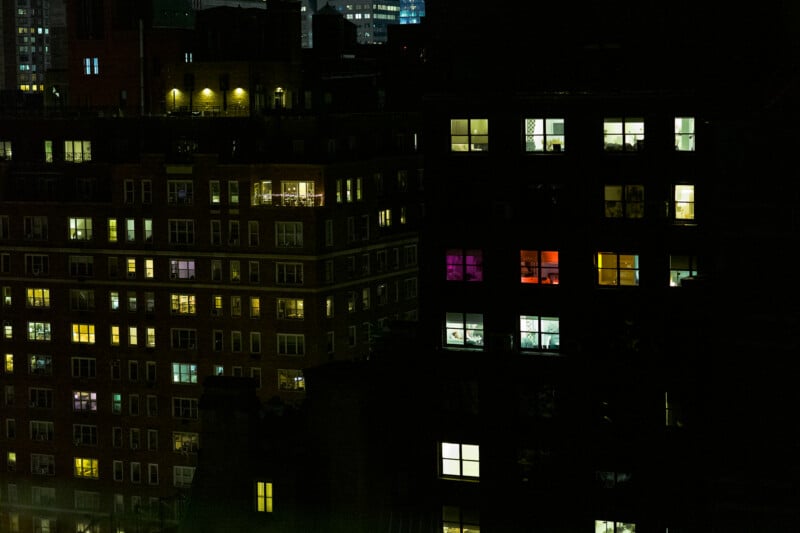 High ISO shots suffer from banding unless you stick to BW mode or go for black shadows.
The light meter seemed to do a good enough job in most lighting situations and I primarily shot DNG RAW format to give myself the most leeway to get good exposure (the Pixii shoots in JPEG or RAW, but not both at the same time for inexplicable reasons).
I also really liked the detail and color out of the BSI 24-megapixel sensor inside the Max. There are various color profiles within the menu and you can also make your own profile recipes and upload them to the camera if desired, but I found the standard mode to be a pleasant starting point to tweak my color further.
There always seems to be a caveat with the Pixii though, and I found brutal banding in the shadows of my images at any ISO higher than about 2500. You will also get this banding if you push shadows up in your RAW files. If you are okay with crushing your shadows down to solid black, you’ll largely avoid this issue but I only find that helpful with black and white images. I was quite disappointed with the banding and I think it relegates this camera to brighter lighting and faster lens settings only.
 I really liked the vibe of the color palette straight out of the Pixii.
 White balance and metering all seemed to do a good job.
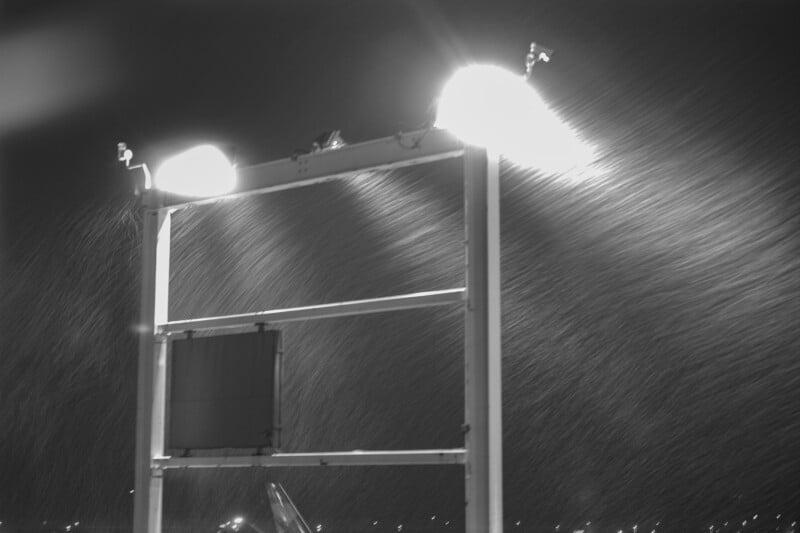
There is a “special” monochromatic option on the Pixii Max which gives you true black and white, 16-bit RAW files to work with. The RAWs shot in this mode are black and white and there is no way to recover the color, which is unusual. I liked the tonality of the mono mode and there is noticeably less banding at higher ISO settings than the color-converted images produced, but it is still present. I would definitely find more utility with the Pixii max as a dedicated black and white camera, especially when using the mono mode, but I still think the Pixii group need to further refine the image pipeline.
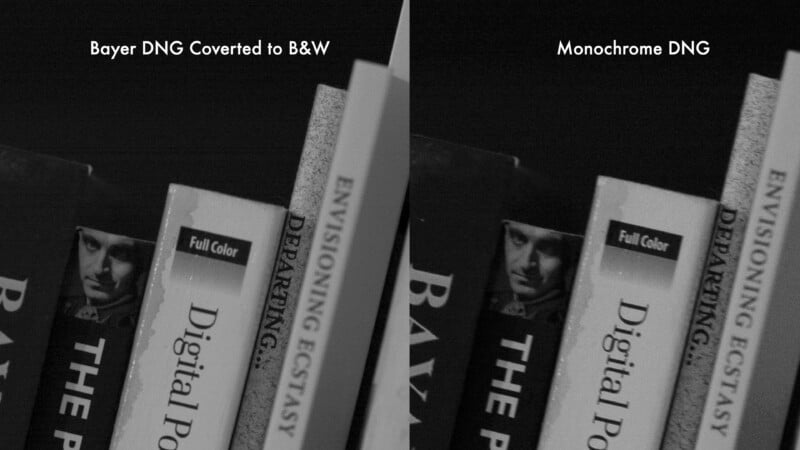 You can see the heavy banding at higher ISO ranges. The dedicated mono mode does reduce this somewhat.
 I took a lot of photos in mono mode where the camera does shine.
The last thing to mention about the picture taking process is the lack of a mechanical shutter in the camera. The electronic shutter does allow for speeds up to 1/32,000 second which means you can shoot fast apertures on bright days without resorting to ND filters. It also means that the camera will have no shutter shock when taking pictures. However, it also means that rolling shutter is an issue, and any sort of fast movement can distort your shots.
 The sensor is a capable and ubiquitous 24 megapixel BSI sensor.


Because the shutter is silent the camera gives you a shutter click sound when shooting, but I found the sound difficult to hear on noisy streets and although there is a quick visual indicator that the shutter was pressed, I often got a different message from the camera. On a regular basis, rather than get a shutter sound I would instead get what can only be described as a grumpy sound from the camera. If I was paying attention, I would then see a message at the bottom of the viewfinder showing a write error. At first, I assumed I was trying to take photos too quickly for the camera to keep up, but I would often get this error on the first shot. Regardless, this happenstance did not elevate my view of the overall shooting experience. I undoubtedly missed some shots because I did not press the shutter enough or pressed it too much.

I Wanted to Love The Pixii Max
The whole time that I was reviewing the camera I felt frustrated but also apologetic. I think that what Pixii team is trying to do is admirable and they are clearly passionate and proud of their product. We need industrious engineers to take risks just like this and make an alternative to the big players in the field. I can also absolutely forgive some eccentric design choices and less than perfect camera functionality due to the vastly smaller scale that the Pixii team has to work with. But a camera still needs to be fun to use, and the images should be free of glaring quality issues at least.
I felt that I was always struggling with the interface and that the final image quality was only usable under ideal conditions. Let’s not forget that at $4,500, the Pixii Max is not affordable by any stretch, but it is still half the price of the Leica M11. However, I feel like you are getting half the camera as well. I know that other users may get along better with the camera and that their mileage will vary in terms of the enjoyment to be found in the Pixii Max. I just did not enjoy it. It looks like I will still be waiting and hoping that someone else will make a more usable digital rangefinder in the future.
Are There Alternatives?
I would consider an excellent used Leica M9 or M10 for example, which will be priced below or at a similar level to the Pixii Max. You’ll get better image quality and far superior handling.
Should You Buy It?
No. Although the goal is commendable, the Pixii Max falls short. Some users will appreciate the boutique nature of this products and accept the many limitations, but I can’t recommend it as it stands now.







 English (US) ·